7 Budget-Friendly Petite Staples That Fit Without Tailoring

Being petite doesn’t mean every pair of trousers, jacket, or dress needs to visit an alterations shop first. A lot of the frustration comes from proportion, not simply length.
The right rise, hem, shoulder fit, and cropped silhouette can make an off-the-rack piece look intentional. That’s where better petite proportions make a real difference.
Quick Takeaways
- Look for cropped or short-length cuts before considering alterations.
- Check shoulder and waist placement, not just overall garment length.
- An ankle-length hem can be easier to style than a full-length one.
- Spend tailoring money on pieces where a small adjustment genuinely improves the fit.
- Build your wardrobe around versatile staples that already suit your frame.

7 Budget-Friendly Petite Staples That Can Work Off the Rack
The easiest petite pieces to shop are the ones that already have a shorter, cleaner proportion. You don’t need every garment labeled “petite” if the cut, rise, and hemline work for your frame.

1. Cropped Straight-Leg Jeans
Cropped straight-leg jeans are one of the safest denim choices for petite women. The shorter hem keeps the ankle visible, while the straight cut gives you a clean line without adding bulk.
Look for:
- A high or mid-rise waist
- A hem that finishes around the ankle
- Minimal bunching below the knee
- A straight leg rather than an exaggerated wide leg
- A denim weight that holds its shape
If the waist and hips fit properly, a slightly cropped jean often needs no alteration at all.
2. High-Rise Ankle Trousers
High-rise ankle trousers do two useful things at once: they sit closer to your natural waist and finish above the shoe.
That shorter hem can make the leg line look cleaner, especially with a low-profile shoe.
Best details:
- Flat front or minimal pleating
- A fitted waistband
- Ankle-length or slightly cropped hem
- A straight or gently tapered leg
- Little excess fabric around the ankles
They’re especially useful for a small capsule because the same trousers can work with tees, knitwear, blazers, and dressier tops.

3. Fitted Crew-Neck Tees
A basic tee sounds simple. Fit makes all the difference.
Choose one with shoulders that end close to your actual shoulder line and a hem that doesn’t extend far below the hip. An overly long, boxy tee can make your torso look shorter.
Try:
- A lightly fitted shape
- A neat crew neckline
- Shorter sleeves
- A hem that can be tucked without excess fabric
- Neutral colors for maximum outfit combinations
A good tee can become the quiet workhorse of your wardrobe.
4. Cropped Cardigans
Cropped cardigans are naturally petite-friendly because their shorter hem doesn’t swallow the torso.
Wear one with high-rise jeans or trousers and you’ll get a defined waist without needing to tuck or fold a long knit.
Look for:
- Hems ending around the waist or upper hip
- Smaller buttons
- Slim or lightly relaxed sleeves
- A neckline that sits neatly around the collarbone
- Fine or medium-weight knit fabric
This is one of those pieces where buying the right cut can save you an alteration bill.
5. Short-Length Blazers
A blazer doesn’t need to be tiny to work on a petite frame. The key is avoiding unnecessary length and oversized shoulders.
A short or petite-length blazer can give you the structure of tailoring without requiring a tailor immediately.
Check the:
- Shoulder seam
- Sleeve length
- Jacket hem
- Button position
- Overall width through the torso
If the shoulders fit well but the sleeves are slightly long, a simple sleeve alteration can be worthwhile. If the entire jacket is too wide and too long, keep shopping.

6. Knee-Length or Shorter Skirts
Skirts can be surprisingly easy to buy off the rack because you aren’t dealing with an inseam.
A knee-length or slightly shorter skirt leaves more leg visible and can feel lighter on a smaller frame.
Good options include:
- Straight skirts
- Simple A-line shapes
- Wrap styles
- Clean denim skirts
- Structured mini skirts with a modest hem
Pay close attention to where the waistband sits. A skirt that’s too low on the hips can change the proportions you were trying to create.
7. Petite-Friendly Midi Dresses
Midi dresses can work for petite women, but length isn’t the only thing to watch. The waist placement matters just as much.
Look for a dress where the waist sits close to your natural waist rather than several inches below it. A shorter midi hem also tends to feel less overwhelming.
Prioritize:
- Defined waist placement
- A shorter midi hem
- Simple vertical lines
- Lightweight fabric
- Minimal excess volume

You may still find an occasional dress worth hemming. But when the waist, shoulders, and overall shape already fit, you can avoid turning every affordable purchase into a tailoring project.
How to Shop Petite Without Paying for Alterations
You can save a surprising amount by learning what to check before buying. The goal isn’t to avoid tailoring forever; it’s to stop buying pieces that were poorly proportioned for you in the first place.

Check These 5 Measurements Before You Buy
Online shopping gets much easier when you stop relying on size labels alone. A “small” can vary wildly between brands.
Before ordering, check:
- Inseam: The inside leg measurement. This is especially useful for trousers and jeans.
- Rise: The distance from the crotch to the waistband. A higher rise can help create a longer-looking leg line.
- Shoulder width: The shoulder seam should sit close to your natural shoulder.
- Sleeve length: Watch for sleeves that cover most of your hands.
- Garment length: Check the actual hem measurement rather than trusting words like “regular” or “midi.”
Vogue’s petite trouser testing also highlights inseam as a key measurement, with shorter proportions making it possible to find trousers that work off the rack instead of automatically budgeting for alterations.
If you’re shopping on a tight budget, these details matter more than chasing a particular label.
Learn the Difference Between “Too Long” and “Wrong Fit”
A garment that’s slightly long can sometimes be an easy fix. A garment that’s too wide, has a low waist, or has oversized shoulders is a different problem.

Here’s a useful rule:
- Slightly long hem: Often worth buying.
- Long sleeves with good shoulders: Usually an easy alteration.
- Good waist but long trousers: Strong candidate for hemming.
- Oversized shoulders: Usually keep shopping.
- Low or misplaced waist: Styling won’t completely correct it.
- Too much fabric through the torso: The piece may simply have the wrong proportions.
For more affordable inspiration, see these budget petite outfits for ideas on putting together polished looks without relying on expensive pieces.
When Tailoring Is Actually Worth the Money
Tailoring isn’t the enemy. It’s just better used selectively.
A small alteration can make sense when:
- You’ve found a high-quality blazer with perfect shoulders but long sleeves.
- Your favorite trousers fit everywhere except the hem.
- An investment dress fits beautifully through the bust and waist but needs a small length adjustment.
- The garment is versatile enough that you’ll wear it repeatedly.
- The original price and alteration cost still make financial sense.
The trick is knowing when to fix a good garment and when to keep shopping. For inexpensive everyday basics, choosing a better proportion from the start is usually the smarter move.
Build a Petite Capsule Wardrobe Without Overspending
A petite wardrobe doesn’t need a separate, expensive version of every basic. Start with pieces that already have manageable proportions, then make them work across several outfits.

The goal is simple: petite capsule wardrobe pieces that earn their place by getting worn often.
Buy for Versatility, Not Just Size
Before adding another item, ask how many outfits it can create.
A strong budget-friendly capsule usually favors:
- One pair of cropped or ankle-length jeans
- One polished trouser
- A fitted neutral tee
- A shorter cardigan
- One structured blazer
- A simple skirt
- One easy dress
That doesn’t mean your closet has to stop there. It means your first purchases should do more work.
Use Proportion as Your Shopping Filter
You don’t always need a petite label. A regular-size garment can work when its important measurements already suit you.
Pay particular attention to:
- Where the waistband sits
- Where the shoulder seam lands
- How much fabric gathers around the ankles
- Where a jacket finishes on your hip
- Whether a dress’s waist falls in the right place
For a deeper capsule-building approach, you can also browse our 15-item petite capsule wardrobe and see how versatile pieces can cover multiple seasons.
Spend More Only Where It Counts
If two inexpensive pieces fit beautifully, you don’t need the pricier one just because it’s marketed specifically for petites.
Save your larger budget for garments where construction and fit matter most. A well-fitting blazer, for example, can justify more attention than a basic cotton tee you’ll replace easily.
The Smartest Way to Spend Your Petite Clothing Budget
The best petite wardrobe isn’t necessarily the one with the most petite-labeled pieces. Spend where fit is difficult to fake, then save on basics that already sit correctly on your frame.

You can also see how this works in practice with our £50 petite outfit challenge, where the goal is to build a complete look without blowing the budget.
Buy Off the Rack vs. Consider Tailoring
| Buy Off the Rack | Consider Tailoring |
|---|---|
| Cropped jeans with the right rise | Trousers that fit everywhere except the hem |
| Short-length cardigans | Blazer sleeves that are slightly too long |
| Fitted everyday tees | A quality dress with a small length issue |
| Ankle trousers | A waistband that needs a minor adjustment |
| Simple skirts with the right waist | Investment pieces you’ll wear for years |
A good example is denim. Vogue’s petite denim coverage points out that fit involves more than inseam; rise, pocket placement, and the way the leg falls also affect proportion.
So before paying for an alteration, ask one question: does this garment already fit in the places that are hardest to change?
Spend More on the Pieces That Work Hardest
Your budget goes further when your pricier purchases have a clear job in your wardrobe.
Prioritize:
- A blazer you’ll wear to work and dinner
- Trousers that pair with several tops
- A well-fitting pair of jeans
- A versatile dress for multiple occasions
- A coat with shoulders and length that already work
For everyday basics, there’s less reason to spend heavily if the fit is already right.
If you’re comparing this approach with building a smaller collection of long-lasting clothes, our guide to pieces worth buying once is a useful next step.
The £50 Test
Before buying anything, imagine the complete outfit.
Can the piece work with at least three things you already own? If yes, it’s doing its job. If you need another purchase just to make it wearable, that “cheap” item may not be such a bargain after all.
A smaller wardrobe with petite outfit on a budget options that actually get worn will beat a crowded closet full of pieces waiting for alterations.
Conclusion
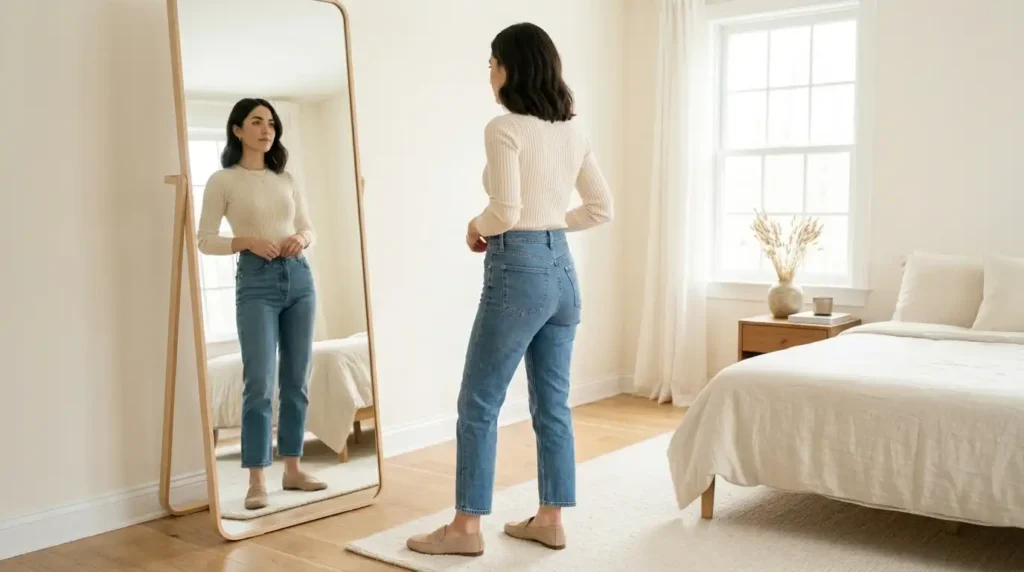
You don’t need custom tailoring for every petite purchase. Start with pieces that already have shorter proportions, a sensible rise, and a clean fit through the shoulders and waist.
Save tailoring for the garments worth keeping long term, and let your everyday staples do the budget-friendly work.
FAQs
Do petite women need custom tailoring?
No. Many petite-friendly pieces can work straight off the rack when the proportions are right. Tailoring is most useful for small adjustments to otherwise well-fitting garments.
What clothes are easiest for petites to buy without alterations?
Cropped jeans, ankle trousers, fitted tees, shorter cardigans, simple skirts, and some midi dresses are often easier because their proportions naturally reduce excess length.
Is it cheaper to buy petite clothing or tailor regular clothing?
It depends on the garment. If a regular-size piece already fits well except for a small length issue, tailoring can make sense. For inexpensive basics, finding a better-proportioned piece is usually more economical.
Which alterations are worth paying for?
Simple changes such as trouser hems, sleeve shortening, and minor waistband adjustments can be worthwhile. Major changes to shoulders, rise, or overall garment proportions are usually a sign that the piece isn’t the right starting point.


