
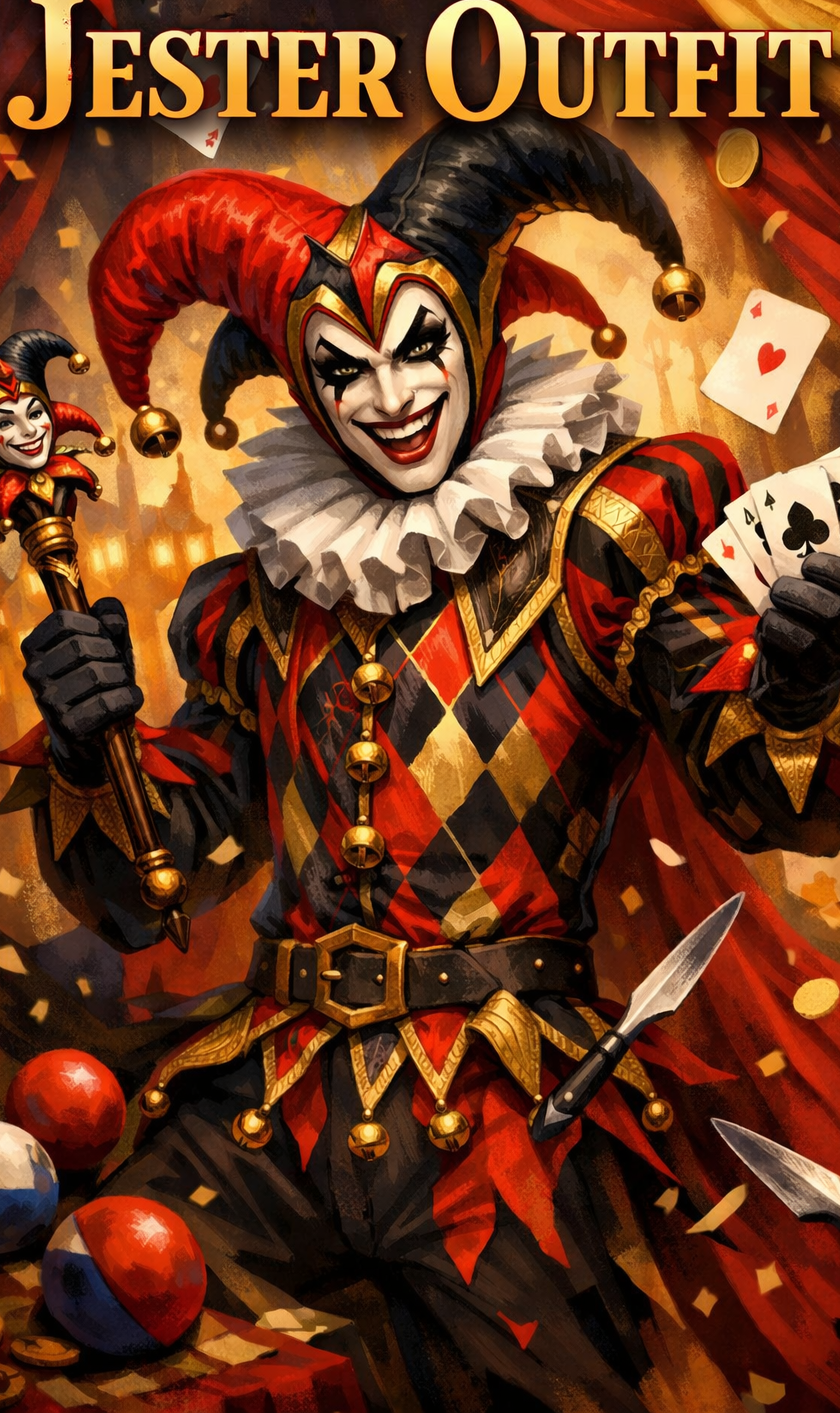
A jester outfit is a distinctive costume historically worn by court jesters—entertainers employed in medieval and Renaissance courts. The outfit is characterized by bright colors, contrasting patterns, and decorative elements such as bells, designed to attract attention and visually reinforce the performer’s role.
The primary purpose of a jester outfit was to:
- Signal the wearer’s entertainment function
- Create a visually humorous and exaggerated appearance
- Differentiate the jester from nobility and commoners
In modern contexts, the jester outfit is used for costumes, theatrical performances, cosplay, and seasonal events.
Summary:
- A jester outfit is a performance-oriented costume
- Designed for visibility, humor, and distinction
- Used historically in courts and currently in entertainment settings
Key Takeaways:
- Defined by color contrast and decorative elements
- Functionally tied to performance and audience engagement
- Adapted today for costume and fashion purposes
Historical Background of Court Jesters
Court jesters were active primarily in medieval and Renaissance Europe, serving monarchs and aristocratic households. Their role included:
- Providing entertainment through humor, music, and satire
- Acting as social commentators, sometimes permitted to critique authority
The jester outfit evolved to become a symbol of this role, incorporating exaggerated and symbolic elements:
- Bright, mismatched colors to represent unpredictability
- Bells to produce sound and draw attention
- Unique headwear distinguishing them from other court members
These features were functional in performance visibility and audience recognition.
Summary:
- Origin: medieval and Renaissance courts
- Role: entertainment and satire
- Outfit: symbolic of status and function
Key Visual Characteristics
A jester outfit is defined by several consistent visual elements:
- Multicolored design: typically red, yellow, green, or purple combinations
- Contrasting patterns: including stripes, checks, or harlequin (diamond) patterns
- Decorative additions: bells attached to clothing or accessories
- Exaggerated shapes: pointed hats, asymmetrical garments
These characteristics are designed to enhance:
- Visibility from a distance
- Dynamic movement during performance
- Immediate visual identification
Summary:
- Bright colors and patterns are essential
- Decorative elements enhance sound and motion
- Visual exaggeration supports performance visibility
Core Elements of a Jester Outfit
Jester Hat (Coxcomb)
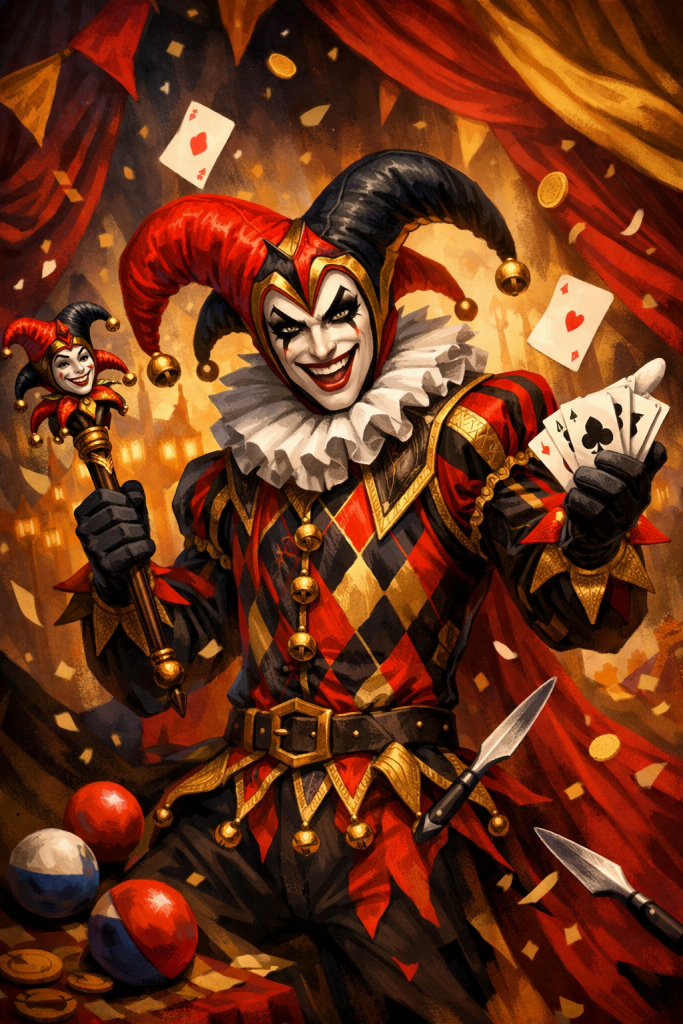
The most recognizable component of a jester outfit is the jester hat, historically known as a coxcomb.
Key features:
- Multiple pointed extensions (typically 2–3 “horns”)
- Bells attached at the tips
- Bright, contrasting colors
Function:
- Provides instant visual identification
- Bells create auditory attention during movement
- Reinforces the exaggerated, theatrical appearance
Summary:
- The coxcomb is the defining visual symbol of a jester
- Combines movement, sound, and color contrast
Also Read :Country Concert Outfit Ideas: Style Tips for Men & Women
Tunic and Top
The upper garment is typically a tunic or fitted top designed with bold visual elements.
Key features:
- Bright, contrasting color panels
- Patterns such as harlequin (diamond), stripes, or patchwork
- Long or asymmetrical sleeves
Function:
- Acts as the main visual surface of the outfit
- Enhances movement visibility during performance
Summary:
- The tunic provides primary visual identity
- Patterns and colors are essential for authenticity
Pants or Tights
Lower garments are designed to complement the top while maintaining flexibility.
Common options:
- Tights or leggings (tight-fitting, often two-toned)
- Loose pants (split-color or patterned)
Function:
- Allows freedom of movement
- Maintains visual symmetry or contrast
Summary:
- Designed for mobility and visual balance
- Often mirrors or contrasts the top’s color scheme
Shoes
Footwear is typically exaggerated to match the overall costume style.
Key features:
- Curved or pointed toes
- Bright colors or patterns
- Bells attached in some designs
Function:
- Enhances visual exaggeration
- Adds auditory elements when bells are included
Summary:
- Shoes contribute to movement-based visual and sound effects
- Often stylized rather than practical
Accessories (Bells, Staff, Masks)
Accessories complete the jester outfit and reinforce its performative function.
Common accessories:
- Bells: attached to clothing, hat, or shoes
- Jester staff (bauble): a symbolic prop resembling a miniature head or ornament
- Masks or face paint: used in theatrical adaptations
Function:
- Increase auditory and visual engagement
- Provide interactive props for performance
Summary:
- Accessories enhance character identity and performance impact
- Bells are the most consistent and recognizable addition
Core Elements Overview Table
| Component | Description | Purpose |
| Hat (Coxcomb) | Multi-pointed hat with bells | Visual identity and sound |
| Tunic/Top | Bright, patterned garment | Main visual focus |
| Pants/Tights | Flexible lower wear | Movement and balance |
| Shoes | Stylized footwear | Visual exaggeration |
| Accessories | Bells, staff, masks | Performance enhancement |
Key Takeaways:
- A jester outfit is built from five core components
- Each element contributes to visibility, movement, and sound
- The combination creates a distinct, performance-oriented costume identity
Popular Jester Outfit Ideas
Classic Medieval Jester
This version reflects the traditional appearance associated with historical court jesters.
Components:
- Top: brightly colored tunic with contrasting panels
- Bottom: two-tone tights or split-color pants
- Hat: multi-pointed coxcomb with bells
- Shoes: curved or pointed shoes
- Accessories: bells and jester staff
Characteristics:
- Strong adherence to historical design elements
- High use of primary colors (red, yellow, green)
- Emphasis on symmetry and contrast
Summary:
- Most historically accurate style
- Best for theatrical or educational settings
Harlequin Style Jester
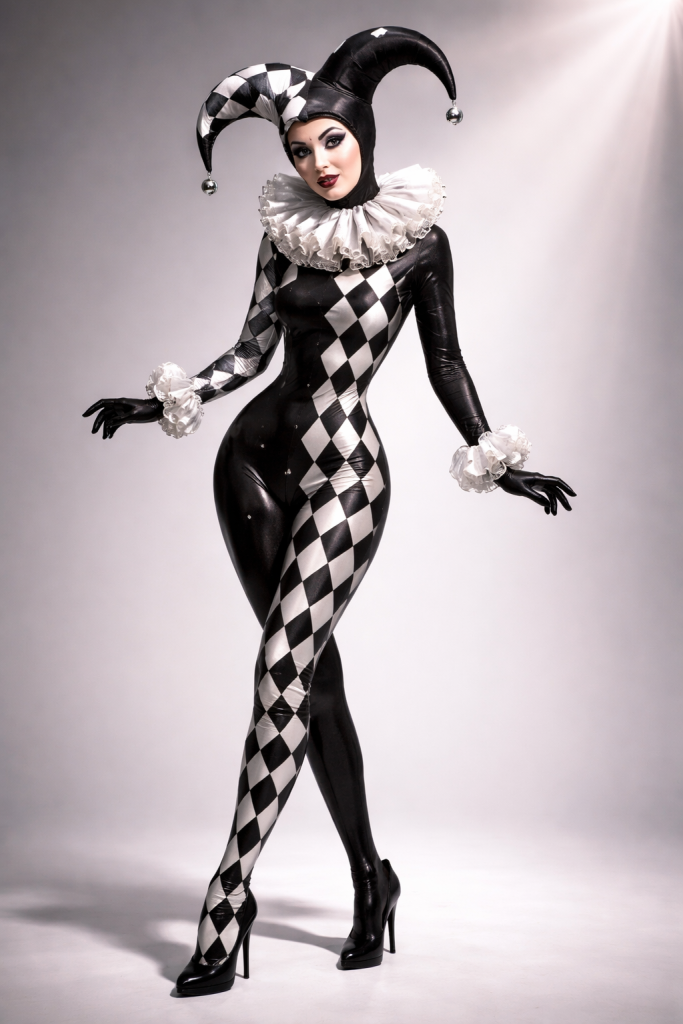
This variation is based on the harlequin diamond pattern, commonly associated with comedic performance costumes.
Components:
- Top and bottom: diamond-patterned (multicolor or black-and-white)
- Hat: simplified or matching patterned coxcomb
- Shoes: standard or stylized footwear
- Accessories: minimal or pattern-focused
Characteristics:
- Strong focus on geometric patterns
- Visually structured and repetitive design
- Often used in theatrical or stylized performances
Summary:
- Pattern-driven design
- Recognizable through diamond shapes
Dark or Gothic Jester
This modern adaptation uses darker tones and less saturated colors.
Components:
- Top: black or dark-toned tunic with subtle patterns
- Bottom: dark pants or tights
- Hat: black or muted coxcomb
- Shoes: boots or dark stylized footwear
- Accessories: minimal bells, darker props
Characteristics:
- Reduced brightness, increased visual contrast through darkness
- Often used in horror, gothic, or alternative costume themes
- Lower emphasis on traditional color schemes
Summary:
- Modern reinterpretation
- Focus on darker aesthetics
Female Jester Outfit
This variation adapts the traditional structure to different garment cuts.
Components:
- Top: fitted tunic or corset-style top
- Bottom: skirt, shorts, or tights
- Hat: smaller or stylized coxcomb
- Shoes: boots or platform shoes
- Accessories: light jewelry, bells
Characteristics:
- Adjusted silhouettes for fit and styling variation
- Maintains core elements while altering proportions
- Common in costume events and cosplay
Summary:
- Adapted fit and structure
- Retains traditional elements with modern styling
Modern or Minimal Jester Look
This simplified version reduces complexity while preserving key identifiers.
Components:
- Top: single-color or lightly patterned shirt
- Bottom: plain pants or jeans
- Hat: minimal or symbolic jester hat
- Shoes: standard sneakers or boots
- Accessories: limited use of bells or props
Characteristics:
- Focus on comfort and accessibility
- Reduced visual complexity
- Suitable for casual or last-minute costumes
Summary:
- Simplified design
- Emphasis on ease and practicality
Style Comparison Table
| Style | Features | Difficulty | Best Use Case |
| Classic Medieval | Bright colors, traditional elements | Medium | Theater, historical events |
| Harlequin | Diamond patterns | Medium | Stylized performances |
| Dark/Gothic | Dark tones, minimal bells | Medium | Horror or themed events |
| Female Jester | Modified fit and silhouette | Medium | Costume parties, cosplay |
| Modern/Minimal | Simplified elements | Low | Casual or quick costumes |
Key Takeaways:
- Jester outfits vary from historical to modern interpretations
- Core elements remain consistent across styles
- Complexity ranges from detailed theatrical costumes to simplified versions
How to Make a Jester Outfit (Step-by-Step)
Step 1: Choose a Color Scheme
Select a high-contrast color combination, as color is a defining feature of a jester outfit.
Common combinations:
- Red, yellow, and green
- Black and white (harlequin style)
- Purple and gold
Guidelines:
- Use 2–3 contrasting colors
- Maintain consistency across all outfit components
- Ensure visibility and visual balance
Step 2: Select Base Clothing
Start with simple base garments that will form the structure of the outfit.
Options:
- Long-sleeve shirt or tunic
- Tights, leggings, or loose pants
Guidelines:
- Choose comfortable, flexible fabrics
- Ensure proper fit for ease of movement
- Use plain items that can be modified
Step 3: Add Patterns
Introduce visual identity through patterns.
Common patterns:
- Harlequin (diamond shapes)
- Stripes
- Split-color (different color on each side)
Methods:
- Use fabric paint or stitched panels
- Attach contrasting fabric pieces
Guidelines:
- Keep patterns symmetrical or intentionally contrasting
- Avoid overcrowding the design
Step 4: Create or Add Accessories
Accessories enhance the costume’s authenticity and performance value.
Key additions:
- Jester hat (coxcomb) with 2–3 points
- Bells attached to hat, sleeves, or shoes
- Jester staff (bauble) or handheld prop
Guidelines:
- Attach bells securely to avoid loss
- Keep accessories lightweight for comfort
Step 5: Final Styling
Complete the outfit with finishing details.
Options:
- Face paint (simple geometric or exaggerated expressions)
- Makeup to match color scheme
- Adjust fit and layering
Guidelines:
- Ensure all elements are secure and comfortable
- Test movement to confirm flexibility and durability
DIY Process Table
| Step | Action | Materials Needed |
| 1 | Choose colors | Fabric or clothing in 2–3 colors |
| 2 | Select base clothing | Shirt, pants, or tights |
| 3 | Add patterns | Fabric pieces, paint, thread |
| 4 | Add accessories | Bells, hat, props |
| 5 | Final styling | Makeup, adjustments |
Summary:
- A jester outfit can be created using basic clothing and added elements
- Key focus areas: color contrast, patterns, and accessories
- Process is adaptable for both simple and detailed designs
Pros and Cons of DIY Jester Outfits:
| Aspect | Advantages | Limitations |
| Cost | Lower than buying | Requires time and effort |
| Customization | Fully adjustable design | Skill-dependent results |
| Fit | Tailored to wearer | May require alterations |
Key Takeaways:
- DIY construction relies on structured steps and material selection
- Patterns and accessories define authenticity
- Flexibility allows both basic and complex costume creation
Materials and Fabrics for Jester Costumes
Traditional Materials
Historically, jester outfits were made using materials available in medieval and Renaissance Europe.
Common traditional fabrics:
- Wool: durable and widely available
- Linen: breathable and lightweight
- Silk or velvet: used in higher-status courts for decorative purposes
Characteristics:
- Emphasis on durability and visibility
- Limited elasticity compared to modern fabrics
- Often layered for structure
Summary:
- Traditional materials focused on availability and durability
- Higher-quality fabrics indicated court status or patron wealth
Modern Costume Materials
Contemporary jester outfits use a wider range of fabrics designed for comfort and accessibility.
Common modern fabrics:
- Cotton blends: breathable and flexible
- Polyester: lightweight, durable, and easy to maintain
- Spandex or elastane: stretchable, ideal for tights and fitted garments
- Satin: smooth texture for visual effect
Characteristics:
- Improved flexibility and comfort
- Greater variety in color and finish
- Easier maintenance and affordability
Summary:
- Modern materials prioritize comfort, stretch, and ease of use
- Suitable for both DIY and pre-made costumes
Comfort vs Authenticity
Material selection often requires balancing historical accuracy with practical usability.
Comparison:
| Factor | Authentic Materials | Modern Materials |
| Comfort | Lower flexibility | High flexibility |
| Appearance | Historically accurate | Visually adaptable |
| Durability | High but heavy | Lightweight and durable |
| Maintenance | More demanding | Easy to clean |
Guidelines:
- Use modern fabrics for long-duration wear and movement
- Choose traditional-style materials for historical or theatrical accuracy
- Combine both where needed for balance
Summary:
- Material choice depends on purpose (authentic vs practical)
- Modern fabrics generally provide better performance for events
Key Takeaways:
- Fabric selection affects comfort, appearance, and usability
- Cotton blends and stretch fabrics are optimal for most users
- Authentic materials are best suited for historical representation
Common Mistakes to Avoid
Overcomplicating the Design
- Adding excessive patterns, colors, or accessories can create visual clutter
- Overly complex designs may reduce recognizability and balance
Guideline:
- Limit to 2–3 main colors and 1–2 pattern types
- Maintain clear contrast without overcrowding
Ignoring Color Balance
- Uneven or poorly matched colors can disrupt the visual harmony of the outfit
- Lack of contrast reduces the distinctive jester appearance
Guideline:
- Use high-contrast color combinations
- Distribute colors evenly across top, bottom, and accessories
Poor Fabric Choices
- Heavy or non-breathable fabrics can cause discomfort during extended wear
- Rigid materials restrict movement and flexibility
Guideline:
- Select lightweight, breathable, and flexible fabrics
- Match fabric choice to event duration and environment
Neglecting Mobility and Comfort
- Tight or restrictive clothing limits movement and performance
- Uncomfortable footwear can affect stability and endurance
Guideline:
- Test the outfit for walking, sitting, and movement
- Prioritize fit and flexibility over appearance alone
Incomplete Accessories
- Missing key elements (hat, bells, or props) reduces authenticity
- Overuse of accessories can cause discomfort or imbalance
Guideline:
- Include essential items like the jester hat and bells
- Keep accessories functional and lightweight
Summary:
- Avoid excessive complexity and poor color coordination
- Ensure materials support comfort and movement
- Maintain balance between authenticity and practicality
Key Takeaways:
- Simplicity with contrast is more effective than overdesign
- Fabric and fit directly impact usability
- Core elements must be included for a recognizable jester outfit
Quick Jester Outfit Formulas
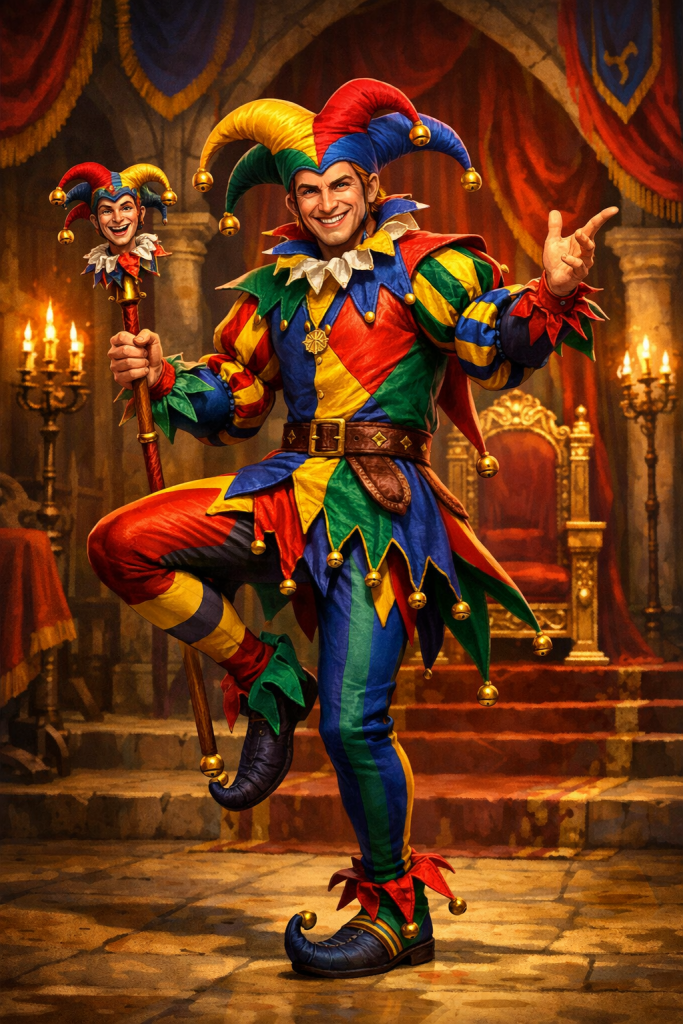
These ready-to-use combinations simplify the process of assembling a jester outfit by defining clear item pairings. Each formula balances visual identity, comfort, and practicality.
Formula 1: Classic Jester
- Top: Red and yellow tunic
- Bottom: Split-color tights
- Hat: Multi-pointed coxcomb with bells
- Shoes: Curved or pointed shoes
- Accessories: Jester staff and bells
Use case:
- Historical or theatrical events
Formula 2: Harlequin Style
- Top: Diamond-pattern shirt
- Bottom: Matching or contrasting patterned pants
- Hat: Patterned or simple jester hat
- Shoes: Standard or stylized footwear
- Accessories: Minimal bells
Use case:
- Stylized performances or costume parties
Formula 3: Dark/Gothic Jester
- Top: Black or dark-toned tunic
- Bottom: Dark pants or tights
- Hat: Black coxcomb
- Shoes: Boots
- Accessories: Minimal, darker props
Use case:
- Themed or alternative events
Formula 4: Simplified Modern Jester
- Top: Solid-color shirt
- Bottom: Plain pants or jeans
- Hat: Basic jester hat
- Shoes: Sneakers or boots
- Accessories: Limited bells or props
Use case:
- Casual or last-minute costumes
Formula 5: Adapted (Fitted) Jester
- Top: Fitted or corset-style top
- Bottom: Skirt, shorts, or tights
- Hat: Smaller stylized coxcomb
- Shoes: Boots or platform shoes
- Accessories: Light bells, minimal jewelry
Use case:
- Costume parties or cosplay
Outfit Formula Table
| Look | Top | Bottom | Shoes | Accessories |
| Classic | Tunic | Split tights | Pointed shoes | Staff, bells |
| Harlequin | Patterned shirt | Patterned pants | Standard shoes | Minimal bells |
| Dark | Dark tunic | Dark pants | Boots | Subtle props |
| Modern | Plain shirt | Jeans/pants | Sneakers | Minimal |
| Adapted | Fitted top | Skirt/tights | Boots | Light accessories |
Summary:
- Outfit formulas provide structured combinations for quick assembly
- Each variation maintains core jester elements
- Complexity ranges from traditional to simplified designs
Key Takeaways:
- Jester outfits can be created using repeatable formulas
- Core components remain consistent across styles
- Users can select formulas based on event type and effort level
Frequently Asked Questions (FAQs)
- What does a jester outfit look like?
A jester outfit is colorful, patterned, and includes a multi-pointed hat with bells, a tunic, tights or pants, and stylized shoes, designed to be visually striking and performance-ready. - How do you make a jester outfit?
Start with base clothing like a tunic and tights, add contrasting patterns, create or attach accessories such as a coxcomb hat and bells, and finalize with makeup or styling details. - What is a jester hat called?
A jester hat is historically called a coxcomb, often featuring multiple pointed tips with bells attached. - What colors do jesters wear?
Traditional jester colors include red, yellow, green, purple, or high-contrast combinations like black and white. Patterns like diamonds or stripes are common. - Can a jester outfit be simplified?
Yes, modern minimal jester outfits use plain tops and bottoms with a basic hat, retaining core elements for recognition while improving comfort. - What accessories are essential for a jester costume?
Essential accessories include the coxcomb hat, bells, and optionally a jester staff. Face paint or light jewelry can enhance the look. - Is a jester outfit the same as a clown costume?
No. While both are colorful performance costumes, jester outfits originate from medieval court entertainers, whereas clown costumes are modern theatrical or circus-based attire.
References:
- Jester (Historical Role and Costume) – Overview of court jesters, their role, and traditional attire including bright clothes and eccentric hats.
https://en.wikipedia.org/wiki/Jester - Medieval Jesters Costumes – Description of medieval jester attire, including motley clothing, fool’s hats, and bells on costumes.
https://www.medievalchronicles.com/medieval-clothing/medieval-jesters-costumes/ - Court Jester Costume Details – Breakdown of traditional jester garment pieces and materials used in medieval times.
https://www.jesterplanet.com/the-court-jester/appearance/clothing/
