
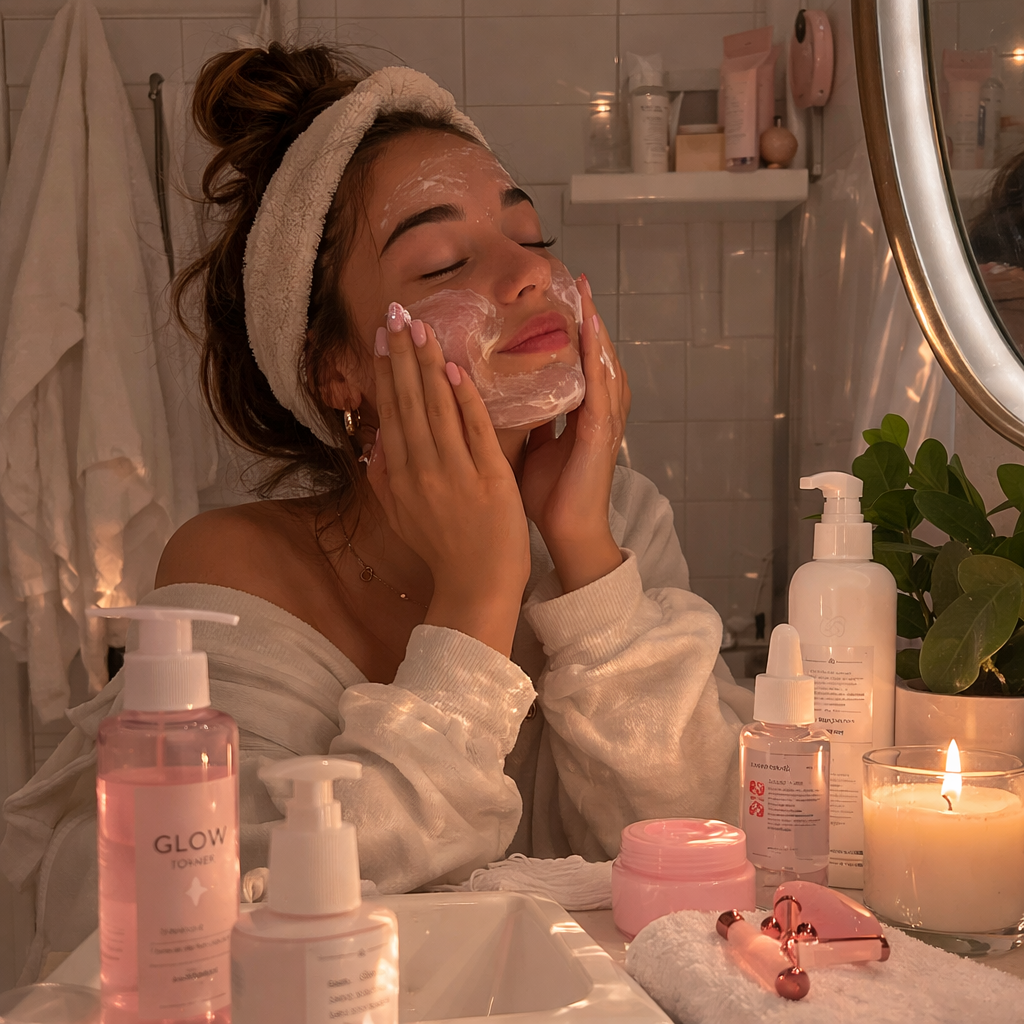
A skincare routine is a structured sequence of topical skin-care practices intended to maintain skin health, support the epidermal barrier, and manage dermatological concerns. The routine generally includes cleansing, treatment, hydration, and protection steps applied in a consistent order.
According to the American Academy of Dermatology, an effective routine focuses on gentle cleansing, targeted treatment ingredients, adequate moisturization, and daily sun protection. These steps support the stratum corneum, the outermost epidermal layer responsible for barrier protection and water retention.
A standard skincare routine typically involves:
- Cleansing to remove dirt, sebum, and environmental pollutants
- Applying treatment products containing active ingredients
- Moisturizing to maintain hydration and lipid balance
- Using sunscreen to protect against ultraviolet radiation
Summary:
A skincare routine is a systematic set of daily skin-care practices designed to cleanse, treat, hydrate, and protect the skin. Dermatology guidelines emphasize consistent routines to maintain epidermal barrier integrity and reduce environmental damage.
Key Takeaways:
- A skincare routine follows a structured sequence of skin-care steps.
- The primary objective is skin barrier maintenance and protection.
- Dermatology guidelines recommend cleansing, treatment, moisturizing, and sun protection.
Purpose of Daily Skin Care:
Daily skin care supports several physiological functions associated with the structure and biology of the skin. The skin acts as a protective biological barrier against environmental stressors such as ultraviolet radiation, microorganisms, and pollutants.
A consistent routine helps maintain barrier integrity by supporting hydration levels and regulating sebum production. Proper skin care may also help manage dermatological conditions including acne, dryness, and irritation.
Primary purposes of daily skincare include:
- Maintaining skin barrier integrity
- Reducing environmental damage from ultraviolet radiation and pollution
- Managing dermatological conditions such as acne or dryness
- Supporting normal skin cell turnover
Dermatological literature indicates that topical ingredients such as retinoids, antioxidants, and humectants can improve skin function when used consistently as part of a structured routine.
Summary:
Daily skincare helps maintain the skin barrier, regulate hydration and oil balance, and support normal epidermal function through consistent topical care.
Key Takeaways:
- Skin care supports epidermal barrier protection.
- Daily routines reduce environmental skin damage.
- Consistent use of topical ingredients improves skin health outcomes.
Skin Barrier Function and Protection:
The skin barrier primarily refers to the stratum corneum, the outermost layer of the epidermis composed of corneocytes embedded within lipid matrices containing ceramides, cholesterol, and fatty acids.
This barrier performs essential biological functions:
- Prevents transepidermal water loss (TEWL)
- Protects against microbial invasion
- Shields underlying tissues from chemical and physical stressors
Damage to the skin barrier may lead to:
- Dryness and irritation
- Increased sensitivity
- Inflammatory skin conditions
Dermatology guidelines emphasize the use of moisturizers containing ceramides and humectants to support barrier function. Research commentary from dermatologists such as Dr. Whitney Bowe notes that consistent skincare practices can assist in maintaining barrier stability and hydration balance.
Summary:
The skin barrier, located in the stratum corneum, regulates hydration and protects against environmental stressors. Skincare routines help preserve this barrier through cleansing, hydration, and protective ingredients.
Key Takeaways:
- The stratum corneum forms the skin’s primary protective barrier.
- Barrier disruption can lead to dryness, irritation, and sensitivity.
- Moisturizing and gentle cleansing help maintain barrier stability.
Dermatological Importance of Consistent Skin Care:
Consistency is a significant factor in dermatological outcomes because many topical ingredients require regular application over time to produce measurable effects.
Examples include:
- Retinoids, which regulate epidermal cell turnover
- Antioxidants, which neutralize free radicals generated by ultraviolet exposure
- Humectants such as hyaluronic acid, which help maintain water balance in the epidermis
The American Academy of Dermatology indicates that consistent skincare routines support skin health and improve the effectiveness of treatments for conditions such as acne, hyperpigmentation, and dryness.
Human skin undergoes continuous biological renewal. Epidermal cell turnover cycles typically occur approximately every 28 days in healthy adult skin, which explains why consistent application of topical treatments is recommended.
Summary:
Regular skincare routines improve the effectiveness of topical treatments and support ongoing biological processes such as epidermal cell renewal.
Key Takeaways:
- Consistency increases topical treatment effectiveness.
- Skin renewal cycles require regular product application.
- Dermatology guidelines emphasize daily skincare routines.
Basic Steps in a Skincare Routine:
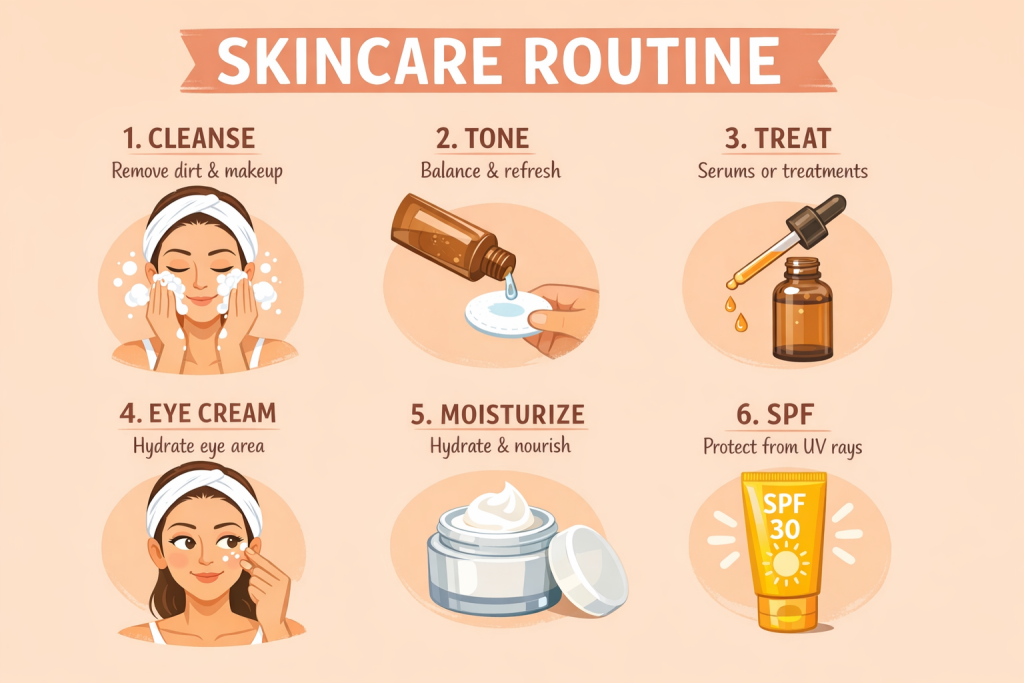
A basic skincare routine consists of a sequence of steps designed to cleanse the skin, deliver treatment ingredients, maintain hydration, and protect against environmental damage. Dermatology guidelines commonly recommend a structured routine because the order of product application influences ingredient absorption and effectiveness.
Most routines include five fundamental steps: cleansing, toning, applying treatment products, moisturizing, and sun protection.
| Step | Product Type | Primary Function |
| 1 | Cleanser | Removes dirt, oil, and environmental pollutants |
| 2 | Toner | Helps rebalance skin and prepare it for treatment products |
| 3 | Serum or treatment | Delivers active ingredients targeting skin concerns |
| 4 | Moisturizer | Maintains hydration and supports the skin barrier |
| 5 | Sunscreen | Protects against ultraviolet radiation |
Summary:
A basic skincare routine includes cleansing, toning, treatment products, moisturizing, and sun protection. The structured order helps maintain skin barrier function and improves the effectiveness of topical ingredients.
Key Takeaways:
- A standard routine typically contains five essential steps.
- Product order influences ingredient absorption and effectiveness.
- Sun protection is considered a critical step in daytime skin care.
Step 1 – Cleansing:
Cleansing is the first step in any skincare routine and involves removing sebum, sweat, environmental pollutants, cosmetic products, and microorganisms from the skin surface.
Facial cleansers contain surfactants that help dissolve oils and debris without excessively disrupting the skin barrier. Dermatology guidelines from the American Academy of Dermatology recommend using gentle, non-irritating cleansers that maintain the skin’s natural pH balance.
Common cleanser types include:
- Gel cleansers for oily or acne-prone skin
- Cream cleansers for dry or sensitive skin
- Foaming cleansers for removing excess sebum
- Micellar cleansers for mild cleansing and makeup removal
Excessive cleansing or using harsh detergents may disrupt the lipid matrix of the stratum corneum, leading to dryness and irritation.
Summary:
Cleansing removes accumulated oils, pollutants, and microorganisms from the skin surface and prepares the skin for subsequent skincare products.
Key Takeaways:
- Cleansing is the first step of a skincare routine.
- Gentle cleansers help preserve the skin barrier and pH balance.
- Over-cleansing may cause dryness and irritation.
Step 2 – Toning:
Toners are liquid skincare products applied after cleansing to help prepare the skin for treatment products. Historically, toners were used to restore skin pH after alkaline soaps, but modern formulations often contain hydrating or soothing ingredients.
Common toner ingredients include:
- Humectants such as glycerin and hyaluronic acid
- Botanical extracts for soothing effects
- Mild exfoliating acids in some formulations
Some toners also help remove residual cleanser or cosmetic products that remain on the skin after washing.
Not all skincare routines require toner use. Many dermatology guidelines classify toners as optional, depending on skin type and product formulation.
Summary:
Toners help prepare the skin for treatment products and may provide additional hydration or mild exfoliation depending on their formulation.
Key Takeaways:
- Toners are applied after cleansing.
- Modern toners often contain hydrating or soothing ingredients.
- Toner use is generally optional in many routines.
Step 3 – Treatment Products (Serums and Actives):
Treatment products contain active ingredients designed to address specific skin concerns such as acne, hyperpigmentation, dehydration, or signs of aging.
Serums are typically lightweight formulations that deliver higher concentrations of active compounds into the epidermis.
Common treatment ingredients include:
- Vitamin C for antioxidant protection
- Niacinamide for oil regulation and barrier support
- Retinoids for regulating cell turnover
- Salicylic acid for acne management
- Hyaluronic acid for hydration
Dermatologists such as Dr. Shereene Idriss emphasize that treatment products should be selected according to individual skin concerns and tolerance levels.
Summary:
Treatment products deliver targeted active ingredients designed to address specific dermatological concerns and improve skin function.
Key Takeaways:
- Serums contain concentrated active ingredients.
- Treatment products address specific skin concerns.
- Selection should be based on skin type and dermatological needs.
Step 4 – Moisturizing:
Moisturizers are formulations designed to maintain hydration and support the lipid structure of the skin barrier. They typically contain a combination of humectants, emollients, and occlusives.
Examples include:
- Humectants: hyaluronic acid, glycerin
- Emollients: fatty acids, ceramides
- Occlusives: petrolatum or silicones
Moisturizers help reduce transepidermal water loss (TEWL) and maintain epidermal hydration.
Regular use of moisturizers is recommended by dermatological organizations such as the American Academy of Dermatology to preserve barrier integrity and improve skin comfort.
Summary:
Moisturizers maintain hydration, support the skin barrier, and reduce water loss from the epidermis.
Key Takeaways:
- Moisturizers help maintain skin hydration and barrier stability.
- They commonly contain humectants, emollients, and occlusives.
- Regular moisturizing helps reduce transepidermal water loss.
Step 5 – Sun Protection:
Sun protection is the final step in daytime skincare routines and plays a significant role in preventing ultraviolet radiation damage.
Ultraviolet (UV) exposure contributes to:
- Photoaging
- Hyperpigmentation
- DNA damage in skin cells
- Increased risk of skin cancers
Dermatology guidelines from the American Academy of Dermatology recommend using broad-spectrum sunscreen with SPF 30 or higher and reapplying every two hours during prolonged outdoor exposure.
Sunscreens may contain:
- Chemical UV filters that absorb radiation
- Mineral filters such as zinc oxide or titanium dioxide that reflect radiation
Summary:
Sun protection reduces the harmful effects of ultraviolet radiation and is considered a critical step in daytime skincare routines.
Key Takeaways:
- Sunscreen is the final step in morning skincare routines.
- Dermatology guidelines recommend SPF 30 or higher.
- Sun protection helps prevent photoaging and UV-related skin damage.
Morning Skincare Routine (AM Routine):
A morning skincare routine is designed to protect the skin from environmental stressors encountered during the day, including ultraviolet (UV) radiation, pollution, and oxidative damage. This routine emphasizes cleansing, hydration, and sun protection while incorporating antioxidant treatments when needed.
| Step | Product Type | Purpose |
| 1 | Cleanser | Removes overnight sweat, sebum, and debris |
| 2 | Toner (optional) | Prepares skin for active ingredients |
| 3 | Antioxidant serum | Protects against free radical damage |
| 4 | Moisturizer | Hydrates and maintains barrier integrity |
| 5 | Sunscreen | Provides UV protection |
Purpose of Morning Skin Care:
The morning routine’s primary goal is protection. Skin experiences increased oxidative stress and UV exposure during daylight hours, which can accelerate photoaging, hyperpigmentation, and DNA damage if not properly managed.
Morning skincare ensures:
- Removal of overnight sweat, oil, and residual treatment products
- Delivery of protective antioxidants
- Hydration to maintain the epidermal barrier
- Adequate sun protection to prevent UV-induced damage
According to the American Academy of Dermatology, sunscreen is considered the most critical component of the morning routine.
Summary:
Morning skincare focuses on cleansing, hydration, antioxidant protection, and sun protection to safeguard the skin from daytime environmental stressors.
Key Takeaways:
- Morning routines are protection-oriented.
- Sunscreen is essential every day.
- Antioxidants help counter oxidative stress.
Recommended Morning Routine Steps:
- Cleanse the skin with a gentle cleanser suitable for your skin type.
- Apply toner if desired, to balance pH and prepare the skin.
- Use antioxidant serum such as vitamin C for free radical protection.
- Moisturize to maintain hydration and barrier integrity.
- Apply broad-spectrum sunscreen (SPF 30 or higher) as the final step.
Summary:
Following a structured morning routine enhances skin protection, maintains hydration, and optimizes the effectiveness of topical antioxidants and sun protection.
Key Takeaways:
- Maintain structured order for product application.
- Hydration supports barrier function.
- Antioxidants and sunscreen reduce daytime skin damage.
Importance of Sunscreen in Daily Skin Care:
Sunscreen mitigates the harmful effects of ultraviolet A (UVA) and ultraviolet B (UVB) radiation, which are associated with:
- Premature aging (wrinkles, loss of elasticity)
- Hyperpigmentation
- Increased risk of skin cancers
Daily use of broad-spectrum sunscreen, as recommended by the American Academy of Dermatology, protects against both UVA and UVB rays and is necessary regardless of weather or indoor/outdoor activity.
Summary:
Sunscreen is a critical component of morning skincare, providing broad-spectrum UV protection and preventing photoaging and skin damage.
Key Takeaways:
- Daily sunscreen is essential for skin protection.
- Broad-spectrum SPF 30 or higher is recommended.
- Sunscreen should be the last step in the morning routine.
Night Skincare Routine (PM Routine):
A night skincare routine focuses on repairing and regenerating the skin while minimizing exposure to environmental stressors. The skin undergoes natural cellular turnover and barrier repair during sleep, making nighttime the optimal period for using active treatment products.
| Step | Product Type | Purpose |
| 1 | Cleanser | Removes makeup, sunscreen, and accumulated debris |
| 2 | Toner (optional) | Prepares skin for active treatments |
| 3 | Treatment serum | Delivers actives such as retinoids or exfoliating acids |
| 4 | Moisturizer | Hydrates and supports barrier repair |
| 5 | Eye cream (optional) | Targets delicate under-eye area concerns |
Why Nighttime Skin Repair Matters:
During sleep, skin exhibits increased blood flow, cellular activity, and epidermal turnover, which facilitates repair of damage accumulated during the day. Night routines capitalize on this process by delivering targeted active ingredients without interference from environmental stressors like UV radiation.
Key benefits of nighttime skincare:
- Supports skin regeneration and repair
- Enhances absorption of treatment ingredients
- Reduces the risk of oxidative damage during sleep
- Helps maintain hydration and barrier integrity
Summary:
Night skincare maximizes natural repair processes and delivers active ingredients to improve skin health while the body is at rest.
Key Takeaways:
- Night routines focus on repair and regeneration.
- Using actives at night enhances effectiveness.
- Cleansing at night removes residual sunscreen, pollutants, and makeup.
Night Routine Steps:
- Cleanse to remove makeup, sunscreen, and impurities.
- Apply toner if desired, to prepare the skin.
- Use treatment products such as retinoids, alpha hydroxy acids (AHAs), or targeted serums.
- Moisturize to maintain hydration and support barrier recovery.
- Apply eye cream if needed for targeted under-eye concerns.
Summary:
Following a structured night routine ensures optimal skin repair, prevents dehydration, and allows active ingredients to work effectively during sleep.
Key Takeaways:
- Night routines should remove daily residue.
- Active treatments work best without UV exposure.
- Moisturization supports overnight barrier recovery.
Use of Active Ingredients at Night:
Active ingredients such as retinoids, exfoliating acids (AHAs/BHAs), and peptides are often recommended for nighttime use because they can increase photosensitivity or degrade in sunlight.
Guidelines for using actives:
- Apply retinoids or exfoliating acids after cleansing and toning.
- Use moisturizers to reduce irritation and support barrier repair.
- Introduce new active ingredients gradually to monitor tolerance and skin response.
Dermatologists like Dr. Shereene Idriss emphasize that nighttime application improves efficacy and minimizes photodegradation.
Summary:
Nighttime use of active ingredients maximizes effectiveness and reduces risks of irritation or UV-related degradation.
Key Takeaways:
- Retinoids and acids are best applied at night.
- Gradual introduction of actives prevents over-irritation.
- Night application enhances ingredient stability and absorption.
Correct Order of Skincare Products:
The order of product application in a skincare routine is critical for optimal absorption and effectiveness. Applying products incorrectly can reduce efficacy or cause irritation. Dermatology guidelines emphasize layering from lightweight, water-based formulations to heavier, occlusive products.
General Rule for Product Layering:
- Start with the lightest, thinnest formulations to ensure penetration.
- Apply treatment products containing active ingredients after hydration is supported.
- Finish with occlusive or protective products to lock in moisture and shield the skin.
This sequence ensures that actives reach the epidermis effectively while preventing barrier disruption.
Water-Based vs Oil-Based Products:
- Water-based products (serums, gels, essences) should be applied first because they penetrate more easily.
- Oil-based products (heavy moisturizers, facial oils) should be applied last to seal in moisture and actives.
Layering oil before water-based products can block absorption of lighter formulations and reduce their efficacy.
Dermatologist-Recommended Product Order:
| Step | Product Type | Notes |
| 1 | Cleanser | Removes dirt, oil, and pollutants |
| 2 | Toner | Optional, prepares skin for actives |
| 3 | Treatment products (serums, retinoids, acids) | Targets specific skin concerns |
| 4 | Moisturizer | Provides hydration and barrier support |
| 5 | Sunscreen (morning) or occlusive (night) | Protects skin or locks in moisture |
Additional recommendations:
- Introduce active ingredients gradually to monitor tolerance.
- Avoid mixing incompatible actives (e.g., retinoids with strong AHAs/BHAs in the same application).
- Adjust layering based on skin type and environmental conditions.
Summary:
Correct layering starts with lightweight, water-based products, followed by actives, and ends with heavier moisturizers or sunscreen. This approach maximizes absorption, efficacy, and skin barrier protection.
Key Takeaways:
- Product order affects ingredient absorption and effectiveness.
- Water-based products go first, oil-based products go last.
- Layering should consider skin type, actives, and environmental exposure.
Skincare Routine by Skin Type:
Skincare routines should be customized according to individual skin types to address specific concerns while maintaining barrier health. Dermatology guidelines recommend selecting products based on oil production, sensitivity, hydration needs, and acne susceptibility.
| Skin Type | Key Concern | Recommended Ingredients |
| Oily | Excess sebum | Salicylic acid, lightweight gel moisturizers |
| Dry | Dehydration | Hyaluronic acid, ceramides, emollient-rich creams |
| Combination | Oily T-zone, dry cheeks | Balanced moisturizers, targeted treatments |
| Sensitive | Irritation, redness | Fragrance-free, calming ingredients like aloe or niacinamide |
| Acne-prone | Breakouts, clogged pores | Benzoyl peroxide, salicylic acid, non-comedogenic products |
Oily Skin Routine:
Oily skin routines focus on regulating sebum production and preventing clogged pores. Key steps:
- Use a gentle foaming cleanser to remove excess oil.
- Apply water-based toner or serum with salicylic acid or niacinamide.
- Use lightweight, oil-free moisturizers.
- Apply broad-spectrum sunscreen during the day.
Summary:
Oily skin routines target excess sebum, maintain hydration without heaviness, and prevent pore clogging.
Key Takeaways:
- Use oil-free, non-comedogenic products.
- Include salicylic acid or niacinamide to control sebum.
- Maintain light hydration to protect the barrier.
Dry Skin Routine:
Dry skin requires routines that maximize hydration and barrier support:
- Cleanse with cream or hydrating cleansers.
- Apply hyaluronic acid serums to boost water retention.
- Use rich moisturizers with ceramides or fatty acids.
- Apply sunscreen in the morning to prevent environmental damage.
Summary:
Dry skin routines focus on hydration, strengthening the skin barrier, and preventing moisture loss.
Key Takeaways:
- Prioritize hydrating and emollient-rich products.
- Ceramides and humectants help restore barrier function.
- Sunscreen protects against photo-induced dryness.
Combination Skin Routine:
Combination skin has both oily and dry areas, often requiring targeted application:
- Use a gentle cleanser suitable for all areas.
- Apply treatment serums selectively on oily or problem areas.
- Use lightweight moisturizer on oily zones, richer creams on dry zones.
- Finish with sunscreen in the morning.
Summary:
Combination routines address both oil control and hydration needs, applying products selectively based on skin region.
Key Takeaways:
- Treat different areas according to their needs.
- Use layering and targeted application.
- Balance hydration and oil control.
Sensitive Skin Routine:
Sensitive skin requires routines that minimize irritation and reinforce barrier function:
- Cleanse with fragrance-free, gentle cleansers.
- Apply soothing toner or serum (aloe vera, niacinamide).
- Use hypoallergenic, gentle moisturizers.
- Apply sunscreen suitable for sensitive skin.
Summary:
Sensitive skin routines emphasize gentle formulations to reduce irritation and maintain barrier integrity.
Key Takeaways:
- Avoid harsh detergents, fragrances, or strong acids.
- Use soothing and barrier-supporting ingredients.
- Daily sunscreen is essential even for sensitive skin.
Acne-Prone Skin Routine:
Acne-prone skin routines target clogged pores and bacterial growth while maintaining barrier hydration:
- Use a gentle foaming cleanser.
- Apply salicylic acid or benzoyl peroxide treatments.
- Moisturize with oil-free, non-comedogenic products.
- Apply sunscreen during the day.
Summary:
Acne-prone skin routines focus on controlling breakouts while keeping the skin hydrated and barrier-protected.
Key Takeaways:
- Include treatments targeting sebum and acne.
- Avoid heavy, pore-clogging moisturizers.
- Consistent cleansing and sunscreen support skin health.
Key Skincare Ingredients and Their Functions:
Understanding the function of key skincare ingredients helps optimize routines and target specific skin concerns. Dermatology guidelines recommend selecting ingredients based on skin type, desired outcome, and tolerance.
| Ingredient | Function | Typical Use |
| Hyaluronic Acid | Humectant that attracts and retains water | Hydration in serums or moisturizers |
| Retinoids (Retinol, Tretinoin) | Regulate cell turnover, reduce fine lines | Nighttime treatment for anti-aging and acne |
| Vitamin C | Antioxidant, brightens skin, supports collagen synthesis | Morning serums to protect against oxidative stress |
| Niacinamide | Reduces sebum, strengthens barrier, soothes irritation | Serums or moisturizers for sensitive or oily skin |
| Salicylic Acid | Exfoliant, penetrates pores, reduces acne | Spot treatment or acne-focused serums |
| Alpha Hydroxy Acids (AHAs) | Exfoliate dead skin cells, improve texture | Exfoliating serums or toners, typically at night |
Hyaluronic Acid:
Hyaluronic acid is a water-binding humectant that attracts and retains moisture in the epidermis. Regular use improves hydration, skin plumpness, and barrier function. It is suitable for all skin types and is often included in serums and moisturizers.
Summary:
Hyaluronic acid enhances epidermal hydration and supports barrier integrity.
Key Takeaways:
- Functions as a humectant.
- Improves skin hydration and plumpness.
- Suitable for all skin types.
Retinoids:
Retinoids, including retinol and tretinoin, are derivatives of vitamin A. They regulate epidermal cell turnover, reduce fine lines, and improve acne lesions. Retinoids are typically applied at night to minimize photosensitivity.
Summary:
Retinoids support cell turnover, improve skin texture, and are key in anti-aging and acne routines.
Key Takeaways:
- Promote epidermal cell renewal.
- Reduce fine lines and acne.
- Best applied at night due to UV sensitivity.
Vitamin C:
Vitamin C (ascorbic acid) is an antioxidant that neutralizes free radicals generated by UV exposure. It also stimulates collagen synthesis and improves skin brightness. Typically included in morning serums, vitamin C enhances protection against environmental oxidative stress.
Summary:
Vitamin C provides antioxidant protection, brightens skin, and supports collagen formation.
Key Takeaways:
- Functions as an antioxidant.
- Protects against oxidative damage.
- Supports collagen synthesis and brightening.
Niacinamide:
Niacinamide (vitamin B3) strengthens the skin barrier, regulates sebum production, and reduces irritation and inflammation. It is versatile and can be included in serums, moisturizers, and toners, suitable for oily, sensitive, or acne-prone skin.
Summary:
Niacinamide improves barrier function, reduces sebum, and soothes skin.
Key Takeaways:
- Strengthens the skin barrier.
- Reduces oiliness and irritation.
- Suitable for sensitive or acne-prone skin.
Salicylic Acid:
Salicylic acid is a beta hydroxy acid (BHA) that penetrates pores to exfoliate and reduce acne. It is commonly used in treatment serums and spot treatments for oily or acne-prone skin.
Summary:
Salicylic acid exfoliates pores and helps manage acne.
Key Takeaways:
- Penetrates pores to reduce blockages.
- Effective for acne-prone and oily skin.
- Typically applied in targeted treatments.
Alpha Hydroxy Acids (AHAs):
AHAs, such as glycolic and lactic acid, exfoliate the skin surface, improving texture and promoting cell turnover. They are often included in toners, serums, and exfoliating treatments applied at night.
Summary:
AHAs exfoliate dead skin cells, improve texture, and enhance the absorption of other skincare products.
Key Takeaways:
- Function as chemical exfoliants.
- Improve skin texture and radiance.
- Best applied at night to reduce sun sensitivity.
Common Skincare Routine Mistakes:
Even with a structured routine, improper practices can reduce effectiveness, irritate the skin, or damage the skin barrier. Understanding these common mistakes helps prevent negative outcomes and supports long-term skin health.
| Mistake | Effect | Recommendation |
| Over-Exfoliation | Barrier damage, irritation, redness | Limit chemical or physical exfoliation to 1–3 times per week depending on skin type |
| Skipping Sunscreen | UV damage, photoaging, hyperpigmentation | Apply broad-spectrum SPF 30+ daily, regardless of weather |
| Using Too Many Active Ingredients | Irritation, redness, decreased effectiveness | Introduce actives gradually and avoid layering incompatible products |
| Incorrect Product Layering | Reduced absorption, ineffective routine | Apply products from lightest to heaviest, water-based before oil-based |
| Neglecting Moisturization | Dryness, barrier disruption | Use moisturizer suitable for skin type after treatments |
| Inconsistent Routine | Reduced benefits, slow results | Follow routine daily, adapting for AM and PM needs |
Over-Exfoliation:
Excessive exfoliation using physical scrubs or strong chemical acids can damage the stratum corneum, leading to irritation, dryness, and sensitivity. Dermatology guidelines suggest limiting exfoliation frequency and choosing gentle formulations appropriate for your skin type.
Summary:
Over-exfoliation can compromise the skin barrier and increase sensitivity; use exfoliants sparingly.
Key Takeaways:
- Limit exfoliation to 1–3 times per week.
- Avoid harsh physical scrubs on sensitive skin.
- Select gentle chemical exfoliants as needed.
Skipping Sunscreen:
Failure to apply sunscreen daily exposes the skin to UVA and UVB radiation, accelerating photoaging and increasing the risk of hyperpigmentation and skin cancer. Broad-spectrum SPF 30 or higher is recommended, even on cloudy days or indoors when near windows.
Summary:
Daily sunscreen is essential to prevent UV-induced skin damage and photoaging.
Key Takeaways:
- Sunscreen is critical every day.
- Broad-spectrum SPF 30+ protects against UVA and UVB.
- Apply as the last step in morning routines.
Using Too Many Active Ingredients:
Applying multiple actives simultaneously (e.g., retinoids, AHAs, BHAs, vitamin C) can overload the skin, cause irritation, and reduce effectiveness. Dermatology recommendations include introducing actives gradually and monitoring skin response.
Summary:
Avoid combining multiple potent actives in the same application to minimize irritation and optimize results.
Key Takeaways:
- Introduce actives gradually.
- Avoid mixing incompatible ingredients.
- Monitor skin for tolerance and reaction.
Incorrect Product Layering:
Applying heavier products before lighter formulations can block absorption of active ingredients, reducing their effectiveness. Always layer from lightest (water-based) to heaviest (oil-based/occlusive).
Summary:
Proper product layering enhances absorption and effectiveness of skincare ingredients.
Key Takeaways:
- Apply lightweight products first, heavier products last.
- Water-based products go before oil-based formulations.
- Correct layering preserves skin barrier and ingredient efficacy.
Neglecting Moisturization:
Skipping moisturizers can lead to dryness, flaking, and compromised barrier function, even in oily or acne-prone skin. Non-comedogenic or skin-type-specific moisturizers are recommended after treatment products.
Summary:
Moisturizers support hydration and barrier protection, even for oily or acne-prone skin.
Key Takeaways:
- Moisturize daily after treatment products.
- Select formulations suited for your skin type.
- Moisturization reduces transepidermal water loss.
Inconsistent Routine:
Inconsistent application of skincare products reduces their benefits and slows visible results. Regular daily routines—adapted for morning and night—ensure optimal performance of actives, hydration, and sun protection.
Summary:
Consistency is essential for achieving desired skin health outcomes and enhancing treatment efficacy.
Key Takeaways:
- Follow routine daily for best results.
- Adapt steps for AM and PM needs.
- Consistent use maximizes ingredient efficacy and skin protection.
How to Build a Personalized Skincare Routine:
Creating a personalized skincare routine involves assessing individual skin needs, selecting appropriate products, and structuring steps to maintain barrier health and address specific concerns. Dermatology guidelines emphasize customization based on skin type, environment, age, and treatment goals.
Determining Skin Type:
Skin type influences product selection and routine design. The primary classifications include:
- Oily: Shiny T-zone, enlarged pores, prone to acne
- Dry: Flaky, tight, or rough texture, low sebum production
- Combination: Oily in T-zone, dry or normal on cheeks
- Sensitive: Prone to redness, irritation, or allergic reactions
- Normal: Balanced hydration and oil production
Methods for identifying skin type:
- Observe shine, dryness, and pore size throughout the day
- Conduct a bare-skin test after cleansing for several hours
- Consult a dermatologist for professional assessment
Summary:
Identifying skin type is the first step in creating a routine tailored to individual needs, influencing cleanser, moisturizer, and active ingredient choices.
Key Takeaways:
- Skin type determines product selection and routine steps.
- Observe skin behavior to classify as oily, dry, combination, sensitive, or normal.
- Professional assessment can enhance accuracy and safety.
Choosing Evidence-Based Ingredients:
Selecting ingredients should align with skin concerns and desired outcomes. Key considerations:
- Hydration: Hyaluronic acid, ceramides, glycerin
- Anti-aging: Retinoids, peptides, antioxidants
- Acne management: Salicylic acid, benzoyl peroxide, niacinamide
- Hyperpigmentation: Vitamin C, alpha arbutin, AHAs
Guidelines:
- Introduce one new ingredient at a time to monitor tolerance
- Avoid combining incompatible actives that can irritate the skin
- Prioritize clinically studied ingredients with proven efficacy
Summary:
Evidence-based ingredient selection ensures routines are effective, safe, and tailored to specific dermatological concerns.
Key Takeaways:
- Choose ingredients based on scientific evidence and skin concerns.
- Introduce new actives gradually to monitor tolerance.
- Avoid incompatible combinations to reduce irritation risk.
Adjusting Routine for Climate and Age:
Environmental and physiological factors affect skin needs:
- Climate: Humid climates may require lighter moisturizers; dry climates need richer formulations
- Seasonal changes: Sunscreen may need higher SPF during summer; hydration routines may be enhanced in winter
- Age: Older skin may require stronger moisturizers, peptides, or retinoids to address barrier weakening and fine lines
Summary:
Adjusting routines for climate, season, and age ensures skin remains healthy, hydrated, and resilient under changing conditions.
Key Takeaways:
- Customize hydration and active use for climate and season.
- Consider age-related changes in barrier function and elasticity.
- Regular evaluation ensures the routine remains effective and safe.
Conclusion:
A well-structured skincare routine is essential for maintaining skin health, supporting the barrier, and addressing specific dermatological concerns. Effective routines incorporate cleansing, treatment products, moisturization, and sun protection, tailored to individual skin types, environmental factors, and age.
Key principles for an optimal routine include:
- Consistency: Daily application ensures maximum efficacy of treatment ingredients.
- Proper layering: Apply products from lightest (water-based) to heaviest (oil-based or occlusive) to enhance absorption.
- Evidence-based ingredients: Use scientifically supported actives targeted to your skin concerns.
- Adaptation: Adjust routines based on skin type, climate, and age for sustained barrier health.
Following these guidelines helps prevent common mistakes such as over-exfoliation, skipping sunscreen, and improper product layering, while maximizing the protective and restorative benefits of skincare.
Summary:
A personalized, consistent, and evidence-based skincare routine supports barrier integrity, hydration, and overall skin health, providing both preventive and corrective benefits.
Key Takeaways:
- Daily routines maintain barrier function and hydration.
- Active ingredients work best when applied correctly and consistently.
- Tailoring steps to skin type, climate, and age optimizes results.
References:
- American Academy of Dermatology. Skin Care Basics and Dermatology Guidelines.
https://www.aad.org/public/everyday-care/skin-care-basics - World Health Organization. Ultraviolet Radiation and Skin Health.
https://www.who.int/news-room/fact-sheets/detail/ultraviolet-(uv)-radiation - U.S. Food and Drug Administration. Sunscreen: How to Help Protect Your Skin from the Sun.
https://www.fda.gov - National Institutes of Health. Skin Barrier Function and Dermatology Research.
https://www.nih.gov
