
The best moisturizer not only helps maintain skin hydration but also plays a critical role in strengthening the skin barrier, preventing transepidermal water loss, and protecting the skin from environmental stressors such as pollution, UV exposure, and dry air. Using a properly formulated moisturizer daily ensures that the stratum corneum, the outermost layer of the skin, retains optimal water content, remains flexible, and functions effectively as a protective barrier.
Moisturizers are topical skincare formulations designed to maintain skin hydration, strengthen the skin barrier, and reduce transepidermal water loss (TEWL). They are considered a fundamental component of dermatological skincare routines because the outermost skin layer—the stratum corneum—requires adequate moisture and lipid balance to function properly.
According to dermatological research and guidance from organizations such as the American Academy of Dermatology, regular use of a moisturizer helps maintain skin integrity, improve texture, and protect against environmental stressors such as pollution, UV exposure, and dry air.
Modern moisturizers typically combine three functional ingredient groups:
- Humectants – attract water to the skin
- Emollients – smooth and soften the skin surface
- Occlusives – form a barrier to reduce moisture loss
These ingredients work together to support hydration and restore the skin barrier, which is essential for preventing irritation, dryness, and inflammation.
Daily moisturizing is particularly important because environmental factors, aging, and cleansing products can disrupt the lipid matrix of the epidermis. When this barrier is compromised, the skin loses water more rapidly and becomes more susceptible to dryness, sensitivity, and irritation.
Summary
Moisturizers are skincare products formulated to hydrate the skin, reinforce the epidermal barrier, and prevent moisture loss, helping maintain overall skin health and function.
Key Takeaways
- Moisturizers help maintain skin hydration and barrier integrity.
- They typically contain humectants, emollients, and occlusives.
- Dermatology guidelines recommend consistent daily moisturizing.
What Is a Moisturizer:
Definition of a Moisturizer:
A moisturizer is a topical skincare product formulated to increase skin hydration, restore the epidermal barrier, and reduce transepidermal water loss (TEWL). Moisturizers function by improving the water content of the stratum corneum, the outermost layer of the epidermis responsible for protecting the body from environmental damage.
Dermatological literature describes moisturizers as formulations containing combinations of humectants, emollients, and occlusive agents, which work together to maintain optimal skin hydration and structural integrity. Clinical dermatology references such as Fitzpatrick’s Dermatology and guidance from the American Academy of Dermatology identify moisturizers as essential components of routine skin care.
Summary
A moisturizer is a skincare formulation designed to hydrate the outer skin layer, strengthen the skin barrier, and minimize water loss from the epidermis.
Key Takeaways
- Moisturizers increase hydration in the stratum corneum.
- They support the skin barrier and prevent excessive water loss.
- Most moisturizers contain humectants, emollients, and occlusives.
How Moisturizers Work on the Skin:
Moisturizers function through several dermatological mechanisms that maintain hydration and improve skin barrier performance.
1. Water Attraction
Humectants such as glycerin and hyaluronic acid attract water from the dermis and surrounding environment into the stratum corneum, increasing the skin’s water content.
2. Surface Smoothing
Emollients fill microscopic gaps between skin cells, creating a smoother and more flexible skin surface. Ingredients such as fatty acids, ceramides, and plant oils perform this function.
3. Water Loss Prevention
Occlusive ingredients form a protective film on the skin surface that slows evaporation of water from the epidermis. Petrolatum and mineral oil are examples of occlusive agents.
These combined actions maintain hydration and help preserve the structural lipids that support the epidermal barrier.
Table: Moisturizer Functional Components
| Component | Function | Example Ingredients |
| Humectants | Attract water to skin | Glycerin, hyaluronic acid |
| Emollients | Smooth and soften skin | Ceramides, fatty acids |
| Occlusives | Prevent water loss | Petrolatum, shea butter |
Summary
Moisturizers improve hydration by drawing water into the skin, smoothing the surface, and preventing evaporation.
Key Takeaways
- Humectants increase water content in the skin.
- Emollients improve texture and flexibility.
- Occlusives reduce moisture loss from the epidermis.
Importance of Moisturizing in Skin Care:
Maintaining adequate skin hydration is essential for preserving the protective barrier function of the epidermis. When skin lacks moisture, the lipid matrix of the stratum corneum becomes disrupted, leading to increased transepidermal water loss and visible dryness.
Clinical dermatology research shows that regular moisturization supports several physiological processes:
- Maintenance of skin barrier integrity
- Reduction of dryness and flaking
- Improvement of skin elasticity
- Protection against environmental irritants
Dermatological guidelines also indicate that moisturizers are beneficial for individuals with skin conditions associated with impaired barrier function, including eczema, xerosis, and dermatitis.
Regular moisturizing also improves tolerance to active skincare ingredients such as retinoids and exfoliating acids by strengthening the skin barrier.
Summary
Moisturizing helps maintain skin barrier stability, hydration balance, and resistance to environmental stressors, making it a fundamental step in daily skincare.
Key Takeaways
- Moisturizers support epidermal barrier function.
- Hydrated skin is less prone to irritation and dryness.
- Consistent use improves skin texture and resilience.
Types of Moisturizers:
Moisturizers are classified based on the primary mechanism through which they improve skin hydration. Dermatological formulations typically combine multiple functional ingredient categories to maintain water balance and support the epidermal barrier.
The three principal moisturizer types are humectants, emollients, and occlusives. In addition, moisturizers are also categorized by product texture, including gel, lotion, and cream formulations.
Humectant-Based Moisturizers:
Humectants are substances that attract water molecules into the stratum corneum, increasing the water content of the outer skin layer. These ingredients bind water from both the dermis and the surrounding environment.
Common humectants include:
- Hyaluronic acid
- Glycerin
- Urea
- Sodium PCA
- Aloe vera
Humectant-based moisturizers are frequently used in lightweight formulations such as gels and serums, making them suitable for individuals with oily or combination skin.
However, humectants are often combined with emollients or occlusives to prevent the attracted moisture from evaporating.
Summary
Humectants increase skin hydration by drawing water into the outer skin layer.
Key Takeaways
- Humectants attract water to the skin surface.
- Common ingredients include glycerin and hyaluronic acid.
- Often used in lightweight moisturizers.
Emollient Moisturizers:
Emollients are ingredients that soften and smooth the skin surface by filling spaces between skin cells. They improve skin texture and flexibility while helping restore the lipid structure of the stratum corneum.
Common emollient ingredients include:
- Ceramides
- Fatty acids
- Squalane
- Plant oils
- Cholesterol
Emollients are widely used in creams and lotions, particularly for individuals with dry or compromised skin barriers.
Clinical dermatology research identifies ceramides as important components because they help restore the natural lipid matrix of the epidermis.
Summary
Emollients improve skin smoothness and barrier function by replenishing skin lipids.
Key Takeaways
- Emollients soften the skin surface.
- They restore lipid balance in the epidermis.
- Common ingredients include ceramides and fatty acids.
Occlusive Moisturizers:
Occlusive ingredients form a protective layer on the skin surface that reduces water evaporation. They are among the most effective ingredients for preventing transepidermal water loss.
Common occlusive agents include:
- Petrolatum
- Mineral oil
- Lanolin
- Beeswax
- Dimethicone
Petrolatum-based formulations are widely recognized in dermatology for their ability to reduce water loss by up to 98 percent, making them effective for extremely dry or damaged skin.
Occlusive moisturizers are typically found in thicker creams and ointments.
Summary
Occlusives protect the skin by creating a barrier that prevents moisture loss.
Key Takeaways
- Occlusives reduce transepidermal water loss.
- They form a protective film on the skin surface.
- Common examples include petrolatum and mineral oil.
Gel vs Cream vs Lotion Moisturizers:
Moisturizers are also categorized based on texture and oil–water composition, which influences absorption and suitability for different skin types.
| Moisturizer Type | Texture | Recommended Skin Type |
| Gel | Lightweight, water-based | Oily or acne-prone skin |
| Lotion | Medium consistency | Combination skin |
| Cream | Thick, oil-rich | Dry or sensitive skin |
Gel moisturizers absorb quickly and leave minimal residue, while creams provide stronger barrier protection due to higher oil content.
Summary
Moisturizer texture influences absorption, hydration level, and suitability for different skin types.
Key Takeaways
- Gel moisturizers are lightweight and oil-free.
- Lotions provide balanced hydration.
- Creams offer stronger moisture retention.
Also read : Skincare Routine Steps & Best Ingredients for Healthy, Glowing Skin
Best Moisturizer Ingredients for Skin Health:
Effective moisturizers contain ingredients that increase hydration, repair the skin barrier, and protect against moisture loss. Dermatological formulations typically combine multiple ingredient categories to support the structural lipids and water balance of the stratum corneum.
Key moisturizing ingredients frequently recommended in dermatology include hyaluronic acid, glycerin, ceramides, niacinamide, shea butter, and petrolatum.
Hyaluronic Acid:
Hyaluronic acid is a naturally occurring glycosaminoglycan found in the skin’s extracellular matrix. It functions as a humectant capable of binding large amounts of water, helping maintain hydration in the epidermis.
Research indicates that a single molecule of hyaluronic acid can hold up to 1,000 times its weight in water, making it one of the most effective hydrating ingredients used in skincare formulations.
Hyaluronic acid is commonly used in:
- Gel moisturizers
- Hydrating serums
- Lightweight creams
Summary
Hyaluronic acid is a powerful humectant that increases water retention in the skin.
Key Takeaways
- Attracts and retains large amounts of water.
- Improves hydration in the outer skin layer.
- Suitable for most skin types.
Glycerin:
Glycerin is one of the most widely used humectants in dermatology and cosmetic formulations. It attracts water from the environment and deeper skin layers, increasing the hydration level of the stratum corneum.
Clinical research shows that glycerin also contributes to skin barrier recovery and improves skin elasticity when used consistently.
Glycerin is frequently included in:
- Cream moisturizers
- Hydrating lotions
- Barrier repair formulations
Summary
Glycerin enhances skin hydration by drawing moisture into the epidermis and supporting barrier recovery.
Key Takeaways
- Strong humectant used in many skincare formulations.
- Improves skin elasticity and hydration.
- Helps restore epidermal barrier function.
Ceramides:
Ceramides are lipid molecules naturally present in the skin barrier, accounting for approximately 50 percent of the lipids in the stratum corneum. They play a critical role in maintaining the structural integrity of the epidermal barrier.
When ceramide levels decrease due to aging or environmental factors, the skin becomes more susceptible to dryness and irritation.
Moisturizers containing ceramides help:
- Restore the skin barrier
- Reduce moisture loss
- Improve skin resilience
Ceramides are commonly recommended by dermatology organizations such as the American Academy of Dermatology for individuals with dry or sensitive skin.
Summary
Ceramides restore lipid balance and barrier function in the epidermis.
Key Takeaways
- Essential lipids found naturally in the skin barrier.
- Help prevent transepidermal water loss.
- Important for dry and sensitive skin types.
Niacinamide:
Niacinamide, a form of vitamin B3, is widely used in moisturizers due to its multiple dermatological benefits. It improves skin barrier function by increasing the production of ceramides and fatty acids.
Niacinamide also contributes to:
- Reduced inflammation
- Improved skin tone
- Regulation of oil production
Because of these properties, it is frequently used in moisturizers designed for acne-prone and combination skin.
Summary
Niacinamide supports the skin barrier and contributes to balanced hydration and improved skin tone.
Key Takeaways
- Promotes production of ceramides and lipids.
- Helps reduce inflammation and redness.
- Suitable for acne-prone and sensitive skin.
Shea Butter:
Shea butter is a natural lipid extracted from the seeds of the shea tree (Vitellaria paradoxa). It functions primarily as an emollient and occlusive agent, helping to soften the skin and prevent water loss.
Shea butter contains fatty acids such as:
- Oleic acid
- Stearic acid
- Linoleic acid
These lipids contribute to improved skin smoothness and barrier support.
Summary
Shea butter is a lipid-rich ingredient that softens the skin and reduces moisture loss.
Key Takeaways
- Provides deep moisturization.
- Contains essential fatty acids.
- Commonly used in cream-based moisturizers.
Petrolatum:
Petrolatum, also known as petroleum jelly, is one of the most effective occlusive agents used in dermatology. It forms a protective layer over the skin surface that significantly reduces transepidermal water loss.
Clinical studies show that petrolatum can reduce moisture loss by approximately 98 percent, making it highly effective for individuals with extremely dry or compromised skin.
Petrolatum is frequently used in:
- Ointments
- Intensive moisturizers
- Barrier repair treatments
Summary
Petrolatum prevents water evaporation by forming a protective barrier on the skin surface.
Key Takeaways
- Highly effective occlusive ingredient.
- Reduces transepidermal water loss.
- Recommended for severely dry or damaged skin.
How to Choose the Best Moisturizer for Your Skin Type:
Selecting an appropriate moisturizer depends on skin type, hydration needs, and the condition of the skin barrier. Dermatology guidelines emphasize choosing formulations that match the oil–water balance of the skin to maintain hydration without causing irritation or pore blockage.
Different skin types respond best to specific ingredient profiles and textures. Understanding these characteristics helps ensure that moisturizers effectively support the stratum corneum and epidermal barrier function.
Best Moisturizer for Dry Skin:
Dry skin is characterized by reduced lipid content and increased transepidermal water loss, which can lead to flaking, tightness, and irritation. Individuals with dry skin typically benefit from rich, lipid-containing moisturizers that provide strong barrier support.
Recommended ingredients include:
- Ceramides
- Shea butter
- Hyaluronic acid
- Glycerin
- Petrolatum
Creams and ointments with higher oil content are generally more effective for dry skin because they reduce moisture evaporation and restore the lipid matrix of the epidermis.
Summary
Dry skin requires rich moisturizers containing occlusive and emollient ingredients to improve hydration and barrier stability.
Key Takeaways
- Choose thicker cream or ointment formulas.
- Look for ingredients such as ceramides and shea butter.
- Strong occlusive agents help prevent water loss.
Best Moisturizer for Oily Skin:
Oily skin produces excess sebum due to higher activity in the sebaceous glands. Despite this oil production, the skin can still experience dehydration.
Lightweight moisturizers are recommended to hydrate the skin without contributing to clogged pores.
Suitable ingredients include:
- Hyaluronic acid
- Glycerin
- Niacinamide
- Aloe vera
Gel-based or water-based moisturizers absorb quickly and leave minimal residue, making them appropriate for oily or acne-prone skin.
Summary
Oily skin benefits from lightweight, non-comedogenic moisturizers that hydrate without adding excess oil.
Key Takeaways
- Use gel or water-based moisturizers.
- Avoid heavy occlusive ingredients.
- Look for oil-balancing ingredients such as niacinamide.
Best Moisturizer for Combination Skin:
Combination skin exhibits characteristics of both oily and dry areas, often with oiliness in the T-zone and dryness on the cheeks.
Balanced formulations are typically recommended to provide hydration without excessive heaviness.
Appropriate ingredients include:
- Hyaluronic acid
- Ceramides
- Lightweight emollients
- Niacinamide
Lotions or lightweight creams usually provide sufficient hydration while maintaining a balanced texture.
Summary
Combination skin requires balanced moisturizers that hydrate dry areas without increasing oiliness.
Key Takeaways
- Choose lightweight lotions or creams.
- Hydrating ingredients such as hyaluronic acid are beneficial.
- Avoid overly heavy formulations.
Best Moisturizer for Sensitive Skin:
Sensitive skin is more prone to irritation, redness, and inflammation, often due to a compromised skin barrier.
Moisturizers for sensitive skin should focus on barrier repair and minimal irritants.
Recommended characteristics include:
- Fragrance-free formulations
- Ceramides
- Glycerin
- Colloidal oatmeal
- Minimal preservatives
Dermatology organizations such as the American Academy of Dermatology recommend avoiding products containing fragrances, alcohol, or strong exfoliating agents.
Summary
Sensitive skin benefits from simple, fragrance-free moisturizers that support the skin barrier.
Key Takeaways
- Use gentle, fragrance-free products.
- Ceramides and glycerin help repair the skin barrier.
- Avoid potential irritants.
Best Moisturizer for Acne-Prone Skin:
Acne-prone skin is associated with blocked pores, inflammation, and increased sebum production. Moisturizers designed for this skin type should be non-comedogenic and lightweight.
Recommended ingredients include:
- Niacinamide
- Hyaluronic acid
- Ceramides
- Oil-free emollients
Maintaining proper hydration can help regulate sebum production and reduce irritation caused by acne treatments.
Summary
Acne-prone skin requires lightweight, non-comedogenic moisturizers that hydrate without clogging pores.
Key Takeaways
- Use oil-free or gel-based moisturizers.
- Choose products labeled non-comedogenic.
- Ingredients such as niacinamide and hyaluronic acid support hydration.
Benefits of Using a Moisturizer Daily:
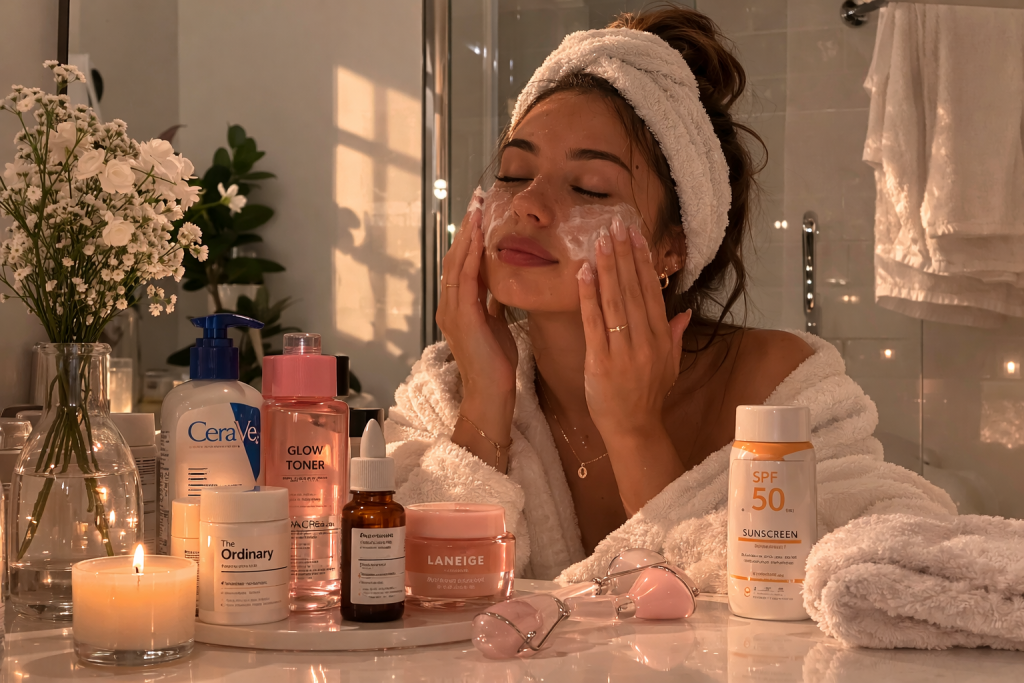
Regular use of a moisturizer contributes to skin hydration, barrier stability, and protection against environmental stressors. Dermatological studies indicate that maintaining adequate hydration in the stratum corneum is essential for preserving the structural integrity and physiological functions of the skin.
Moisturizers support the skin by replenishing water content, restoring lipids, and reducing moisture loss. Organizations such as the American Academy of Dermatology emphasize daily moisturization as a fundamental component of preventive skin care.
Skin Barrier Protection:
The skin barrier, located primarily in the stratum corneum, is responsible for preventing water loss and protecting the body from external irritants such as pollutants, microbes, and chemicals.
Moisturizers containing ceramides, fatty acids, and cholesterol help reinforce the lipid matrix of this barrier. When the barrier is strengthened, the skin becomes less vulnerable to dryness, irritation, and inflammation.
Summary
Moisturizers help maintain the structural integrity of the epidermal barrier, improving the skin’s ability to resist environmental stressors.
Key Takeaways
- Reinforces the lipid matrix of the skin barrier.
- Reduces vulnerability to irritants and environmental damage.
- Supports healthy epidermal function.
Improved Hydration:
One of the primary benefits of moisturizers is the increase in skin water content. Hydrating ingredients such as glycerin and hyaluronic acid draw water into the outer skin layer, improving moisture levels in the epidermis.
Adequate hydration contributes to:
- Improved skin elasticity
- Reduced dryness and flaking
- Smoother skin texture
Hydrated skin also appears more uniform and resilient.
Summary
Moisturizers increase water content in the outer skin layer, helping maintain smooth and flexible skin.
Key Takeaways
- Humectants attract water to the skin.
- Hydrated skin has improved elasticity and texture.
- Regular use prevents dryness.
Prevention of Transepidermal Water Loss:
Transepidermal water loss (TEWL) refers to the evaporation of water from the epidermis into the surrounding environment. Excessive TEWL is associated with dry, irritated, and compromised skin.
Occlusive ingredients such as petrolatum and dimethicone create a protective film that slows water evaporation, helping maintain optimal hydration levels.
Reducing TEWL is particularly important in dry climates and during colder seasons when environmental conditions accelerate moisture loss.
Summary
Moisturizers reduce transepidermal water loss, helping maintain hydration and skin barrier stability.
Key Takeaways
- Occlusive ingredients prevent water evaporation.
- Reduced TEWL supports long-term skin hydration.
- Barrier protection improves overall skin health.
Reduction of Dryness and Irritation:
Dry skin often leads to itching, redness, and scaling, which can result from a weakened epidermal barrier. Moisturizers containing soothing ingredients such as ceramides, glycerin, and colloidal oatmeal help alleviate these symptoms.
Maintaining adequate hydration also improves tolerance to skincare actives such as retinoids and exfoliating acids, which may otherwise cause irritation when the skin barrier is compromised.
Summary
Moisturizers help reduce dryness, irritation, and discomfort associated with barrier dysfunction.
Key Takeaways
- Hydration helps relieve itching and flaking.
- Barrier repair reduces sensitivity.
- Regular moisturization supports overall skin comfort.
Common Moisturizer Mistakes:
Incorrect use of moisturizers can reduce their effectiveness and may contribute to skin irritation, clogged pores, or inadequate hydration. Dermatology guidelines emphasize selecting appropriate formulations and applying them correctly to maintain the epidermal barrier and hydration balance.
Understanding common mistakes helps improve the effectiveness of moisturizing routines.
Using the Wrong Formula for Skin Type:
One of the most frequent mistakes is selecting a moisturizer that does not match the skin’s oil production and hydration needs.
Examples include:
- Heavy occlusive creams used on oily or acne-prone skin
- Lightweight gels used on extremely dry skin
- Fragranced products applied to sensitive skin
Using an unsuitable formulation may lead to excess oiliness, clogged pores, or insufficient hydration.
Summary
Choosing a moisturizer incompatible with the skin type can reduce hydration effectiveness and contribute to skin problems.
Key Takeaways
- Match moisturizer texture with skin type.
- Avoid heavy formulations for oily skin.
- Dry skin typically requires richer creams.
Overusing Heavy Moisturizers:
Applying excessively thick or occlusive moisturizers can create a heavy layer on the skin surface. While occlusive ingredients help prevent water loss, excessive use may interfere with normal skin function in individuals with oily or acne-prone skin.
Overuse can contribute to:
- Pore congestion
- Increased oiliness
- Product buildup on the skin surface
Moderate application using an appropriate formulation generally provides adequate hydration without these effects.
Summary
Overusing thick moisturizers may lead to pore congestion and excessive residue on the skin.
Key Takeaways
- Use appropriate quantities of moisturizer.
- Thick occlusive products are best suited for very dry skin.
- Lighter formulations are preferable for oily skin.
Skipping Moisturizer for Oily Skin:
Many individuals with oily skin avoid moisturizers due to the misconception that additional hydration increases oil production. However, dehydration can actually stimulate the sebaceous glands to produce more oil in an attempt to compensate for moisture loss.
Using lightweight, non-comedogenic moisturizers helps maintain hydration without contributing to excessive oiliness.
Summary
Even oily skin requires hydration to maintain balanced oil production and barrier stability.
Key Takeaways
- Oily skin can still experience dehydration.
- Lightweight moisturizers help maintain hydration.
- Avoid skipping moisturizer in daily skincare routines.
Applying Moisturizer Incorrectly:
Application technique also influences moisturizer effectiveness. Applying moisturizer to completely dry skin may reduce its ability to retain moisture.
Dermatology guidelines often recommend applying moisturizer immediately after cleansing or bathing, when the skin is slightly damp. This helps trap water within the stratum corneum.
Additional application errors include:
- Using too little product
- Inconsistent use
- Skipping moisturizing after exfoliation
Summary
Proper application improves the hydration retention and barrier support provided by moisturizers.
Key Takeaways
- Apply moisturizer on slightly damp skin.
- Use consistent daily application.
- Adequate product quantity improves effectiveness.
How to Apply Moisturizer Correctly:
Proper application techniques improve the effectiveness of moisturizers in maintaining hydration and protecting the skin barrier. Dermatology guidelines emphasize applying moisturizers in the correct order within a skincare routine and at the appropriate time to maximize water retention in the stratum corneum.
Best Time to Apply Moisturizer:
The most effective time to apply moisturizer is immediately after cleansing, bathing, or washing the face, when the skin is slightly damp. This timing helps trap water in the outer skin layer and reduces transepidermal water loss.
Dermatology organizations such as the American Academy of Dermatology recommend moisturizing within a few minutes after washing the skin to preserve hydration.
Daily moisturizing is typically recommended:
- Morning – to protect the skin during the day
- Night – to support overnight skin repair and hydration
Summary
Moisturizers should be applied shortly after cleansing while the skin is still slightly damp to maximize hydration retention.
Key Takeaways
- Apply moisturizer within minutes after washing the skin.
- Moisturize both morning and night.
- Damp skin improves moisture retention.
Moisturizer Order in Skincare Routine:
Moisturizers should be applied after lightweight products and before sunscreen during daytime routines. Proper layering ensures that each product can absorb effectively.
Typical skincare product order:
- Cleanser
- Toner (optional)
- Treatment products or serums
- Moisturizer
- Sunscreen (morning routine)
Moisturizers act as a sealing layer that helps lock in hydration and active ingredients applied earlier in the routine.
Summary
Moisturizers are applied after treatment products and before sunscreen in a standard skincare routine.
Key Takeaways
- Follow the lightest-to-heaviest product rule.
- Moisturizers help seal in hydration.
- Sunscreen should be applied after moisturizer during daytime.
Recommended Application Method:
The method used to apply moisturizer can influence how evenly the product spreads across the skin surface.
General dermatology recommendations include:
- Use a pea-sized amount for the face.
- Apply the moisturizer using gentle upward motions.
- Avoid excessive rubbing that may irritate the skin.
- Spread evenly across the face and neck.
Consistent daily application helps maintain hydration and support the epidermal barrier.
Summary
Applying moisturizer evenly with gentle movements ensures consistent hydration and barrier support across the skin surface.
Key Takeaways
- Use an appropriate amount of product.
- Apply using gentle, even strokes.
- Consistent daily use improves skin hydration.
Conclusion:
Selecting and using the best moisturizer is essential for maintaining skin hydration, barrier integrity, and overall skin health. A well-formulated moisturizer incorporates humectants, emollients, and occlusives to attract water, smooth the skin surface, and prevent moisture loss.
Key principles for choosing and using a moisturizer:
- Match formulation to skin type – lightweight gels for oily skin, rich creams for dry skin.
- Use effective ingredients – hyaluronic acid, glycerin, ceramides, niacinamide, shea butter, petrolatum.
- Apply correctly and consistently – after cleansing on slightly damp skin, following the proper product layering.
- Daily routine – morning for protection, night for repair.
Following these guidelines ensures the skin remains hydrated, resilient, and protected from environmental stressors, while minimizing common mistakes such as using the wrong texture or skipping hydration for oily skin.
Key Takeaways:
- Moisturizers support barrier function and hydration.
- Correct formulation and application maximize effectiveness.
- Daily, skin-type-appropriate use maintains long-term skin health.
Frequently Asked Questions (FAQs):
1. What is the best moisturizer for dry skin?
Answer: Creams or ointments containing ceramides, shea butter, glycerin, and petrolatum provide strong hydration and barrier support for dry skin.
2. Can oily skin use moisturizer?
Answer: Yes. Oily skin benefits from lightweight, non-comedogenic gels or lotions that hydrate without clogging pores.
3. What ingredients should I look for in a moisturizer?
Answer: Key ingredients include humectants (hyaluronic acid, glycerin), emollients (ceramides, fatty acids), and occlusives (petrolatum, shea butter).
4. How often should I apply moisturizer?
Answer: Moisturizer should be applied twice daily, after cleansing—once in the morning and once at night—for optimal hydration and barrier maintenance.
5. Can moisturizers help with sensitive skin?
Answer: Yes. Fragrance-free, gentle moisturizers with ceramides and glycerin strengthen the skin barrier and reduce irritation.
6. Does moisturizer prevent aging?
Answer: While moisturizers primarily hydrate and protect the skin barrier, adequate hydration reduces fine lines and improves skin elasticity, indirectly supporting a youthful appearance.
7. Can using too much moisturizer be harmful?
Answer: Overuse of heavy moisturizers, especially on oily or acne-prone skin, can clog pores, increase oiliness, and reduce product effectiveness.
References:
- American Academy of Dermatology. Skin Care Guidelines. https://www.aad.org/public/everyday-care/skin-care-basics
- American Academy of Dermatology. Skin Care Basics: Hydration and Barrier Care. https://www.aad.org/public/everyday-care/skin-care-basics
- National Institutes of Health. Skin Barrier Function and Moisturizers. https://www.nih.gov
