
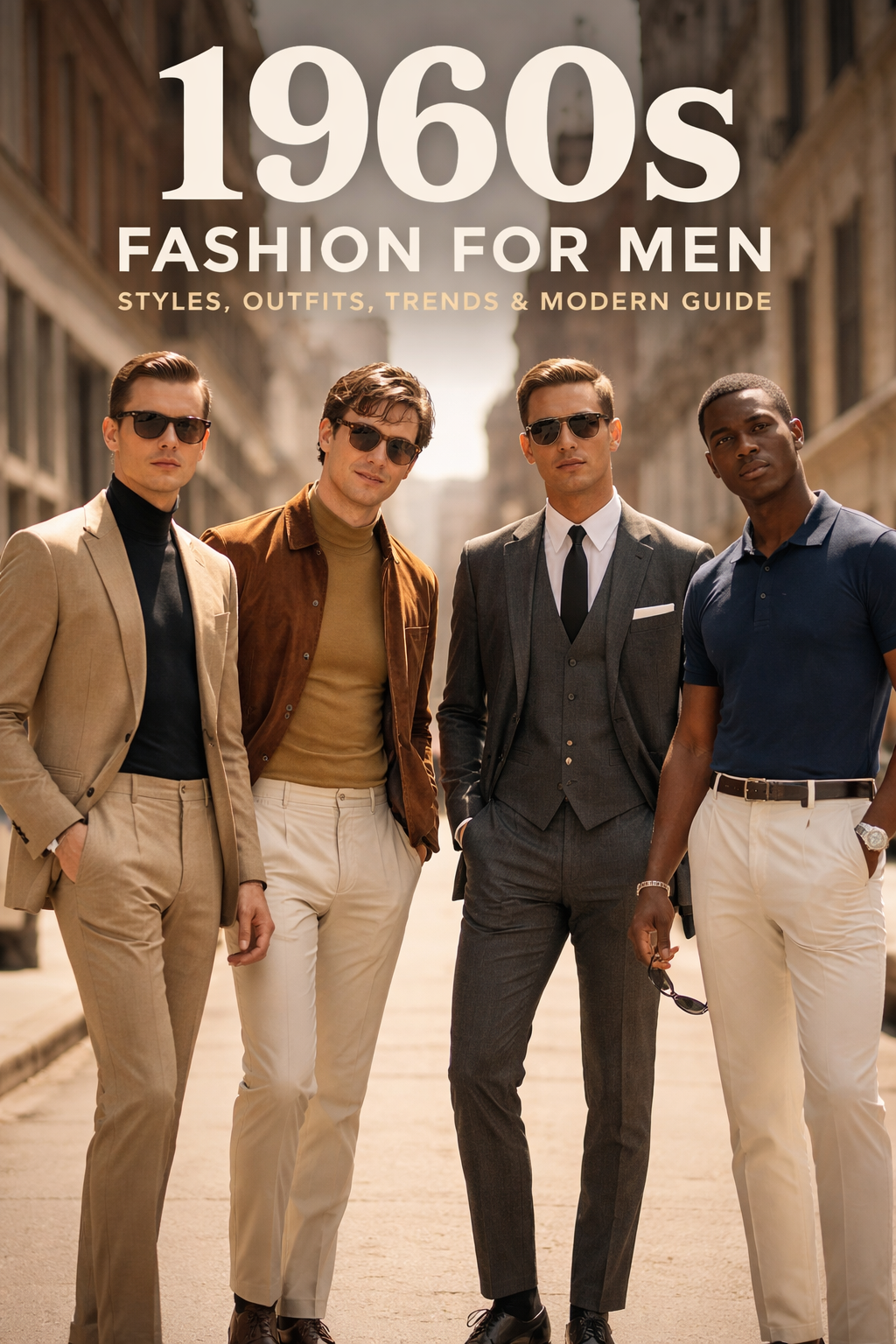
1960s fashion men marked a major shift from traditional, conservative styles to more expressive and experimental looks. Early in the decade, fashion emphasized clean tailoring and minimalism, while the later years introduced bold colors, patterns, and cultural influences driven by music and youth movements.
Key Characteristics
- Slim, tailored silhouettes replaced loose-fitting clothing
- Neutral colors dominated early years; bright and bold tones emerged later
- Influence of youth culture and music reshaped fashion trends
- Increased experimentation with patterns, textures, and fabrics
- Shift from formal to more casual and expressive styles
Why the 1960s Were Influential
- The decade introduced youth-driven fashion trends rather than traditional authority-based styles
- Cultural movements like the Mod movement and Hippie movement redefined men’s clothing
- Celebrities and musicians such as The Beatles and Steve McQueen shaped global fashion preferences
- Fashion became a form of self-expression, not just social conformity
Evolution Within the Decade
| Period | Style Focus | Key Features |
| Early 1960s | Classic & Formal | Slim suits, muted colors, clean lines |
| Mid 1960s | Mod Influence | Sharp cuts, bold patterns, tailored fits |
| Late 1960s | Experimental & Hippie | Bright colors, relaxed fits, psychedelic prints |
Summary
1960s men’s fashion evolved from structured, formal styles into bold and expressive looks influenced by youth culture, music, and social change. The decade is known for its transition from classic tailoring to experimental fashion.
Key Takeaways
- Early 60s focused on clean, tailored styles
- Late 60s introduced bold and experimental fashion
- Youth culture played a major role in shaping trends
- Music and celebrities influenced global style
Pros / Cons
Pros:
- Wide variety of styles within one decade
- Strong influence on modern fashion
- Balance between formal and casual wear
Cons:
- Some styles can appear outdated today
- Bold patterns may not suit all preferences
Common Mistakes
- Mixing early and late 60s styles incorrectly
- Overusing bold patterns without balance
- Ignoring the importance of fit and tailoring
Also read: FFXIV Fashion Report Explained: How to Score 80–100 Points & Earn MGP.
Early 1960s Men’s Fashion (Classic Style)
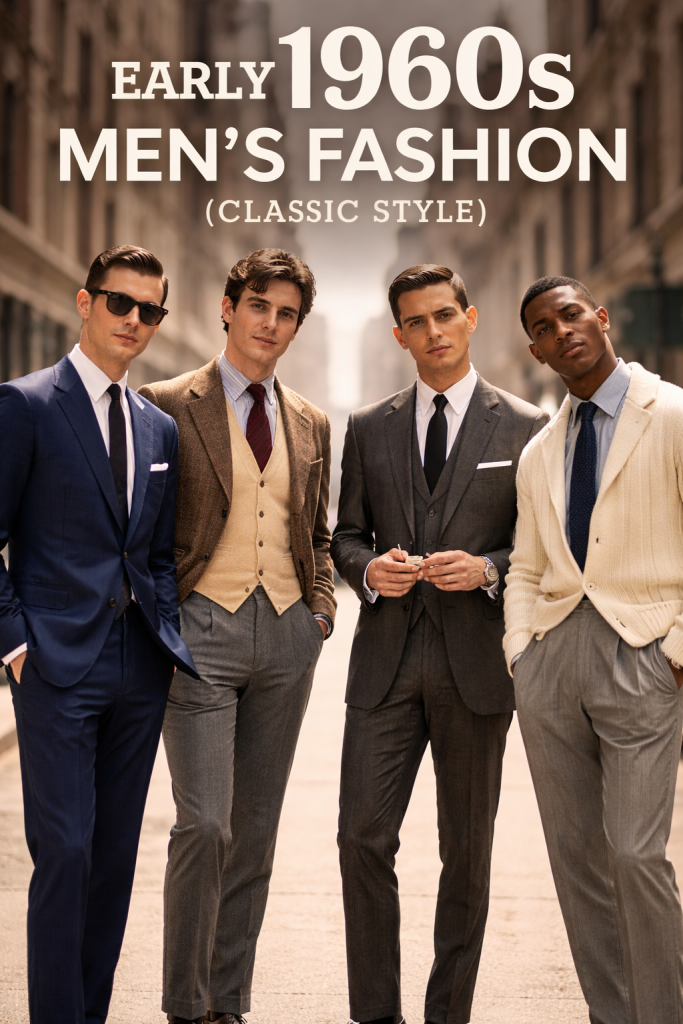
Early 1960s men’s fashion focused on clean, structured, and refined looks, heavily influenced by post-war conservatism and formal dress codes. The emphasis was on sharp tailoring, minimalism, and understated elegance, making this period one of the most polished eras in men’s style.
Slim Suits and Tailoring
- Suits became slimmer and more fitted compared to the 1950s
- Jackets featured:
- Narrow lapels
- Single-breasted designs
- Structured shoulders
- Trousers were:
- Flat-front
- Straight or slightly tapered
Influence:
- Icons like Steve McQueen popularized clean, effortless tailoring
Shirts and Ties
- Dress shirts were:
- Crisp and well-fitted
- Mostly white or light pastel colors
- Common styles:
- Button-down collars
- Spread collars
- Ties were:
- Slim and narrow
- Often solid or subtly patterned
Table: Shirt & Tie Features
| Element | Style |
| Shirt Fit | Slim, tailored |
| Colors | White, light blue, pastels |
| Tie Width | Narrow |
| Patterns | Minimal |
Footwear Trends
- Shoes maintained a formal and polished appearance
- Popular styles included:
- Leather Oxford shoes
- Loafers
- Brogues
- Colors:
- Black
- Brown
These shoes complemented the overall clean and professional aesthetic
Style Identity of Early 60s
| Feature | Description |
| Fit | Slim and structured |
| Colors | Neutral and muted |
| Patterns | Minimal |
| Overall Look | Formal and refined |
Summary
Early 1960s men’s fashion emphasized slim tailoring, neutral colors, and minimal design. The focus was on polished, formal clothing that reflected sophistication and simplicity.
Key Takeaways
- Slim-fit suits defined the era
- Shirts and ties were simple and refined
- Footwear remained formal and classic
- Minimalism was the core style principle
Pros / Cons
Pros:
- Timeless and elegant style
- Easy to adapt to modern fashion
- Clean and professional appearance
Cons:
- Limited color variety
- Less expressive compared to late 60s styles
Common Mistakes
- Wearing oversized suits instead of slim-fit
- Using bold patterns that don’t match the era
- Ignoring proper tailoring and fit
Late 1960s Men’s Fashion (Bold & Experimental)
Late 1960s men’s fashion shifted dramatically toward bold, expressive, and unconventional styles. Influenced by youth rebellion, music, and cultural movements, fashion became more colorful, relaxed, and experimental compared to the structured early 1960s.
Mod Style Influence
- The Mod (Modernist) movement introduced sharp, stylish, and trend-forward clothing
- Key features:
- Slim-cut suits with bold colors
- Geometric patterns
- Turtlenecks instead of traditional shirts
- Footwear:
- Chelsea boots
- Sleek loafers
Influence:
- Bands like The Beatles helped popularize Mod fashion globally
Hippie Fashion Trends
- Emerged in the late 1960s as a reaction against mainstream fashion
- Focused on:
- Comfort and freedom
- Natural fabrics
- Loose-fitting clothing
Common items:
- Flared trousers (bell-bottoms)
- Tie-dye shirts
- Fringed jackets
Influence:
- Artists like Elvis Presley contributed to the rise of expressive fashion styles
Psychedelic Patterns
- Bright and eye-catching designs became popular
- Patterns included:
- Swirls
- Abstract prints
- Floral designs
Color palette:
- Vibrant shades like:
- Orange
- Purple
- Yellow
- Neon tones
Style Comparison Shift
| Feature | Early 1960s | Late 1960s |
| Fit | Structured | Relaxed |
| Colors | Neutral | Bright and bold |
| Patterns | Minimal | Psychedelic |
| Influence | Formal culture | Youth & music |
Summary
Late 1960s men’s fashion embraced bold colors, experimental designs, and relaxed fits. Influenced by Mod and Hippie movements, it marked a shift toward individuality and self-expression.
Key Takeaways
- Fashion became more expressive and colorful
- Mod style introduced sharp, modern looks
- Hippie fashion emphasized comfort and freedom
- Psychedelic patterns defined late 60s aesthetics
Pros / Cons
Pros:
- Highly expressive and creative
- Wide variety of styles
- Strong cultural identity
Cons:
- Some styles may appear excessive today
- Harder to balance bold elements
Common Mistakes
- Mixing too many bold patterns at once
- Ignoring balance between colors and fit
- Confusing Mod and Hippie styles
Key Clothing Items in 1960s Men’s Fashion
1960s men’s fashion was defined by specific clothing pieces that evolved throughout the decade in fashion history. From tailored suits to relaxed trousers, these items formed the foundation of both early and late 60s styles.
Suits
- Central to men’s fashion in the early 1960s
- Characteristics:
- Slim-fit silhouettes
- Narrow lapels
- Single-breasted jackets
- Late 1960s variation:
- Brighter colors
- Velvet or textured fabrics
- Patterned designs
Shirts
- Early 60s:
- Plain dress shirts
- Light colors (white, pastel)
- Late 60s:
- Bold prints
- Psychedelic patterns
- Turtlenecks became popular
Trousers
- Early 60s:
- Straight-leg
- Slim fit
- Late 60s:
- Flared trousers (bell-bottoms)
- Looser and more relaxed fit
Outerwear
- Common outerwear styles:
- Trench coats
- Peacoats
- Tailored overcoats
- Late 60s additions:
- Fringed jackets
- Leather jackets
- Military-style coats
Clothing Items Overview Table
| Item | Early 1960s Style | Late 1960s Style |
| Suits | Slim, neutral | Bold, patterned |
| Shirts | Plain, formal | Printed, colorful |
| Trousers | Straight, fitted | Flared, relaxed |
| Outerwear | Structured coats | Experimental jackets |
Summary
Key clothing items in 1960s men’s fashion ranged from slim suits and formal shirts in the early decade to bold shirts, flared trousers, and experimental outerwear in the late 1960s.
Key Takeaways
- Suits were the foundation of early 60s fashion
- Shirts evolved from simple to bold patterns
- Trousers shifted from slim to flared
- Outerwear became more expressive over time
Pros / Cons
Pros:
- Wide variety of clothing styles
- Strong influence on modern fashion
- Adaptable to different occasions
Cons:
- Some late 60s styles may be difficult to style today
- Requires balance between classic and bold elements
Common Mistakes
- Wearing incorrect fit (too loose or too tight)
- Mixing early and late 60s items without cohesion
- Overusing bold pieces without balance
Accessories and Footwear
Accessories and footwear played a crucial role in defining 1960s men’s fashion, adding personality and completing the overall look. While early 1960s styles focused on subtle and refined accessories, the late 1960s introduced more expressive and statement pieces.
Shoes (Chelsea Boots, Loafers)
- Popular footwear styles included:
- Chelsea boots
- Loafers
- Oxford shoes
- Brogues
- Early 1960s:
- Formal leather shoes in black or brown
- Late 1960s:
- Sleeker designs with a modern edge
- Boots became more prominent
Table: Footwear Overview
| Shoe Type | Style Use | Era |
| Oxford | Formal wear | Early 60s |
| Loafers | Smart casual | Early–Mid 60s |
| Chelsea boots | Mod fashion | Mid–Late 60s |
| Brogues | Classic style | Throughout |
Hats and Sunglasses
- Hats:
- Fedora (early 60s formal style)
- Flat caps (casual wear)
- Sunglasses:
- Simple, classic frames early in the decade
- Bold, tinted lenses in the late 60s
Sunglasses became more expressive as fashion evolved.
Watches and Belts
- Watches:
- Slim and minimal
- Leather straps preferred
- Belts:
- Simple leather belts (early 60s)
- Wider and more decorative styles (late 60s)
Table: Accessories Impact
| Accessory | Purpose | Style Impact |
| Watch | Function + style | Subtle elegance |
| Belt | Practical | Completes outfit |
| Sunglasses | Protection + fashion | Adds personality |
| Hat | Style statement | Defines era look |
Style Balance
- Early 60s:
- Minimal accessories
- Focus on refinement
- Late 60s:
- More expressive accessories
- Statement pieces became common
Summary
Accessories and footwear in the 1960s evolved from subtle, classic pieces to bold fashion statements. Shoes like Chelsea boots and accessories like sunglasses became key elements of personal style.
Key Takeaways
- Footwear defined both formal and casual looks
- Accessories became more expressive over time
- Early 60s favored minimalism
- Late 60s embraced bold statements
Pros / Cons
Pros:
- Enhances overall outfit
- Allows personal expression
- Easy to adapt to modern style
Cons:
- Over-accessorizing can disrupt balance
- Some styles may feel outdated
Common Mistakes
- Wearing too many accessories at once
- Mismatching shoes with outfit style
- Ignoring the importance of subtle details
Hairstyles and Grooming
Hairstyles and grooming were essential elements of 1960s men’s fashion, reflecting the broader cultural shift from conservative appearance to individual expression. Throughout the decade, grooming trends evolved from clean-cut styles to longer, more relaxed looks influenced by music and youth culture.
Popular Haircuts
- Early 1960s:
- Short, neat, and well-groomed hair
- Side-parted styles were dominant
- Clean and professional appearance
- Mid to Late 1960s:
- Longer hair became popular
- Natural texture was embraced
- Less rigid styling compared to earlier years
Influence:
- Bands like The Beatles popularized longer, layered hairstyles that became widely adopted
Facial Hair Trends
- Early 1960s:
- Clean-shaven look was standard
- Minimal facial hair for a polished appearance
- Late 1960s:
- Beards and mustaches became more common
- Influenced by the Hippie movement and counterculture
Table: Grooming Evolution
| Feature | Early 1960s | Late 1960s |
| Hair Length | Short | Medium to long |
| Styling | Structured | Natural |
| Facial Hair | Clean-shaven | Beards, mustaches |
Grooming Style Identity
- Early 60s:
- Formal and disciplined grooming
- Late 60s:
- Relaxed and expressive appearance
Summary
1960s hairstyles and grooming evolved from short, clean-cut styles to longer, more natural looks. Facial hair, once uncommon, became a symbol of individuality in the late 1960s.
Key Takeaways
- Early 60s favored short, neat hairstyles
- Late 60s embraced longer, natural hair
- Facial hair became popular later in the decade
- Grooming reflected cultural and social changes
Pros / Cons
Pros:
- Wide variety of styles
- Strong cultural identity
- Easy to adapt to modern trends
Cons:
- Some styles may require maintenance
- Longer styles may not suit all face shapes
Common Mistakes
- Mixing early and late 60s grooming styles incorrectly
- Over-styling hair when a natural look is required
- Ignoring face shape when choosing hairstyle
Influential Figures in 1960s Men’s Fashion
1960s men’s fashion was heavily shaped by cultural icons from music, film, and popular culture. These figures influenced global style trends, turning fashion into a form of identity and expression rather than just tradition.
Musicians
- Musicians played a major role in defining 1960s fashion
- Bands like The Beatles introduced:
- Slim suits (early years)
- Bold, experimental outfits (later years)
- Their evolving style reflected the shift from formal to expressive fashion
Actors
- Film stars influenced classic and masculine fashion styles
- Steve McQueen became known for:
- Minimalist, rugged style
- Clean tailoring with a casual edge
- Other actors promoted:
- Sharp suits
- Timeless wardrobe pieces
Cultural Icons
- Elvis Presley influenced:
- Bold stage outfits
- Statement fashion choices
- Cultural movements and public figures:
- Encouraged individuality
- Broke traditional fashion rules
Influence Breakdown Table
| Category | Influence on Fashion |
| Musicians | Introduced new trends and bold styles |
| Actors | Maintained classic and refined looks |
| Cultural Icons | Encouraged experimentation |
Impact on Fashion Trends
- Shift from authority-driven fashion to celebrity-driven trends
- Increased acceptance of:
- Bold colors
- Unique patterns
- Personal expression
Summary
Influential figures in the 1960s transformed men’s fashion by introducing new styles and encouraging individuality. Musicians, actors, and cultural icons played a key role in shaping both classic and experimental trends.
Key Takeaways
- Celebrities drove fashion trends in the 1960s
- Musicians introduced bold and experimental styles
- Actors maintained classic fashion influence
- Cultural icons encouraged self-expression
Pros / Cons
Pros:
- Diverse fashion inspiration
- Strong cultural influence
- Evolution of personal style
Cons:
- Some trends may not translate well today
- Over-imitation can reduce originality
Common Mistakes
- Copying styles without adapting to modern context
- Mixing conflicting influences
- Ignoring personal fit and comfort
How to Dress in 1960s Style Today
Recreating 1960s men’s fashion today involves combining classic elements with modern tailoring while maintaining the distinctive aesthetics of the decade. The goal is to capture the essence of the era without appearing outdated or overly costume-like.
Modern Outfit Ideas
- Classic Early 60s Look:
- Slim-fit suit
- White dress shirt
- Narrow tie
- Leather Oxford shoes
- Mod-Inspired Outfit:
- Tailored blazer
- Turtleneck
- Slim trousers
- Chelsea boots
- Late 60s Casual Look:
- Patterned shirt
- Flared or straight trousers
- Loafers or boots
Table: Outfit Ideas
| Style | Key Items | Occasion |
| Early 60s | Slim suit, tie | Formal events |
| Mod style | Blazer, turtleneck | Smart casual |
| Late 60s | Patterned shirt | Casual outings |
Mixing Vintage with Modern
- Use modern fits with vintage-inspired pieces
- Combine:
- Classic colors with subtle patterns
- One statement piece per outfit
- Example:
- Modern slim jeans + vintage-style jacket
Budget-Friendly Tips
- Buy:
- Thrifted or vintage-inspired clothing
- Affordable modern brands with retro styles
- Focus on:
- Fit over brand
- Versatile pieces
- Avoid:
- Overpaying for rare vintage items
Style Balance Guidelines
| Rule | Explanation |
| Keep it simple | Avoid too many bold elements |
| Focus on fit | Tailoring is key |
| Add one statement piece | Prevents over-styling |
Summary
Dressing in 1960s style today requires balancing vintage inspiration with modern fashion. Focus on tailored fits, simple combinations, and one standout element to achieve an authentic yet wearable look.
Key Takeaways
- Combine vintage style with modern fit
- Focus on tailoring and simplicity
- Use one statement piece per outfit
- Avoid full costume-style dressing
Pros / Cons
Pros:
- Timeless and stylish appearance
- Easy to adapt to modern wardrobes
- Wide range of outfit options
Cons:
- Requires careful styling balance
- Some vintage items can be expensive
Common Mistakes
- Dressing like a costume instead of modern interpretation
- Overusing bold patterns
- Ignoring proper fit and tailoring
Common Mistakes to Avoid
When recreating or studying 1960s men’s fashion, many people unintentionally mix styles incorrectly or misinterpret key design principles. Avoiding these mistakes ensures a more accurate and visually balanced understanding of the era.
Mixing Early and Late 1960s Styles Incorrectly
- Early 1960s fashion is formal, structured, and minimal
- Late 1960s fashion is bold, relaxed, and expressive
Common mistake:
- Combining slim formal suits with psychedelic patterns or flared trousers in the same outfit
Ignoring Proper Fit and Tailoring
- Fit was a defining element of 1960s style
- Early 60s: slim and precise tailoring
- Late 60s: relaxed but still intentional silhouettes
Mistake:
- Wearing oversized modern clothing and calling it “1960s style”
Overusing Bold Patterns
- Late 1960s introduced strong prints and colors
- However, balance was still important
Mistake:
- Wearing multiple loud patterns in one outfit
- Creates visual clutter instead of vintage authenticity
Using Inaccurate Modern Substitutes
- Some modern clothing does not reflect 1960s structure
- Examples:
- Too stretchy fabrics
- Extremely baggy streetwear
- Incorrect shoe types
Style Balance Table
| Mistake | Correct Approach |
| Mixing eras | Stick to one 60s sub-era per outfit |
| Poor fit | Prioritize tailoring |
| Too many patterns | Use one statement piece |
| Modern streetwear | Choose retro-inspired cuts |
Summary
The most common mistakes in 1960s men’s fashion involve mixing eras, ignoring tailoring, and overusing bold patterns. Staying consistent with either early or late 60s styling creates a more authentic look.
Key Takeaways
- Do not mix early and late 60s styles randomly
- Fit and tailoring are essential
- Limit bold patterns to one focal point
- Avoid modern streetwear elements
Pros / Cons of Getting It Right
Pros:
- More authentic vintage appearance
- Cleaner and more stylish outfits
- Better visual balance
Cons:
- Requires attention to detail
- Needs basic understanding of fashion eras
Common Mistakes Summary
- Mixing conflicting fashion eras
- Overloading outfits with patterns
- Ignoring proper fit
- Using modern styles that break authenticity
Conclusion
1960s men’s fashion represents one of the most transformative decades in modern style history. It began with structured, slim tailoring and minimal design in the early years, then evolved into bold, expressive, and experimental fashion in the late 1960s. Influenced by cultural movements, music, and film icons such as The Beatles, the decade redefined men’s clothing as a form of personal expression. Today, its styles continue to inspire modern tailoring, retro outfits, and contemporary street fashion interpretations.
FAQs
1. What did men typically wear in the 1960s?
Men wore slim-fit suits, dress shirts, narrow ties, and leather shoes in the early 1960s, while the late 1960s introduced flared trousers, patterned shirts, and more relaxed clothing.
2. What is Mod fashion in the 1960s?
Mod fashion was a youth-driven style focused on sharp tailoring, slim silhouettes, bold colors, and modern designs, heavily influenced by British culture and music.
3. What shoes were popular in 1960s men’s fashion?
Popular shoes included Oxford shoes, loafers, brogues, and later Chelsea boots, which became a key part of Mod fashion.
4. How did 1960s men’s fashion change over time?
It evolved from formal and minimal styles in the early 60s to bold, colorful, and experimental designs in the late 60s influenced by youth culture and music.
5. Who influenced men’s fashion in the 1960s?
Major influences included musicians like The Beatles, actors like Steve McQueen, and cultural icons like Elvis Presley.
6. Can you wear 1960s fashion today?
Yes, modern fashion often incorporates 1960s elements such as slim suits, turtlenecks, Chelsea boots, and patterned shirts, adapted with modern tailoring.
7. What defined late 1960s men’s fashion?
Late 1960s fashion was defined by bold patterns, flared trousers, psychedelic prints, and relaxed silhouettes influenced by the Hippie movement.
References
- Levi’s – Historical influence on denim and casual wear evolution
- Brooks Brothers – Classic tailoring and menswear heritage
- The Beatles – Cultural impact on 1960s fashion and Mod style
- Steve McQueen – Influence on minimalist, masculine style
- Fashion history archives and academic studies on fashion history
- General menswear evolution studies and vintage fashion documentation
