
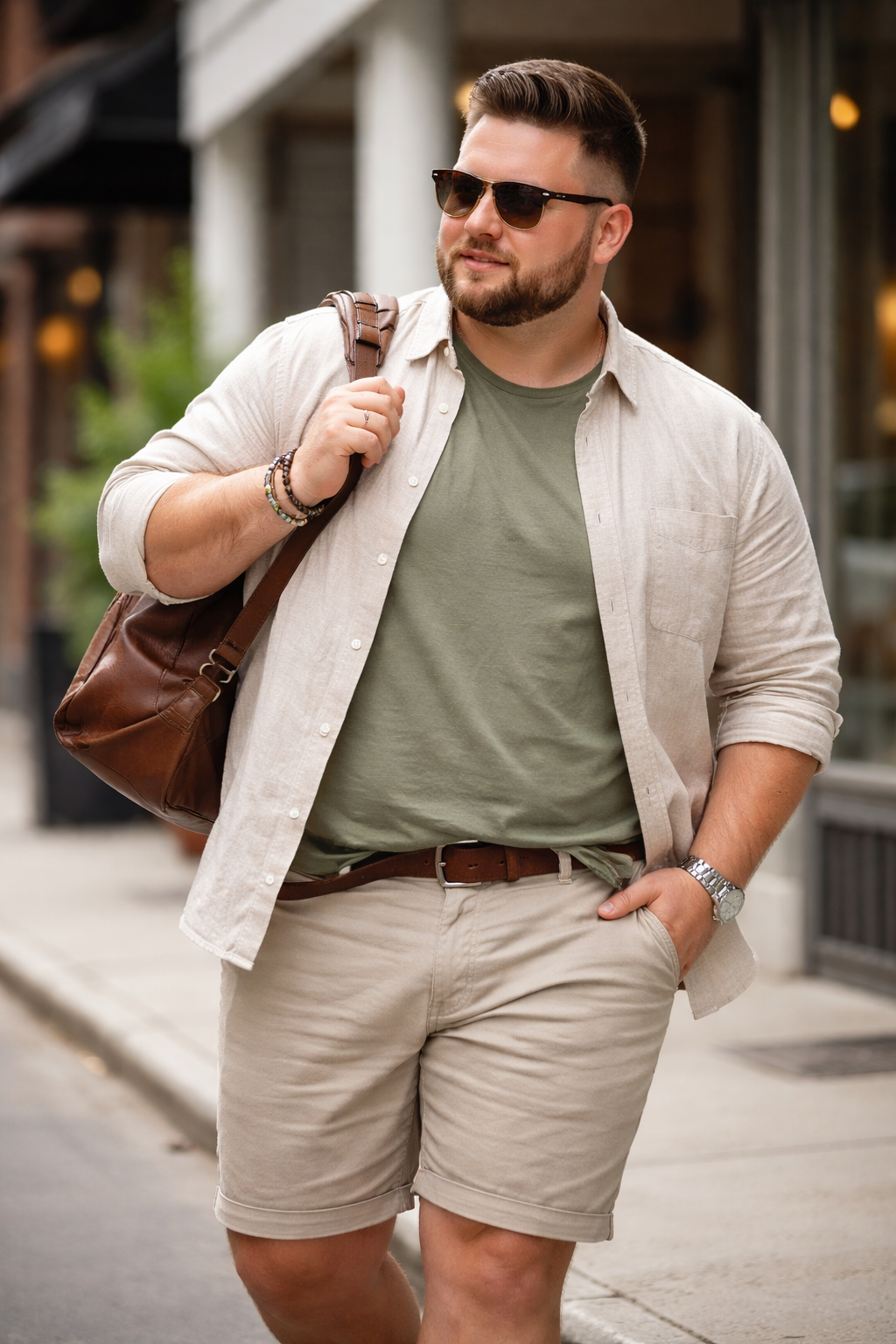
Fat men fashion focuses on fit, proportion, and balance, not limiting style choices. In modern styling, the goal is not to hide the body but to create clean structure and visual harmony through well-fitted clothing and smart outfit choices.
For plus-size or big & tall men, the most important rule is that proper fit always matters more than size label. Clothes that are too tight highlight discomfort, while overly loose clothing can remove shape entirely. The ideal approach is balanced tailoring that follows natural body lines.
Why Fit Matters More Than Size:
- Proper fit improves posture appearance
- Creates a cleaner and more structured silhouette
- Enhances confidence and visual balance
- Prevents bulkiness or unnecessary widening
Common Misconceptions in Men’s Fashion:
| Misconception | Reality |
| Baggy clothes hide weight | They often add visual bulk |
| Dark colors are the only option | Any color works with proper fit |
| Style is limited for bigger bodies | Style depends on structure, not size |
| Tight clothes look more “fit” | They emphasize discomfort and uneven lines |
Confidence in fat men fashion as a Styling Factor:
Confidence plays a major role in how an outfit is perceived. Even simple outfits can look stylish when worn with good posture and correct fit. Clothing should support comfort, movement, and natural presence rather than restrict it.
Key confidence-based styling principles:
- Wear clothes that allow easy movement
- Maintain upright posture for better silhouette
- Choose outfits that feel comfortable all day
- Avoid overthinking trends; focus on consistency
Summary:
Fashion for plus-size men is centered around proper fit, balanced proportions, and confidence-driven styling rather than hiding body size or following restrictive rules.
Key Takeaways:
- Fit is more important than clothing size
- Overly baggy clothes increase visual bulk
- Style is not limited by body size
- Confidence improves outfit appearance
- Balance and structure create better looks
Common Mistakes:
- Choosing oversized clothing to “hide” body shape
- Assuming style options are limited
- Ignoring comfort for appearance
- Following trends without considering fit
Core Styling Principles for Bigger Body Types:
Styling for bigger body types is based on creating proportion, structure, and visual balance. In plus-size or big & tall men’s fashion, the goal is not to hide the body but to shape a clean silhouette using fit, layering, and line direction.
The most effective styling approach focuses on three core principles:
- Proper fit (not tight, not oversized)
- Vertical visual lines
- Proportion balancing between upper and lower body
Proper Fit vs Oversized Clothing:
| Fit Type | Effect | Recommendation |
| Slim Fit | Can feel tight and emphasize shape unevenly | Use carefully, only if stretchable |
| Regular Fit | Balanced and most recommended | Best everyday choice |
| Oversized Fit | Adds unnecessary bulk | Avoid unless styled intentionally |
A structured regular fit is generally the safest and most flattering option for most outfits.
Vertical Balance Techniques:
Vertical styling helps create a longer and slimmer visual effect. This is achieved by guiding the eye up and down instead of side-to-side.
Key techniques:
- Wear vertical stripes instead of horizontal ones
- Use open jackets or shirts to create vertical lines
- Choose V-neck collars to elongate the neck area
- Keep color transitions smooth from top to bottom
Proportion Correction Rules:
Proper proportion ensures no part of the outfit feels visually heavier than another.
- If upper body is broader → use darker or simpler tops
- If lower body is heavier → choose straight-fit trousers
- Avoid extreme contrasts between top and bottom sizes
- Keep layering minimal but structured
Summary:
Core styling principles for bigger body types focus on maintaining proper fit, using vertical lines for visual length, and balancing proportions to create a clean and structured appearance.
Key Takeaways:
- Regular fit is the most balanced clothing choice
- Vertical lines create a slimming visual effect
- Proportion balance is essential for clean styling
- Avoid unnecessary oversized clothing
- Layering should remain structured, not bulky
Common Mistakes:
- Wearing oversized clothes to hide body shape
- Mixing extreme proportions between top and bottom
- Using horizontal patterns that widen appearance
- Over-layering without structure
Also read: Home
Best Clothing Styles for Big Men:
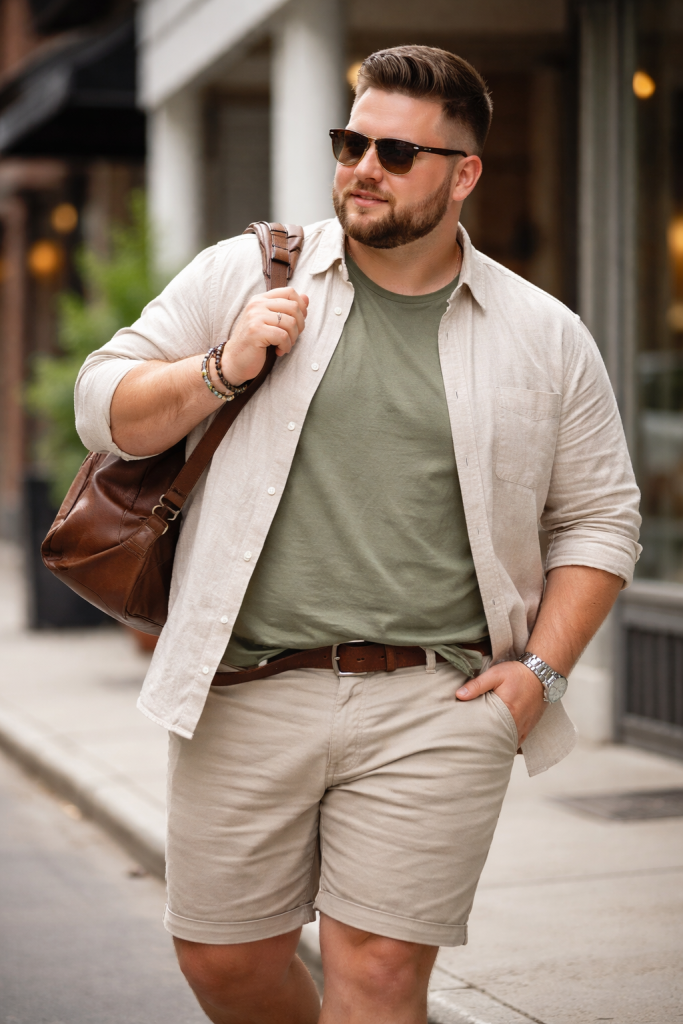
Choosing the right clothing styles is essential for creating a balanced, structured, and confident appearance. For bigger body types, the focus should be on outfits that provide clean lines, proper fit, and visual harmony across the entire look.
Instead of limiting style choices, the goal is to adapt fashion categories in a way that complements body proportions.
Casual Outfits:
Casual wear should prioritize comfort while still maintaining structure.
Recommended pieces:
- Regular-fit T-shirts (not tight, not oversized)
- Straight-fit jeans or chinos
- Lightweight overshirts or unstructured jackets
- Minimal graphic designs or plain colors
Style tip:
- Keep layers light to avoid adding unnecessary bulk
- Choose darker or neutral tones for a cleaner base look
Formal Outfits:
Formal styling for bigger men focuses on sharp structure and clean tailoring.
Recommended pieces:
- Single-breasted blazers
- Straight-leg dress pants
- Solid-colored dress shirts
- Minimal tie patterns
Style tip:
- Slightly tailored blazers improve shoulder definition
- Avoid double-breasted jackets unless perfectly fitted
- Keep shirts tucked for better proportion
Streetwear Looks:
Streetwear can work well when properly balanced with fit control.
Recommended pieces:
- Boxy but structured hoodies
- Straight or relaxed-fit cargo pants
- Clean sneakers with minimal design
- Layered tees with open overshirts
Style tip:
- Avoid overly oversized streetwear pieces
- Focus on structured layering instead of volume
- Stick to 2–3 colors per outfit
Smart Casual Combinations:
Smart casual outfits combine structure with relaxed comfort.
Examples:
- Polo shirt + chinos + loafers
- Button-down shirt + jeans + sneakers
- Lightweight sweater + straight pants
Style tip:
- Maintain balance between formal and casual elements
- Avoid overly loose tops with loose bottoms
Summary:
Best clothing styles for bigger men include structured casual wear, well-fitted formal outfits, balanced streetwear, and smart casual combinations that maintain proportion and clean visual lines.
Key Takeaways:
- Casual wear should stay simple and structured
- Formal outfits require proper tailoring
- Streetwear works when not overly oversized
- Smart casual is the most versatile style option
- Balance and fit matter more than trends
Common Mistakes:
- Wearing oversized streetwear thinking it looks stylish
- Using baggy clothing in both top and bottom
- Ignoring tailoring in formal outfits
- Overloading outfits with too many layers
Color & Pattern Guide for Slimming Effect:
Color and pattern selection plays a major role in how an outfit is visually perceived. In plus-size or big & tall men’s fashion, the goal is to use color contrast and pattern direction to create a more balanced and structured appearance.
When applied correctly, colors and patterns can naturally enhance proportions without relying on restrictive clothing.
Dark vs Light Color Impact:
| Color Type | Effect | Best Use |
| Dark Colors | Create slimming visual effect | Base outfits, trousers, jackets |
| Light Colors | Add visual volume | Highlight areas like shirts or layers |
| Neutral Colors | Balanced appearance | Everyday wear |
Key principle:
- Dark tones reduce visual bulk
- Light tones should be used strategically, not excessively
Vertical Patterns and Stripes:
Vertical patterns help guide the eye up and down, creating a longer and leaner appearance.
Recommended patterns:
- Thin vertical stripes
- Subtle pinstripes
- Long line design elements
Style tip:
- Keep stripe spacing narrow for better slimming effect
- Combine vertical patterns with solid colors for balance
What Patterns to Avoid:
Some patterns can make the body appear wider or unbalanced if used incorrectly.
Avoid:
- Large horizontal stripes
- Oversized bold prints across the chest
- Busy all-over patterns
- High contrast patch designs
These patterns can break visual flow and increase perceived width.
Balanced Color Strategy:
A simple and effective approach is:
- Dark base (pants or jacket)
- Neutral mid-layer (shirt or hoodie)
- Controlled accent color (shoes or accessories)
This creates a structured, visually clean outfit.
Summary:
Color and pattern choices in big men’s fashion should focus on dark tones, vertical lines, and minimal contrast to create a slimming and balanced visual effect.
Key Takeaways:
- Dark colors create a slimming effect
- Vertical patterns improve visual height
- Avoid large horizontal designs
- Neutral tones offer balance and flexibility
- Controlled contrast improves outfit structure
Common Mistakes:
- Wearing large horizontal stripes
- Using too many bright colors at once
- Choosing oversized bold prints
- Ignoring balance between top and bottom colors
Fabric & Fit Selection Guide:
Fabric choice and fit quality are two of the most important elements in plus-size or big & tall men’s fashion. The right materials improve comfort, structure, and overall appearance, while poor fabric choices can make outfits look bulky or unbalanced.
A well-selected fabric supports the body naturally without adding unnecessary volume.
Breathable Fabrics:
Breathable materials help maintain comfort while keeping the outfit light and structured.
Recommended fabrics:
- Cotton (soft, versatile, breathable)
- Linen (lightweight and airy for warm weather)
- Cotton blends (durable with slight stretch)
- Jersey knit (comfortable for casual wear)
Style benefit:
- Prevents overheating
- Reduces stiffness in movement
- Maintains natural body flow
Structured vs Soft Materials:
| Fabric Type | Effect | Best Use |
| Structured fabrics | Hold shape and improve silhouette | Jackets, trousers |
| Soft fabrics | Comfortable but less shape control | T-shirts, loungewear |
Key principle:
- Structured fabrics create a cleaner outline
- Soft fabrics should be balanced with fitted cuts
Tailoring Importance:
Tailoring is one of the most effective ways to improve clothing fit for bigger body types.
Benefits of tailoring:
- Adjusts clothing to natural proportions
- Removes excess bulk in key areas
- Enhances shoulder and waist definition
- Improves overall outfit symmetry
Even small adjustments can significantly improve appearance without changing clothing style.
Fit Selection Rules:
- Shoulder seams should align naturally
- Clothes should skim the body, not cling or hang loosely
- Pants should fall straight without excessive tightness
- Sleeves and hems should avoid excess bunching
Summary:
Fabric and fit selection directly influence comfort and appearance. Breathable materials, structured fabrics, and proper tailoring help create a balanced and well-defined silhouette for bigger body types.
Key Takeaways:
- Cotton and linen are ideal breathable fabrics
- Structured materials improve body shape definition
- Tailoring enhances fit and appearance significantly
- Proper fit is more important than fabric trend
- Avoid overly stiff or overly loose materials
Common Mistakes:
- Wearing heavy fabrics that add bulk
- Ignoring tailoring adjustments
- Choosing clothes that hang loosely without structure
- Prioritizing style over comfort and fit
Outfit Formulas for Easy Dressing:
Outfit formulas simplify styling by giving ready-made combinations that consistently work for big and tall men. Instead of guessing what matches, these formulas focus on balance, proportion, and clean structure in everyday dressing.
For plus-size fashion, formulas help reduce mistakes and ensure outfits always look intentional and well-put together.
Everyday Outfit Formulas:
| Outfit Type | Combination | Style Result |
| Casual Basic | Plain T-shirt + straight jeans + sneakers | Clean and simple |
| Smart Casual | Polo shirt + chinos + loafers | Balanced and neat |
| Layered Casual | T-shirt + open shirt + jeans | Vertical structure effect |
| Minimal Streetwear | Hoodie + joggers + clean sneakers | Relaxed but controlled |
Key idea:
- Keep combinations simple and avoid over-layering
Office Outfit Formulas:
Professional outfits should focus on structure and clean lines.
Examples:
- Button-down shirt + tailored trousers + dress shoes
- Solid polo + chinos + minimal loafers
- Light blazer + shirt + straight-fit pants
Style tip:
- Stick to neutral colors like navy, grey, black, and white
- Ensure shirts are properly fitted, not tight or loose
Party Outfit Formulas:
Party wear allows slightly more style flexibility while maintaining balance.
Examples:
- Dark shirt + black jeans + boots
- Printed shirt (minimal design) + neutral trousers
- Lightweight jacket + fitted tee + sneakers
Style tip:
- Use one statement piece only
- Keep rest of outfit simple to avoid visual clutter
Simple Styling Rule:
A reliable formula to remember:
1 fitted top + 1 structured bottom + 1 clean footwear choice
This ensures:
- Balanced proportions
- Clean silhouette
- Easy coordination
Summary:
Outfit formulas make dressing simple and effective by combining balanced pieces into ready-made looks that enhance structure, proportion, and everyday style confidence.
Key Takeaways:
- Outfit formulas remove guesswork
- Simplicity improves appearance
- Balance is more important than trends
- One statement piece per outfit is enough
- Structure ensures better proportions
Common Mistakes:
- Overcomplicating outfits with too many layers
- Mixing unrelated styles in one look
- Ignoring fit in favor of trends
- Using too many bold elements together
Common Fashion Mistakes Big Men Should Avoid:
Many style issues in plus-size or big & tall men’s fashion come from fit errors, poor proportion choices, and misunderstanding how clothing affects visual shape. Avoiding these mistakes can instantly improve overall appearance without changing your entire wardrobe.
Wearing Overly Tight Clothes:
Tight clothing does not create a slimmer look. Instead, it highlights body shape in an unbalanced way and can make movement uncomfortable.
Problems caused:
- Emphasizes body areas unevenly
- Restricts comfort and mobility
- Breaks clean silhouette lines
Better approach:
- Choose regular or slightly relaxed fits
- Ensure clothes skim the body instead of clinging
Excessively Baggy Outfits:
On the opposite end, overly loose clothing creates unnecessary bulk and hides body structure completely.
Problems caused:
- Adds visual weight
- Removes body definition
- Creates shapeless appearance
Better approach:
- Use structured fits instead of oversized styles
- Maintain balance between top and bottom proportions
Wrong Layering Choices:
Layering can improve style, but incorrect layering adds bulk instead of structure.
Common issues:
- Too many thick layers
- Unbalanced jacket sizes
- Random color stacking
Better approach:
- Use light, structured layers
- Keep inner layers simple
- Maintain vertical flow in outfit design
Ignoring Proportion Balance:
Uneven outfit proportions can disrupt visual harmony.
Examples of mistakes:
- Oversized top with oversized pants
- Short tops with wide bottoms
- Heavy upper layers with no structure below
Better approach:
- Balance fitted and relaxed pieces
- Keep silhouette consistent from top to bottom
Overcomplicating Fashion Choices:
Trying too many trends at once often reduces overall style quality.
Problems:
- Confusing visual appearance
- Lack of clear style identity
- Reduced outfit coordination
Better approach:
- Stick to simple, consistent outfit formulas
- Focus on fit and structure over trends
Summary:
Big men’s fashion mistakes usually come from incorrect fit choices, poor layering, and ignoring proportion balance. Avoiding these issues leads to a cleaner, more confident, and structured appearance.
Key Takeaways:
- Avoid both overly tight and overly baggy clothing
- Layering should add structure, not bulk
- Proportion balance is essential for good styling
- Simplicity improves overall appearance
- Fit matters more than trends
Common Mistakes:
- Wearing clothes that are too tight or too loose
- Over-layering outfits without structure
- Ignoring body proportion rules
- Mixing too many styles in one outfit
Best Clothing Brands for Plus-Size Men:
Choosing the right brands can make styling easier because many labels now design specifically for big & tall or plus-size men’s fashion, focusing on better fit, proportion, and comfort.
Instead of forcing standard sizing, these brands offer structured cuts that naturally suit larger body types.
Affordable Brands:
These brands provide budget-friendly options without sacrificing basic fit quality.
- H&M (plus-size & relaxed fits)
- Uniqlo (clean, minimal structured basics)
- ASOS Design (wide size range, trendy options)
- Levi’s (straight-fit jeans and durable denim)
Style benefit:
- Easy access to everyday essentials
- Good balance of price and quality
- Wide availability online and offline
Premium Brands:
Premium brands focus on better tailoring, fabric quality, and long-term durability.
- Ralph Lauren (classic structured fashion)
- Nike (athletic plus-size streetwear fits)
- Tommy Hilfiger (smart casual styling)
- Adidas (sportswear with extended sizing)
Style benefit:
- Better fabric structure
- More refined cuts
- Longer-lasting wardrobe pieces
Online Shopping Options:
Online platforms offer the widest size availability and styling variety.
- Amazon Fashion (large size inventory)
- ASOS (extended plus-size collections)
- Zalando (international fashion options)
- Brand official websites (best sizing accuracy)
Style tip:
- Always check size charts before purchasing
- Read fit reviews for accuracy
- Prioritize return-friendly platforms
Choosing the Right Brand Strategy:
Instead of focusing on one brand, build a mixed wardrobe:
- Basics from affordable brands
- Statement pieces from premium brands
- Seasonal or trend items from online stores
This ensures:
- Budget control
- Style flexibility
- Better overall outfit balance
Summary:
The best clothing brands for plus-size men offer a mix of affordability, structure, and sizing flexibility, helping create a wardrobe that balances comfort, fit, and style.
Key Takeaways:
- Affordable brands are ideal for basics
- Premium brands improve long-term wardrobe quality
- Online stores offer the widest size options
- Mixing brands creates better style balance
- Fit consistency is more important than brand name
Common Mistakes:
- Relying on only one brand for all clothing
- Ignoring size charts when shopping online
- Choosing style over proper fit
- Overpaying for unnecessary premium items
Confidence & Personal Style Development:
Style is not only about clothing—it is also about how you carry yourself and develop a consistent personal identity through fashion. For plus-size or big & tall men, confidence plays a major role in how outfits are perceived.
Well-fitted clothing combined with strong personal presence creates a balanced and stylish appearance regardless of body size.
Building a Signature Look:
A signature style helps create consistency and makes dressing easier.
Steps to build it:
- Choose 2–3 core colors for your wardrobe
- Stick to a preferred fit type (usually regular fit)
- Identify repeatable outfit formulas
- Keep accessories minimal and consistent
Style benefit:
- Easier daily outfit decisions
- Strong personal identity
- More polished overall appearance
Grooming Importance:
Grooming is a key part of fashion presentation and strongly influences overall style impact.
Key grooming areas:
- Haircut that matches face shape
- Beard shaping for structure
- Clean, well-maintained skin
- Neat and intentional appearance
Style tip:
- Grooming should complement outfit structure, not compete with it
Posture and Presence:
Body posture significantly affects how clothing looks on the body.
Improved presence includes:
- Standing upright with relaxed shoulders
- Avoiding slouched posture
- Walking with balanced movement
- Wearing clothes with natural confidence
Impact:
- Enhances silhouette appearance
- Improves outfit structure visibility
- Creates stronger overall impression
Confidence-Based Styling Rules:
- Wear clothes that feel comfortable all day
- Avoid constantly adjusting outfits
- Focus on fit over trend pressure
- Choose clothing that reflects personality
Confidence transforms even simple outfits into strong style statements.
Summary:
Confidence and personal style development are essential in plus-size fashion, combining grooming, posture, and consistent outfit choices to create a strong and balanced appearance.
Key Takeaways:
- Signature style simplifies dressing decisions
- Grooming enhances overall fashion impact
- Posture improves how clothes appear
- Comfort builds natural confidence
- Consistency creates stronger personal identity
Common Mistakes:
- Copying trends without personal fit consideration
- Ignoring grooming as part of style
- Poor posture affecting outfit appearance
- Changing style too frequently without consistency
Frequently Asked Questions (FAQs):
This section answers the most common questions about plus-size / big & tall men’s fashion, helping clarify styling rules, outfit choices, and confidence-building strategies.
What clothes make fat men look slimmer?
Clothes that create a clean vertical line and proper structure help achieve a slimmer visual effect. Best choices include:
- Regular-fit shirts (not tight or oversized)
- Straight-leg trousers or jeans
- Dark or neutral colors
- Vertical striped patterns
These elements reduce visual width and improve balance.
Should big men wear baggy clothes?
No, overly baggy clothes are not recommended. While they may feel comfortable, they often:
- Add unnecessary visual bulk
- Remove body definition
- Make outfits look shapeless
A better option is structured regular-fit clothing.
Which colors suit plus-size men best?
Color choice depends on balance, but generally:
- Dark colors create a slimming effect
- Neutral tones offer versatility
- Light colors should be used as accents
Best combination:
- Dark base + neutral middle layer + light accent
How can big men dress stylishly every day?
A simple daily formula is:
- Fitted top + straight-fit bottom + clean shoes
Also:
- Stick to outfit formulas
- Avoid over-layering
- Focus on fit and structure
Do tight clothes help in looking fit?
No. Tight clothing often emphasizes uneven body lines and reduces comfort. Proper fit should:
- Follow body shape naturally
- Allow movement
- Maintain clean silhouette
What is the best outfit style for big men?
The best styles include:
- Smart casual outfits
- Structured streetwear
- Well-fitted formal wear
- Minimalist everyday fashion
These styles prioritize balance and proportion.
How can confidence improve fashion style?
Confidence improves how clothing appears by:
- Enhancing posture
- Making outfits look intentional
- Reducing overthinking
- Improving overall presence
Even simple outfits look better when worn confidently.
Summary:
Big men’s fashion is built on proper fit, balanced colors, and structured outfit choices. Confidence and consistency play a major role in improving overall appearance and style impact.
Key Takeaways:
- Slimming effect comes from vertical structure
- Baggy clothes reduce style quality
- Fit matters more than color alone
- Outfit formulas simplify daily dressing
- Confidence enhances overall appearance
Common Mistakes:
- Choosing oversized clothing to hide body shape
- Ignoring fit in favor of trends
- Overusing dark colors without balance
- Wearing unstructured outfits daily
Conclusion:
Plus-size or big & tall men’s fashion is centered on fit, proportion, structure, and confidence rather than body size limitations. When clothing is chosen correctly, it enhances appearance by creating clean visual lines and balanced silhouettes instead of focusing on hiding the body.
The key principles—proper fit, vertical styling, smart color selection, and structured layering—work together to create outfits that look intentional and well-composed. As highlighted throughout this guide, confidence and consistency are just as important as clothing choices in achieving a strong personal style.
By following simple outfit formulas, avoiding common mistakes, and selecting appropriate fabrics and brands, any man can build a functional and stylish wardrobe that works for everyday life, formal occasions, and casual wear.
FAQs:
What is the most important rule in plus-size men’s fashion?
The most important rule is proper fit, not size. Clothes should neither be too tight nor too loose.
Can big men wear trendy clothes?
Yes. Trends can be worn effectively when adjusted for fit and proportion balance.
What type of shirts are best for big men?
Regular-fit shirts, polo shirts, and structured button-down shirts work best.
Are dark clothes always better for bigger body types?
Dark colors help create a slimming effect, but balance with neutral and light tones is also important.
How can big men improve their style quickly?
Focus on:
- Better fit
- Simple outfit formulas
- Proper grooming
- Minimal but structured layering
References:
- Fashion and Apparel Fit Guidelines (General Industry Standards)
- Body Proportion & Visual Styling Principles in Men’s Fashion Design
- Retail Sizing and Fit Recommendations from major fashion brands
- Modern Menswear Styling Principles (Smart Casual & Formal Wear Standards)
- Contemporary Plus-Size Fashion Guidelines from global apparel industry practices
