
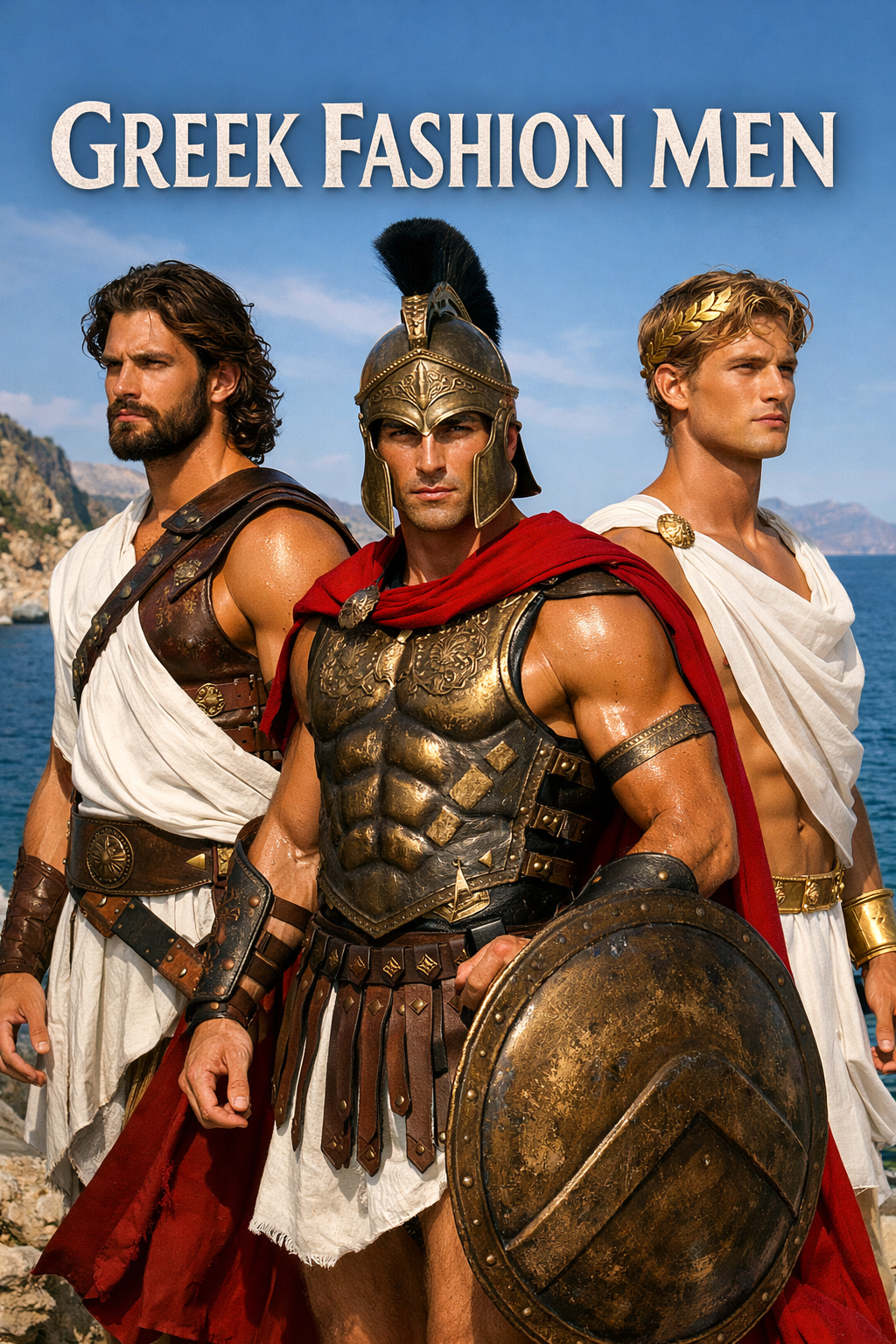
Greek fashion men is defined by a combination of climate-driven practicality, cultural heritage, and minimalist aesthetics. Originating from Ancient Greece and evolving through modern European influences, it reflects both tradition and contemporary style.
The fashion style in Greece is heavily shaped by its Mediterranean environment, favoring lightweight fabrics, breathable designs, and relaxed silhouettes. This results in clothing that is both functional and visually clean.
What Defines Greek Fashion:
Key characteristics include:
- Lightweight and breathable fabrics like linen and cotton
- Neutral and earthy color palettes
- Relaxed yet structured fits
- Minimalist design with low visual clutter
- Practical styling suited for warm climates
Greek fashion prioritizes comfort, simplicity, and natural elegance over heavy layering or complex styling.
Influence of Climate and Culture:
The Mediterranean climate plays a major role in shaping clothing choices:
- Hot summers require light, airy fabrics
- Mild winters allow simple layering
- Coastal lifestyle encourages relaxed outfits
Culturally, Greek fashion reflects:
- Historical influences from ancient garments
- Traditional clothing used in ceremonies
- Modern European fashion trends
Evolution from Ancient to Modern:
Greek men’s fashion has evolved significantly over time:
| Era | Style Characteristics | Influence |
| Ancient Greece | Draped garments like chitons | Simplicity and function |
| Traditional Period | Structured cultural outfits | Identity and heritage |
| Modern Greece | Minimalist European fashion | Comfort and versatility |
This evolution shows a shift from draped garments to structured modern outfits, while still maintaining a focus on simplicity and practicality.
Summary:
Greek men’s fashion combines historical influence, Mediterranean climate practicality, and modern minimalist style to create clean, breathable, and versatile clothing.
Key Takeaways:
- Greek fashion is influenced by climate and culture
- Lightweight fabrics are essential
- Minimalism defines modern style
- Historical roots still influence design
- Comfort and practicality are priorities
Common Mistakes:
- Over-layering in warm climates
- Choosing heavy fabrics unsuitable for weather
- Ignoring simplicity in styling
- Mixing overly complex patterns
Also read: Skincare Routine Steps & Best Ingredients for Healthy, Glowing Skin
Ancient Greek Men’s Clothing Styles:
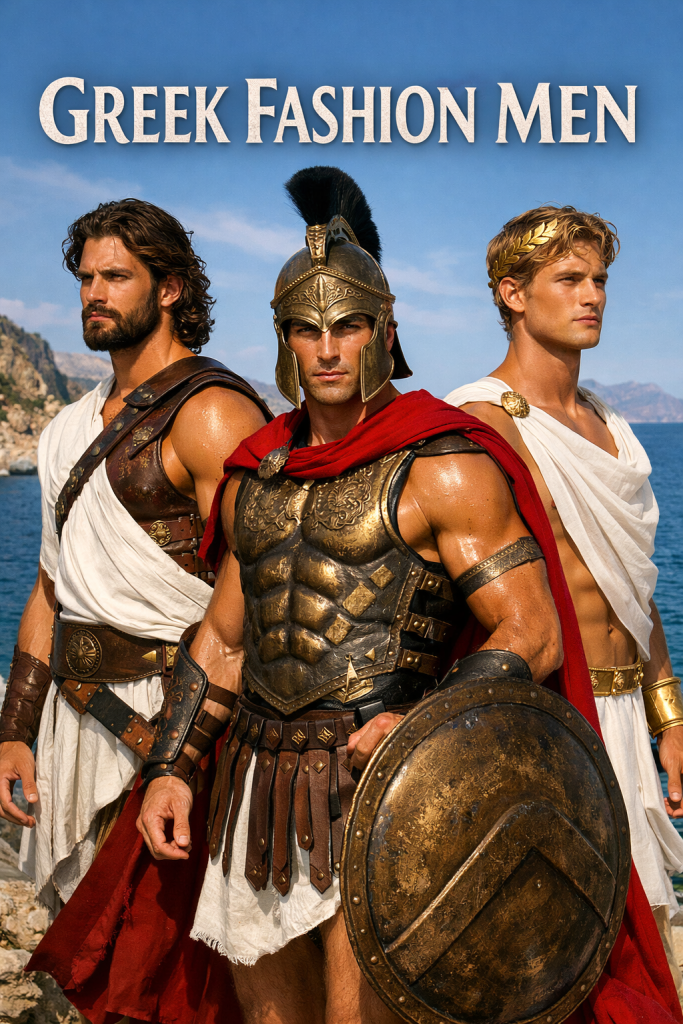
Men’s clothing in Ancient Greece was based on simplicity, draping, and functionality rather than stitching and complex tailoring. Garments were typically made from rectangular pieces of fabric, wrapped and secured around the body to create natural flow and movement.
These styles influenced not only traditional Greek clothing but also modern minimalist fashion concepts.
Chiton and Himation:
The two most common garments worn by men were the chiton and the himation.
- Chiton:
A basic tunic made from linen or wool, worn close to the body. It could be short (for daily activities) or long (for formal occasions). - Himation:
A large rectangular cloak draped over the chiton, used for warmth or as an outer garment. It added a layer of elegance and status.
Key features:
- Loose, flowing design
- Adjustable fit through draping
- Suitable for warm climates
Materials and Draping Styles:
Clothing materials were chosen based on climate and availability:
| Material | Purpose | Benefit |
| Linen | Everyday wear | Lightweight and breathable |
| Wool | Cooler weather | Provides warmth |
| Cotton (less common) | Comfort use | Soft texture |
Draping styles allowed:
- Flexibility in movement
- Natural body ventilation
- Customizable fit without tailoring
Footwear and Accessories:
Footwear and accessories were minimal but functional.
Common items:
- Leather sandals for daily use
- Simple belts to secure garments
- Cloaks for added layering
Style characteristics:
- Practical design
- Minimal decoration
- Focus on utility over fashion complexity
Summary:
Ancient Greek men’s clothing focused on draped garments like the chiton and himation, using lightweight materials and simple designs suited for climate and daily life.
Key Takeaways:
- Clothing was based on draping, not tailoring
- Chiton and himation were primary garments
- Linen and wool were commonly used materials
- Style emphasized simplicity and function
- Minimal accessories were used
Common Mistakes:
- Assuming ancient clothing was heavily structured
- Confusing draped garments with modern tailoring
- Overestimating the use of complex accessories
- Ignoring the importance of climate in design
Traditional Greek Clothing for Men:
Traditional men’s clothing in Greece reflects strong cultural identity, regional diversity, and historical heritage. Unlike ancient draped garments, traditional outfits became more structured, decorative, and symbolic, especially during festivals and national events.
These garments are still worn today in ceremonies, cultural celebrations, and performances.
Fustanella Outfit:
The most iconic traditional outfit is the fustanella, a pleated white skirt-like garment worn by men, often paired with other distinctive elements.
Key components:
- White pleated fustanella (symbol of heritage)
- Fitted shirt with wide sleeves
- Waistcoat or vest (often embroidered)
- Long woolen stockings
- Leather shoes (tsarouchia) with pom-poms
Style significance:
- Represents bravery and national identity
- Historically worn by warriors and guards
- Now associated with ceremonial dress
Regional Variations:
Traditional Greek clothing varies by region, reflecting local customs and climate differences.
Examples:
- Mountain regions: heavier fabrics and darker tones
- Coastal areas: lighter fabrics and simpler designs
- Island regions: more relaxed and breathable styles
These variations show how clothing adapted to both environment and lifestyle.
Cultural Significance:
Traditional clothing carries symbolic meaning beyond fashion.
Key aspects:
- Represents historical identity and heritage
- Worn during national celebrations and cultural events
- Preserves traditional craftsmanship and design
- Reflects social and regional identity
Even in modern times, these outfits remain an important part of Greek culture and tradition.
Summary:
Traditional Greek men’s clothing is structured and symbolic, with the fustanella as its most iconic piece, representing cultural identity, heritage, and regional diversity.
Key Takeaways:
- Fustanella is the most recognizable traditional outfit
- Clothing varies by region and climate
- Designs are more structured than ancient styles
- Strong cultural and historical significance
- Still used in ceremonies and celebrations
Common Mistakes:
- Confusing traditional clothing with ancient Greek garments
- Assuming all regions share identical styles
- Viewing traditional outfits as everyday wear
- Ignoring cultural meaning behind designs
Modern Greek Men’s Fashion Trends:
Modern men’s fashion in Greece blends Mediterranean practicality with contemporary European minimalism. The focus is on clean silhouettes, breathable fabrics, and effortless styling suited to a warm climate and relaxed lifestyle.
Unlike traditional or ancient styles, modern Greek fashion emphasizes wearability, simplicity, and versatility.
Minimalist European Style:
A key feature of modern Greek fashion is its alignment with broader European minimalist trends.
Core elements:
- Neutral color palettes (white, beige, navy, black)
- Clean lines and simple designs
- Limited patterns and branding
- Focus on quality over quantity
Style benefit:
- Creates a polished and timeless look
- Easy to mix and match outfits
- Works for both casual and semi-formal settings
Summer-Focused Outfits:
Due to the Mediterranean climate, summer fashion dominates Greek style.
Common outfit choices:
- Linen shirts with rolled sleeves
- Lightweight cotton T-shirts
- Tailored shorts or chinos
- Breathable trousers
Style tip:
- Prioritize airflow and comfort
- Avoid heavy layering
- Stick to light fabrics and relaxed fits
Casual Streetwear:
Greek streetwear is more refined and minimal compared to oversized global trends.
Typical pieces:
- Slim or regular-fit jeans
- Basic T-shirts and polos
- Lightweight jackets or overshirts
- Clean sneakers or loafers
Style characteristics:
- No excessive layering
- Balanced proportions
- Subtle color coordination
Summary:
Modern Greek men’s fashion focuses on minimalist design, breathable fabrics, and summer-friendly outfits that combine comfort with clean, stylish presentation.
Key Takeaways:
- Minimalism defines modern Greek style
- Summer clothing dominates due to climate
- Neutral colors are widely used
- Streetwear is simple and structured
- Comfort and practicality are key
Common Mistakes:
- Over-layering in warm weather
- Using heavy or synthetic fabrics
- Following oversized trends excessively
- Adding too many patterns or bold elements
Key Elements of Greek Style:
Greek men’s fashion is built on a few essential elements that create its clean, breathable, and effortlessly stylish appearance. These elements are consistent across both traditional influences and modern adaptations in Greece.
Understanding these core components helps in recreating Greek-inspired outfits in a practical and wearable way.
Light Fabrics (Linen, Cotton):
Lightweight fabrics are the foundation of Greek style due to the Mediterranean climate.
Recommended fabrics:
- Linen (highly breathable and ideal for summer)
- Cotton (soft and versatile for everyday wear)
- Cotton-linen blends (balance of comfort and structure)
Benefits:
- Keeps the body cool in warm weather
- Allows better airflow
- Creates a relaxed and natural look
Neutral and Earthy Colors:
Greek fashion relies heavily on colors inspired by nature.
Common palette:
- White (fresh and clean look)
- Beige and sand tones (coastal influence)
- Olive green (natural earthy tone)
- Navy and light blue (sea-inspired shades)
Style tip:
- Combine light and neutral tones for a balanced outfit
- Avoid overly bright or clashing colors
Relaxed Yet Structured Fits:
Greek style balances comfort with form by avoiding extremes in fit.
Fit guidelines:
- Clothes should follow the body naturally
- Avoid overly tight or oversized clothing
- Use structured pieces like tailored trousers or fitted shirts
Effect:
- Maintains a clean silhouette
- Enhances natural proportions
- Improves overall outfit balance
Simplicity and Minimalism:
Minimalism is a defining feature of Greek fashion.
Key principles:
- Limit accessories
- Avoid excessive patterns
- Focus on clean, simple designs
- Keep outfits visually uncluttered
This creates a timeless and versatile wardrobe that works across different occasions.
Summary:
Greek style is defined by lightweight fabrics, neutral color palettes, balanced fits, and minimalist design, creating outfits that are both practical and visually refined.
Key Takeaways:
- Linen and cotton are essential fabrics
- Neutral and earthy tones dominate
- Fit should be relaxed but structured
- Minimalism enhances overall style
- Simplicity creates timeless outfits
Common Mistakes:
- Wearing heavy fabrics in warm climates
- Using too many bright or contrasting colors
- Choosing overly tight or oversized fits
- Over-accessorizing outfits
Greek-Inspired Outfit Ideas for Men:
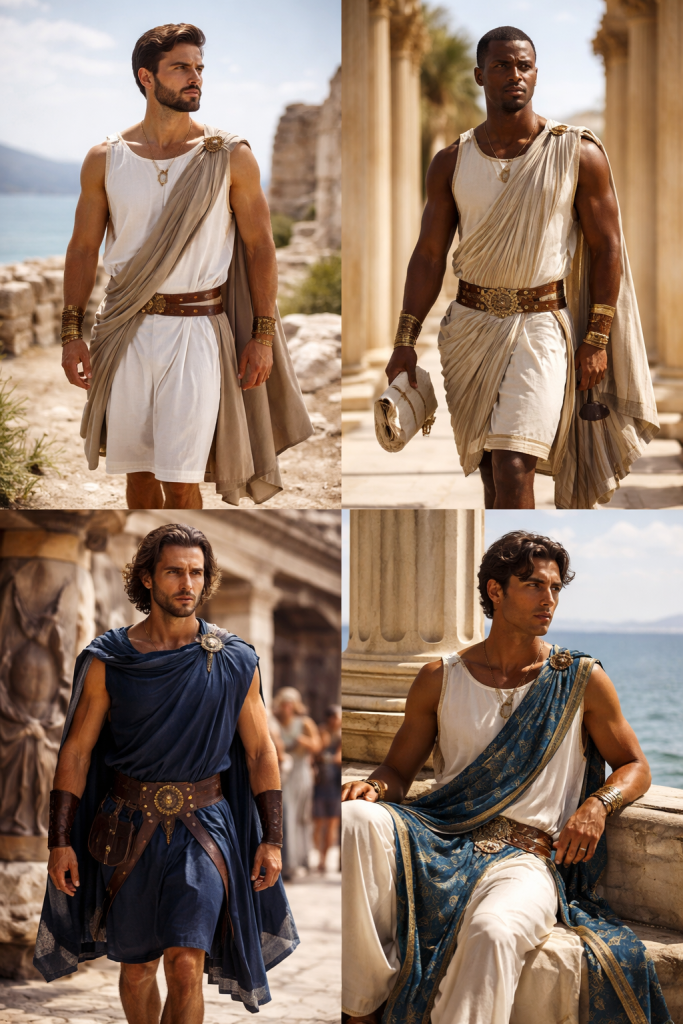
Greek-inspired outfits focus on lightweight fabrics, neutral tones, and clean silhouettes, making them practical for everyday wear while reflecting Mediterranean style. These outfits are designed to be simple, breathable, and visually balanced.
Casual Outfits:
Casual Greek style is relaxed yet polished, suitable for daily wear.
Examples:
- White linen shirt + beige chinos + loafers
- Cotton T-shirt + light denim jeans + sneakers
- Short-sleeve shirt + tailored shorts + sandals
Style tip:
- Keep colors neutral and soft
- Avoid heavy layering
Beachwear Looks:
Beachwear is a key part of Greek fashion due to its coastal lifestyle.
Examples:
- Linen shirt (open) + swim shorts + sandals
- Light tank top + cotton shorts + flip-flops
- Loose shirt + drawstring shorts
Style tip:
- Focus on breathable fabrics
- Stick to light colors like white, sky blue, and beige
Smart Casual Outfits:
Smart casual combines structure with comfort.
Examples:
- Polo shirt + chinos + loafers
- Button-down shirt + tailored trousers + sneakers
- Lightweight blazer + T-shirt + slim pants
Style tip:
- Keep outfits simple and balanced
- Avoid bold patterns
Evening Outfits:
Evening looks in Greek style are clean and slightly refined.
Examples:
- Dark shirt + light trousers + loafers
- Linen shirt + dark chinos + dress shoes
- Minimal blazer + fitted shirt + neutral pants
Style tip:
- Use darker tones for evening balance
- Maintain minimalism
Outfit Ideas Table:
| Occasion | Outfit | Style Tip |
| Casual | Linen shirt + chinos | Keep colors light |
| Beach | Open shirt + shorts | Use breathable fabrics |
| Smart Casual | Polo + trousers | Maintain structure |
| Evening | Dark shirt + chinos | Add contrast |
Summary:
Greek-inspired outfits are simple, breathable, and versatile, using neutral colors and lightweight fabrics to create balanced looks for different occasions.
Key Takeaways:
- Linen and cotton dominate outfit choices
- Neutral colors create clean looks
- Simplicity improves overall style
- Different outfits suit different occasions
- Minimalism is key in all styles
Common Mistakes:
- Over-layering in warm weather
- Using heavy fabrics
- Adding too many accessories
- Ignoring color balance
Seasonal Greek Fashion Guide:
Greek men’s fashion changes slightly with the seasons, but the core principle remains the same: comfort, breathability, and simplicity adapted to the Mediterranean climate of Greece.
Unlike colder regions, Greek fashion emphasizes light layering and fabric selection rather than heavy seasonal wardrobe changes.
Summer Styling:
Summer is the most dominant season in Greek fashion due to long, hot weather conditions.
Recommended clothing:
- Linen shirts and lightweight cotton T-shirts
- Tailored shorts or breathable trousers
- Light colors such as white, beige, and sky blue
- Sandals, espadrilles, or lightweight sneakers
Style approach:
- Keep outfits minimal and airy
- Avoid layering unless necessary
- Prioritize comfort and airflow
Winter Adaptations:
Winters in Greece are generally mild, so heavy clothing is rarely needed.
Recommended clothing:
- Lightweight jackets or blazers
- Knit sweaters or long-sleeve shirts
- Darker tones such as navy, grey, and black
- Straight-fit trousers or jeans
Style approach:
- Use light layering instead of bulky coats
- Maintain clean and simple silhouettes
Layering Techniques:
Layering in Greek fashion is subtle and functional rather than heavy.
Effective layering:
- T-shirt + light overshirt
- Shirt + thin jacket
- Sweater + lightweight coat
Guidelines:
- Keep layers thin and structured
- Avoid stacking multiple heavy pieces
- Maintain vertical flow for a clean look
Summary:
Seasonal Greek fashion focuses on lightweight summer styling and minimal winter layering, adapting to the Mediterranean climate while maintaining simplicity and comfort.
Key Takeaways:
- Summer fashion dominates Greek style
- Lightweight fabrics are essential year-round
- Winter requires only light layering
- Neutral and seasonal colors improve balance
- Layering should remain minimal and structured
Common Mistakes:
- Wearing heavy winter clothing unnecessarily
- Over-layering outfits
- Ignoring climate when choosing fabrics
- Using dark, heavy styles in summer
Footwear & Accessories in Greek Fashion:
Footwear and accessories in Greek men’s fashion are minimal, functional, and climate-appropriate, aligning with the overall philosophy of simplicity and practicality in Greece.
Rather than bold or heavy styling, the focus is on clean, versatile pieces that complement the outfit without overpowering it.
Sandals and Loafers:
Footwear choices are heavily influenced by the warm Mediterranean climate.
Common options:
- Leather sandals (ideal for casual and beachwear)
- Loafers (perfect for smart casual and evening looks)
- Minimal sneakers (for everyday wear)
Style tip:
- Stick to neutral colors like brown, black, white, or tan
- Choose lightweight and breathable designs
Sunglasses and Minimal Accessories:
Accessories are kept simple and purposeful.
Common accessories:
- Sunglasses (essential for sunny weather)
- Simple watches (leather or metal strap)
- Minimal jewelry (if any)
Style principle:
- Less is more
- Avoid excessive or flashy accessories
Bags and Belts:
Functional accessories complete the outfit while maintaining clean design.
Recommended items:
- Leather belts (match with shoes for consistency)
- Tote bags or small backpacks
- Crossbody bags for casual use
Style tip:
- Keep designs simple and neutral
- Avoid bulky or oversized accessories
Summary:
Greek fashion uses minimal footwear and accessories, focusing on comfort, functionality, and clean design that complements the overall outfit without adding visual clutter.
Key Takeaways:
- Sandals and loafers are key footwear choices
- Accessories should remain minimal
- Neutral colors improve versatility
- Functionality is as important as style
- Clean design enhances overall look
Common Mistakes:
- Wearing heavy or bulky footwear in warm weather
- Over-accessorizing outfits
- Choosing flashy or overly complex designs
- Ignoring color coordination between accessories
Common Mistakes to Avoid:
Even with a strong understanding of Greek-inspired fashion, many people make styling mistakes that weaken the overall look. In Greece fashion culture, the focus is on simplicity, balance, and climate-appropriate dressing, so avoiding unnecessary complexity is essential.
Over-Layering:
One of the most common mistakes is adding too many layers.
Problems:
- Makes outfits feel heavy and uncomfortable
- Breaks the clean Mediterranean aesthetic
- Reduces breathability in warm climates
Better approach:
- Use light, minimal layering only when needed
- Stick to 1–2 visible layers maximum
Wrong Fabric Choices:
Fabric selection is critical in Greek fashion.
Mistakes:
- Wearing thick wool or heavy synthetics in warm weather
- Choosing non-breathable materials
- Ignoring seasonal fabric needs
Better approach:
- Use linen, cotton, and lightweight blends
- Prioritize airflow and comfort
Ignoring Climate:
Greek style is deeply connected to the Mediterranean climate.
Mistakes:
- Dressing too heavily in summer
- Using winter-heavy outfits in mild weather
- Overcomplicating seasonal transitions
Better approach:
- Adapt clothing to weather conditions
- Keep summer outfits light and winter outfits minimal
Over-Accessorizing:
Accessories should support the outfit, not dominate it.
Mistakes:
- Wearing too many jewelry pieces
- Using flashy or oversized accessories
- Creating visual clutter
Better approach:
- Stick to minimal sunglasses, watches, and belts
- Maintain clean and simple design
Poor Color Balance:
Color coordination is a key part of Greek-inspired style.
Mistakes:
- Mixing too many bright or clashing colors
- Ignoring neutral tones
- Overusing dark colors in warm seasons
Better approach:
- Use neutral and earthy tones
- Balance light and dark shades carefully
Summary:
Common mistakes in Greek fashion include over-layering, wrong fabric choices, ignoring climate, excessive accessories, and poor color balance. Avoiding these ensures a clean, minimal, and culturally aligned style.
Key Takeaways:
- Keep outfits lightweight and simple
- Choose breathable fabrics
- Dress according to climate
- Use minimal accessories
- Maintain balanced color palettes
Common Mistakes:
- Over-layering clothing
- Wearing heavy fabrics in hot weather
- Over-accessorizing outfits
- Ignoring seasonal dressing rules
FAQs:
This section answers common questions about Greek-inspired men’s fashion and how it connects to style principles in Greece, including both traditional influence and modern styling.
What defines Greek men’s fashion style?
Greek men’s fashion is defined by light fabrics, neutral colors, and minimal design, focusing on comfort and simplicity suited to a Mediterranean climate.
What did men traditionally wear in Greece?
Historically, men in Ancient Greece wore draped garments such as the chiton and himation, made from linen or wool and designed for flexibility and comfort.
What is modern Greek fashion like for men?
Modern Greek fashion is minimalist and European-inspired, featuring:
- Linen shirts
- Neutral tones
- Relaxed but structured fits
- Simple streetwear and smart casual looks
What fabrics are commonly used in Greek fashion?
The most common fabrics include:
- Linen (best for summer)
- Cotton (everyday wear)
- Cotton-linen blends (balanced comfort and structure)
How can I dress like a Greek man?
To achieve a Greek-inspired look:
- Use light and breathable fabrics
- Stick to neutral and earthy colors
- Keep outfits simple and well-fitted
- Avoid heavy layering and excessive accessories
Is Greek fashion suitable for hot weather?
Yes. Greek fashion is ideal for warm climates because it prioritizes breathable fabrics, light colors, and loose but structured fits.
What shoes are common in Greek style?
Common footwear includes:
- Leather sandals
- Minimal sneakers
- Loafers for smart casual looks
Summary:
Greek fashion blends historical influences and modern minimalism, focusing on comfort, breathable fabrics, and simple styling suited for warm climates.
Key Takeaways:
- Greek fashion is minimalist and climate-based
- Ancient clothing was draped and simple
- Modern style is clean and European-inspired
- Linen and cotton are essential fabrics
- Simplicity is the core principle
Common Mistakes:
- Confusing ancient and modern Greek styles
- Using heavy fabrics in warm weather
- Overcomplicating outfits with too many layers
- Ignoring neutral color balance
Conclusion:
Greek men’s fashion is a timeless blend of historical heritage, Mediterranean climate influence, and modern minimalist styling. From the draped garments of Ancient Greece to today’s clean, breathable outfits in Greece, the evolution of style remains rooted in simplicity and functionality.
The key strength of Greek-inspired fashion lies in its effortless balance between comfort and elegance. Lightweight fabrics like linen and cotton, neutral color palettes, and relaxed yet structured fits make it highly adaptable for both casual and smart occasions. By avoiding over-layering, heavy materials, and excessive accessories, anyone can achieve a refined Mediterranean look.
Ultimately, Greek fashion demonstrates that true style is not about complexity, but about clarity, proportion, and harmony with environment and culture.
Key Takeaways:
- Greek fashion is rooted in simplicity and climate suitability
- Linen and cotton are essential fabrics
- Modern style focuses on minimalism and clean fits
- Ancient Greek clothing influences modern design principles
- Balance and proportion define the aesthetic
References:
- Historical clothing practices of Ancient Greece (general classical history studies)
- Mediterranean fashion and climate-based styling principles in Greece
- Textile usage patterns in traditional European and Mediterranean clothing systems
- Modern menswear minimalist fashion guidelines (European fashion industry standards)
- Linkrify.us
