
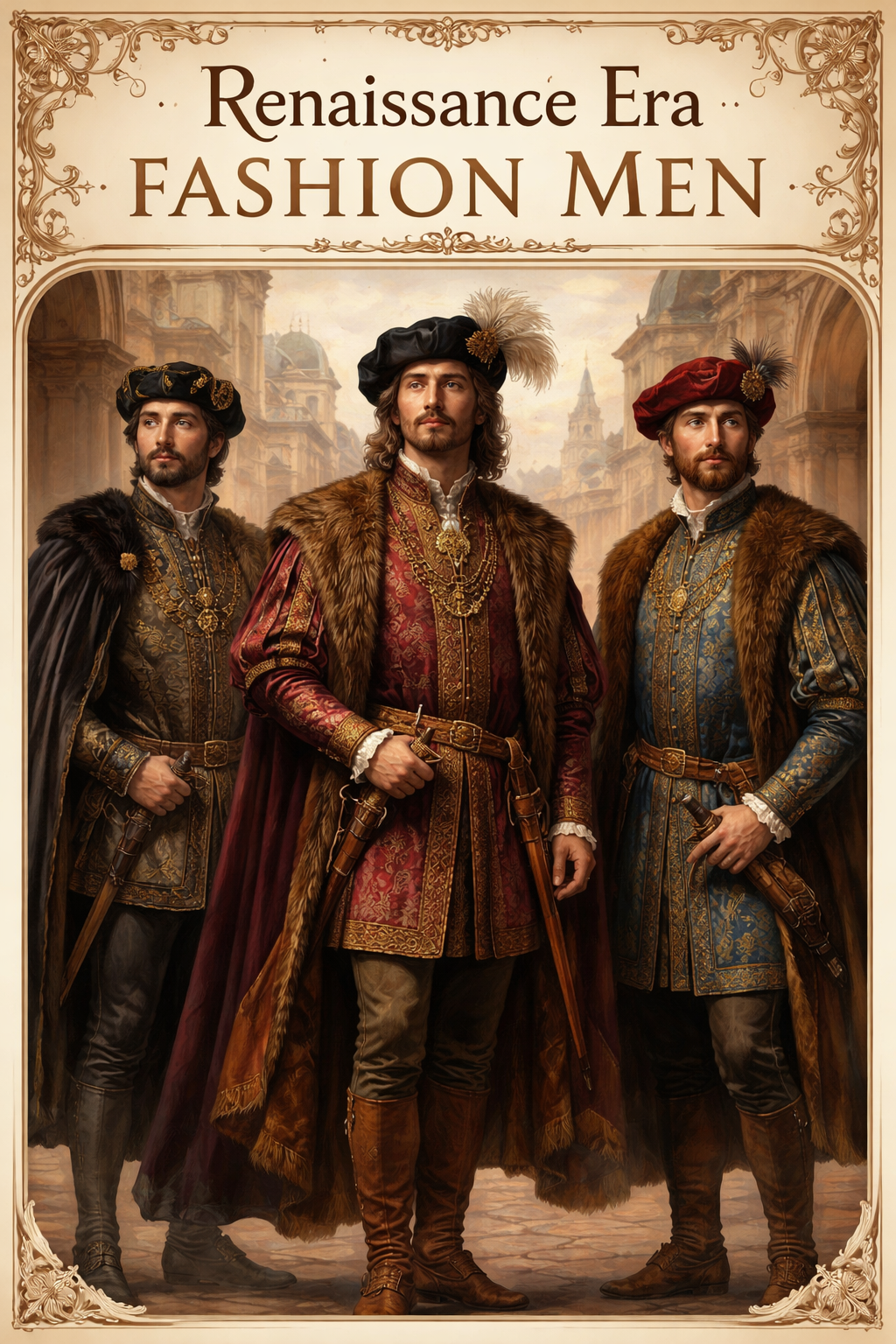
Renaissance era fashion men during the Renaissance was characterized by structured garments, layered outfits, and rich materials. This period, spanning roughly the 14th to 17th century in Europe, marked a shift toward individual expression, artistry, and social identity through clothing.
Fashion became a reflection of status, wealth, and cultural sophistication, influenced heavily by art, politics, and regional trends.
Historical Context:
The Renaissance was a time of cultural revival across Europe, especially in regions like Italy, France, and England.
Key influences:
- Growth of trade and wealth
- Rise of powerful city-states
- Increased focus on art and humanism
- Expansion of textile production
These developments allowed clothing to become more elaborate, decorative, and socially significant.
Influence of Art and Culture:
Art played a major role in shaping fashion trends during this period.
Key aspects:
- Paintings and sculptures showcased detailed clothing styles
- Nobility used fashion to display power and refinement
- Tailoring became more precise and structured
Clothing mirrored the artistic values of the time, emphasizing:
- Symmetry
- Proportion
- Rich textures
Evolution of Style:
Renaissance men’s fashion evolved over time:
| Phase | Style Characteristics | Influence |
|---|---|---|
| Early Renaissance | Simple, flowing garments | Medieval traditions |
| High Renaissance | Structured and decorative clothing | Artistic influence |
| Late Renaissance | More elaborate and luxurious styles | Wealth and status display |
This evolution reflects a transition from functionality to visual expression and status symbolism.
Summary:
Renaissance men’s fashion was shaped by cultural revival, artistic influence, and social hierarchy, featuring structured garments, layered outfits, and increasingly elaborate designs.
Key Takeaways:
- Fashion reflected social status and wealth
- Art and culture influenced clothing design
- Styles evolved from simple to elaborate
- Tailoring became more structured
- Clothing gained symbolic importance
Common Mistakes:
- Assuming Renaissance clothing was simple
- Ignoring regional and time variations
- Confusing it with medieval fashion
- Overlooking its connection to art and culture
Also read: Dark Academia Men Fashion – Outfit Guide, Style Tips & Aesthetic Clothing Ideas.
Key Clothing Pieces in the Renaissance Era:
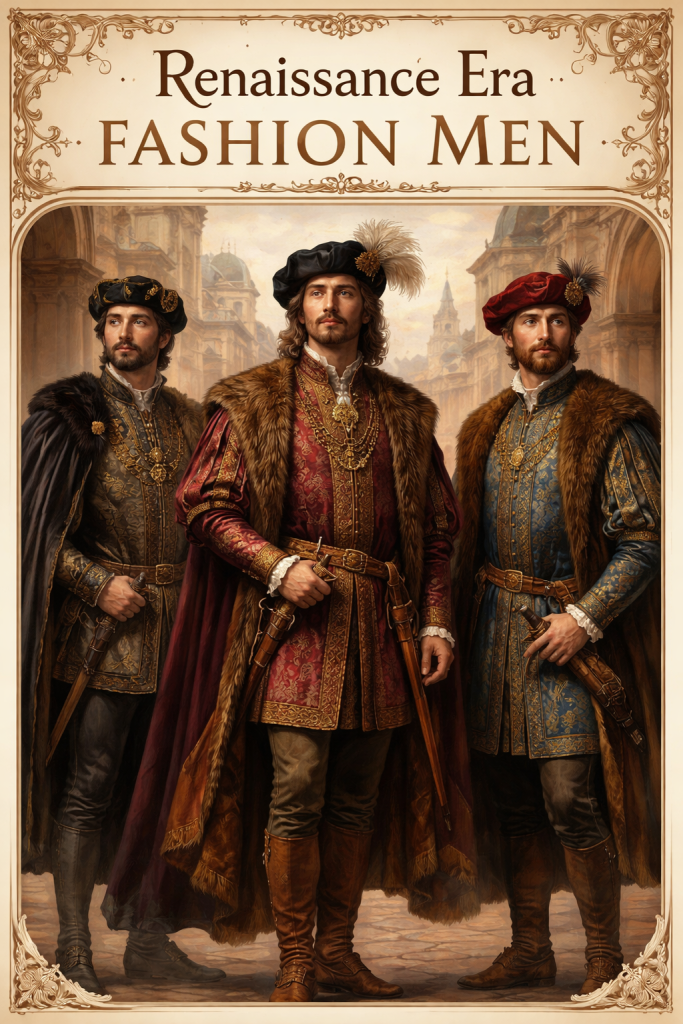
Men’s clothing during the Renaissance was built around layering and structured garments, each serving a specific function in both style and social display. These pieces combined practicality with decorative detail, creating a distinctive and recognizable look.
Doublet:
The doublet was the central garment in men’s Renaissance fashion.
Key features:
- Fitted, padded jacket worn on the upper body
- Often fastened with buttons or laces
- Decorated with embroidery, slashing, or fine fabrics
Function:
- Provided structure and shape
- Highlighted the torso
- Served as a base for outer layers
Hose and Breeches:
Lower-body garments evolved during the Renaissance period.
Types:
- Hose: Tight-fitting leg coverings, often worn in two separate pieces
- Breeches: Shorter, fuller trousers introduced later in the period
Style role:
- Emphasized leg shape
- Balanced the fitted doublet
- Added volume and proportion
Shirts and Undergarments:
Undergarments formed the base layer of clothing.
Key features:
- Made from linen for comfort
- Loose-fitting and breathable
- Often visible at the collar and cuffs
Function:
- Protected outer garments
- Added contrast through visible edges
- Improved overall comfort
Cloaks and Outerwear:
Outer garments added both functionality and status.
Common items:
- Cloaks (long, flowing outerwear)
- Capes (shorter versions)
- Fur-lined coats for colder climates
Style role:
- Provided warmth
- Displayed wealth and rank
- Enhanced overall outfit presence
Clothing Pieces Table:
| Garment | Purpose | Typical Material |
|---|---|---|
| Doublet | Structure and style | Wool, silk, velvet |
| Hose | Leg coverage | Wool, linen |
| Breeches | Volume and comfort | Wool, silk |
| Shirt | Base layer | Linen |
| Cloak | Outerwear and status | Wool, fur |
Summary:
Key Renaissance clothing pieces included the doublet, hose, breeches, shirts, and cloaks, all layered together to create structured, functional, and visually rich outfits.
Key Takeaways:
- Doublet was the central garment
- Hose and breeches defined lower-body style
- Shirts provided comfort and base layering
- Cloaks added status and warmth
- Clothing emphasized structure and layering
Common Mistakes:
- Confusing hose with modern trousers
- Ignoring the importance of layering
- Assuming all garments were loose-fitting
- Overlooking the decorative details
Fabrics, Colors & Materials:
Men’s fashion in the Renaissance was heavily defined by luxurious fabrics, rich colors, and detailed craftsmanship. Clothing materials were not only functional but also served as a clear indicator of wealth, status, and social hierarchy.
Common Fabrics (Wool, Silk, Velvet):
Different fabrics were used depending on social class and occasion.
Primary materials:
- Wool: Most common fabric, used across all classes
- Silk: Expensive and smooth, worn by nobility
- Velvet: Rich and textured, symbol of luxury
- Linen: Used for undergarments due to breathability
Fabric significance:
- Higher-quality fabrics indicated higher status
- Texture added visual depth and elegance
- Imported materials increased garment value
Color Symbolism:
Color played a major role in Renaissance clothing.
Common colors and meanings:
| Color | Symbolism | Usage |
|---|---|---|
| Red | Power and wealth | Nobility |
| Blue | Prestige and stability | Upper class |
| Black | Authority and sophistication | Elite fashion |
| Brown/Neutral | Simplicity | Lower classes |
Key insight:
- Bright and rich colors were often restricted to higher classes
- Dye quality affected cost and accessibility
Embroidery and Decoration:
Decoration was essential in high-status clothing.
Common techniques:
- Gold and silver thread embroidery
- Slashing (cut fabric revealing inner layers)
- Decorative stitching and patterns
Purpose:
- Display wealth and craftsmanship
- Add visual complexity
- Highlight garment structure
Summary:
Renaissance fashion used fabrics like wool, silk, and velvet, combined with symbolic colors and detailed embroidery to represent status, wealth, and artistic expression.
Key Takeaways:
- Fabric quality indicated social status
- Silk and velvet were luxury materials
- Colors carried symbolic meaning
- Embroidery added artistic value
- Clothing was both functional and decorative
Common Mistakes:
- Assuming all fabrics were equally accessible
- Ignoring color symbolism
- Overlooking the importance of decoration
- Confusing Renaissance fabrics with modern equivalents
Social Class and Fashion Differences:
Fashion during the Renaissance clearly reflected social hierarchy, with clothing styles, fabrics, and decoration varying significantly between classes. What a man wore was a direct indicator of his wealth, occupation, and social status.
Nobility Clothing:
The upper class wore the most elaborate and luxurious clothing.
Key features:
- Rich fabrics such as silk, velvet, and fur
- Bright and deep colors (red, blue, black)
- Heavy embroidery and decorative detailing
- Multiple layered garments
Style purpose:
- Display wealth and power
- Reflect social superiority
- Showcase access to rare materials
Merchant Class:
The merchant and middle class adopted more practical yet stylish clothing.
Key features:
- Good-quality wool and some imported fabrics
- Simpler designs with limited decoration
- Structured garments similar to nobility but less elaborate
Style purpose:
- Show financial success without excessive luxury
- Maintain professionalism and respectability
Peasant Clothing:
Lower-class clothing was simple and purely functional.
Key features:
- Basic wool and linen fabrics
- Neutral and dull colors
- Minimal or no decoration
- Loose and practical designs
Style purpose:
- Provide durability and comfort for labor
- Reflect limited access to luxury materials
Social Class Comparison Table:
| Class | Clothing Style | Materials |
|---|---|---|
| Nobility | Elaborate, decorative | Silk, velvet, fur |
| Merchant | Structured, moderate detail | Wool, some silk |
| Peasant | Simple, functional | Wool, linen |
Summary:
Renaissance men’s fashion varied greatly by social class, with nobility wearing luxurious and decorative clothing, merchants adopting balanced styles, and peasants focusing on practicality.
Key Takeaways:
- Clothing indicated social status
- Nobility wore the most elaborate outfits
- Merchants balanced style and practicality
- Peasants wore simple, functional garments
- Fabric and color varied by class
Common Mistakes:
- Assuming all people dressed similarly
- Ignoring the role of wealth in fashion
- Overgeneralizing Renaissance clothing styles
- Missing the importance of social hierarchy
Renaissance Outfit Structure:
Men’s outfits during the Renaissance followed a layered system, where each garment had a specific function in both comfort and visual presentation. This structured approach created a balanced silhouette while allowing for decoration and status display.
Layering System:
Renaissance clothing was worn in multiple layers, starting from inner garments to outerwear.
Typical layering order:
- Linen shirt (base layer)
- Hose or breeches (lower body)
- Doublet (core upper garment)
- Cloak or coat (outer layer)
Purpose:
- Provided comfort and hygiene
- Allowed layering for warmth
- Created a structured and elegant appearance
How Outfits Were Worn:
Each piece was carefully combined to achieve proportion and balance.
Key styling features:
- Fitted upper body (doublet)
- Defined waistline
- Emphasis on shoulders and chest
- Balanced lower body through hose or breeches
Style result:
- Highlighted masculine form
- Created symmetry and proportion
- Enhanced visual structure
Functional vs Decorative Elements:
Renaissance outfits combined practicality with visual appeal.
Functional elements:
- Linen shirts for comfort
- Wool garments for warmth
- Durable fabrics for everyday use
Decorative elements:
- Embroidery and patterns
- Slashed fabrics revealing inner layers
- Rich colors and textures
Outfit Structure Table:
| Layer | Item | Function |
|---|---|---|
| Base | Linen shirt | Comfort and hygiene |
| Lower | Hose/Breeches | Coverage and balance |
| Core | Doublet | Structure and shape |
| Outer | Cloak/Coat | Warmth and status |
Summary:
Renaissance outfits were built on a structured layering system, combining functional base garments with decorative outer layers to create balanced and visually rich clothing.
Key Takeaways:
- Layering was essential in Renaissance fashion
- Each garment had a specific role
- Structure and proportion were key
- Clothing balanced function and decoration
- Outfits emphasized the upper body
Common Mistakes:
- Thinking outfits were single-layered
- Ignoring the importance of structure
- Confusing decorative elements with functional ones
- Overlooking the role of layering
Modern Influence of Renaissance Fashion:
Fashion from the Renaissance continues to influence modern menswear through tailoring, layering, and attention to detail. While the original styles were elaborate, many core elements have been adapted into simpler, wearable forms in contemporary fashion.
Impact on Modern Menswear:
Several Renaissance elements are still visible in today’s clothing.
Key influences:
- Structured jackets inspired by the doublet
- Tailored fits emphasizing the torso
- Layered outfit combinations
- Use of rich fabrics in formal wear
Modern result:
- Cleaner, simplified versions of historical garments
- Focus on fit and proportion rather than heavy decoration
Fashion Adaptations:
Renaissance fashion has been adapted into modern styles in subtle ways.
Examples:
- Blazers replacing doublets
- Trousers replacing hose and breeches
- Coats inspired by cloaks
- Minimal embroidery in formal wear
Style approach:
- Maintain structure without excessive ornamentation
- Blend historical inspiration with modern practicality
Influence on Aesthetics:
Renaissance fashion has also influenced various fashion aesthetics.
Key areas:
- Vintage-inspired fashion
- Academic and classic styles
- Historical-inspired runway collections
Effect:
- Emphasis on elegance and timeless design
- Revival of classic tailoring techniques
Summary:
Renaissance fashion influences modern menswear through structured tailoring, layered outfits, and refined aesthetics, adapted into simpler and more practical styles.
Key Takeaways:
- Tailoring and structure come from Renaissance fashion
- Modern clothing simplifies historical designs
- Blazers and coats reflect historical garments
- Layering remains an important concept
- Influence extends to modern fashion aesthetics
Common Mistakes:
- Expecting exact historical replication in modern fashion
- Overusing decorative elements
- Ignoring practicality in modern styling
- Misinterpreting historical influence
Accessories & Footwear:
Accessories and footwear in the Renaissance were essential for completing a man’s outfit, serving both functional and decorative purposes. These elements often reflected social status, wealth, and personal style, just like the main garments.
Hats and Caps:
Headwear was a key part of Renaissance fashion.
Common types:
- Flat caps and berets
- Wide-brimmed hats
- Feathered hats for nobility
Style significance:
- Indicated social rank and fashion awareness
- Added visual balance to layered outfits
Style tip:
- More elaborate hats were worn by higher classes
Shoes and Boots:
Footwear was designed for both practicality and style.
Common options:
- Leather shoes (basic everyday wear)
- Soft boots (for travel or riding)
- Decorated footwear for formal occasions
Style features:
- Rounded or slightly pointed toes
- Made from durable leather
- Minimal but refined decoration
Belts and Jewelry:
Accessories enhanced both function and appearance.
Common items:
- Leather belts for securing garments
- Chains and pendants (worn by nobility)
- Rings as symbols of status
Purpose:
- Added detail and elegance
- Showed wealth and social standing
Accessories Table:
| Accessory | Purpose | Style Role |
|---|---|---|
| Hat/Cap | Head covering | Status and style |
| Shoes/Boots | Foot protection | Practical + decorative |
| Belt | Utility | Structure |
| Jewelry | Decoration | Wealth display |
Summary:
Accessories and footwear in Renaissance fashion completed the outfit, combining practicality with decorative elements that reflected social status and personal style.
Key Takeaways:
- Hats were essential for style and status
- Leather shoes and boots were common
- Jewelry indicated wealth
- Accessories balanced the outfit
- Function and decoration were equally important
Common Mistakes:
- Ignoring the importance of accessories
- Assuming footwear was purely functional
- Overlooking social significance
- Mixing modern accessories with historical styles
Common Mistakes to Avoid:
Even when studying or recreating fashion from the Renaissance, many people misunderstand the style and unintentionally distort its meaning. Renaissance fashion is defined by structure, proportion, and social symbolism, so accuracy and balance are essential.
Mixing Inaccurate Eras:
One of the most common mistakes is blending Renaissance clothing with unrelated historical styles.
Mistakes:
- Combining medieval armor-style clothing with Renaissance outfits
- Mixing modern streetwear with historical garments
- Using fantasy-inspired pieces as “authentic” references
Better approach:
- Stick to Renaissance-specific silhouettes and garments
- Study actual historical paintings and references
Over-Decorating the Outfit:
While Renaissance clothing could be ornate, excessive decoration creates an unrealistic look.
Mistakes:
- Adding too many modern embellishments
- Overusing gold trims, chains, or embroidery
- Creating overly theatrical outfits
Better approach:
- Keep decoration balanced and historically inspired
- Let fabric and structure speak for the outfit
Ignoring Proper Structure:
Structure is a core principle of Renaissance fashion.
Mistakes:
- Wearing loose, shapeless garments
- Ignoring fitted doublet-style silhouettes
- Skipping layering logic
Better approach:
- Maintain fitted upper body structure
- Follow traditional layering order
Misinterpreting Social Context:
Clothing in this era reflected social class, not just style.
Mistakes:
- Dressing all characters in noble-style clothing
- Ignoring differences between classes
- Applying luxury materials universally
Better approach:
- Match clothing style to social role or class
- Use appropriate fabric and design levels
Over-Stylization for Modern Looks:
Trying to modernize too aggressively can break authenticity.
Mistakes:
- Turning Renaissance outfits into cosplay costumes
- Over-simplifying historical garments incorrectly
- Ignoring historical proportions
Better approach:
- Adapt inspiration, not exact replication
- Keep silhouettes historically grounded
Summary:
Common mistakes in Renaissance fashion include mixing eras, over-decoration, ignoring structure, misrepresenting social class, and over-stylizing historical outfits.
Key Takeaways:
- Keep historical accuracy in styling
- Avoid excessive decoration
- Structure and layering are essential
- Social class influenced clothing design
- Inspiration should not become costume
Common Mistakes:
- Mixing Renaissance with other eras
- Overusing decorative elements
- Ignoring garment structure
- Misrepresenting historical context
FAQs:
This section answers common questions about men’s fashion in the Renaissance, helping clarify its clothing system, cultural meaning, and modern relevance.
What did men wear during the Renaissance era?
Men typically wore layered clothing including:
- Linen shirts (base layer)
- Hose or breeches (lower body)
- Doublets (structured upper garment)
- Cloaks or coats (outerwear)
These outfits were designed for structure, status, and visual balance.
What is a doublet in Renaissance fashion?
A doublet was a fitted, padded jacket worn on the upper body. It shaped the torso, provided structure, and was often decorated with embroidery, buttons, or slashing.
What fabrics were used in Renaissance clothing?
Common fabrics included:
- Wool (everyday use)
- Silk (wealthy classes)
- Velvet (luxury clothing)
- Linen (undergarments)
Fabric choice strongly reflected social class and wealth.
How did social class affect Renaissance fashion?
Clothing clearly showed social hierarchy:
- Nobility wore silk, velvet, and rich decoration
- Merchants used quality wool with moderate design
- Peasants wore simple, functional wool and linen
Fashion was a direct indicator of status and occupation.
Was Renaissance fashion practical or decorative?
It was both:
- Practical: layering provided warmth and comfort
- Decorative: embroidery, color, and structure showed status
The balance depended on the wearer’s social class.
Is Renaissance fashion still used today?
Not directly, but it influences:
- Modern tailoring (blazers, structured jackets)
- Vintage-inspired fashion
- Historical and theatrical costumes
- Fashion aesthetics in media and design
Why is Renaissance fashion important in history?
It reflects:
- Social hierarchy
- Cultural development in Europe
- Evolution of tailoring techniques
- Growth of textile trade and craftsmanship
Summary:
Renaissance men’s fashion was a structured, layered system that reflected social class, wealth, and cultural development, and it continues to influence modern tailoring and aesthetics.
Key Takeaways:
- Clothing was layered and structured
- Doublet was a key garment
- Fabrics indicated social status
- Fashion reflected hierarchy and culture
- Still influences modern menswear
Common Mistakes:
- Thinking it was simple or uniform clothing
- Ignoring social class differences
- Confusing decorative style with function
- Assuming no modern influence
Conclusion:
Men’s fashion during the Renaissance represents one of the most structured and socially expressive eras in clothing history. It was defined by layering, tailored silhouettes, rich fabrics, and strong social symbolism, where every garment communicated status, identity, and cultural refinement.
From fitted doublets and hose to luxurious cloaks and embroidered details, Renaissance fashion balanced functionality with artistic expression. Clothing was not only practical but also a powerful visual language shaped by class hierarchy, trade growth, and artistic influence.
Today, its legacy continues in modern tailoring, structured jackets, and vintage-inspired aesthetics, proving that Renaissance fashion remains a foundational influence in contemporary menswear design.
Key Takeaways:
- Renaissance fashion was highly structured and layered
- Clothing reflected social class and identity
- Fabrics like silk, velvet, and wool defined status
- Tailoring and silhouette remain its lasting influence
- It shaped modern menswear and fashion aesthetics
References:
- Historical fashion studies on Renaissance clothing systems and European dress evolution
- European textile and tailoring history (14th–17th century fashion archives)
- Art history sources depicting Renaissance portrait clothing styles
- Academic research on social class and dress codes in early modern Europe.
