Before vs After: Fixing Petite Style Mistakes

An outfit can be perfectly nice on its own and still feel wrong on a petite frame. The culprit is often a tiny detail: a hem that lands too low, a jacket that runs too long, or two oversized pieces competing for space.
That doesn’t mean you need a completely new wardrobe. In many cases, the before vs after difference comes from one small adjustment—tucking a top, changing the rise of your trousers, shortening a sleeve, or removing an unnecessary layer.
Petite styling is really about proportion. Even fashion editors point to proportion as a key part of making current silhouettes work on smaller frames.

So instead of giving you another list of rigid “petite rules,” we’re going to look at the outfit itself. What isn’t working? What can you change? And, most importantly, why does the after version look more balanced?
The 7 Petite Style Mistakes That Change an Outfit
Most petite outfit problems aren’t really about the clothes. They’re about where the clothes end, begin, or add visual weight. Fix that first, and the same wardrobe can look surprisingly different.

1. Wearing Too Much Fabric at Once
Before: An oversized sweater paired with wide-leg trousers can hide your shape from shoulder to ankle.
After: Keep the relaxed sweater, but pair it with a slimmer or straighter bottom. Or keep the wide trousers and switch to a shorter, neater top.
The trick is simple: let one piece have the volume. The other should give the outfit some structure.

2. Cutting the Legs at an Awkward Point
Before: Cropped trousers that stop at the widest part of the calf can create a strong horizontal break.
After: Try a deliberate ankle length or a full-length trouser that falls cleanly toward the shoe.
A hem doesn’t need to be extremely short to work on a petite frame. It just needs to look intentional.

3. Hiding the Natural Waist
Before: A long untucked shirt falls over the hips and makes the torso appear longer while giving the legs less visual space.
After: Try a full tuck, half-tuck, or shorter top. Even a small change can make the waistline easier to see.
That clearer break helps the outfit feel more defined rather than swallowed by fabric.

4. Choosing the Wrong Rise
Before: Very low-rise bottoms can reduce the amount of visible leg above the waist.
After: A higher rise can place the waistband closer to your natural waist and create a longer-looking lower-body proportion.
Don’t treat high-rise as a universal rule, though. The best rise is the one that fits comfortably and works with your top length.

5. Letting Shoes Break the Leg Line
Before: A bulky shoe with a strong ankle strap can create a noticeable visual stop between the leg and foot.
After: A sleeker shoe, lower-profile sneaker, or footwear that works with the trouser hem can keep the outfit looking cleaner.
The goal isn’t to avoid statement shoes. It’s to notice where they create a visual break.

6. Ignoring Sleeve and Shoulder Proportion
Before: Dropped shoulders and extra-long sleeves can make a petite frame look smaller underneath the fabric.
After: Roll the sleeves, choose a cleaner shoulder seam, or push up an oversized sleeve to reveal some wrist.
Sometimes the easiest fix is already in your hands.

7. Treating Every Petite Rule as Universal
Before: You follow every petite styling rule literally and end up wearing clothes that don’t feel like you.
After: Keep the principle, but adapt the execution to your body shape, proportions, and personal style.
Petite women don’t all have the same proportions. A petite hourglass and petite pear shape may need different ways to create balance. The goal isn’t to follow rules perfectly. It’s to understand what your outfit is doing.
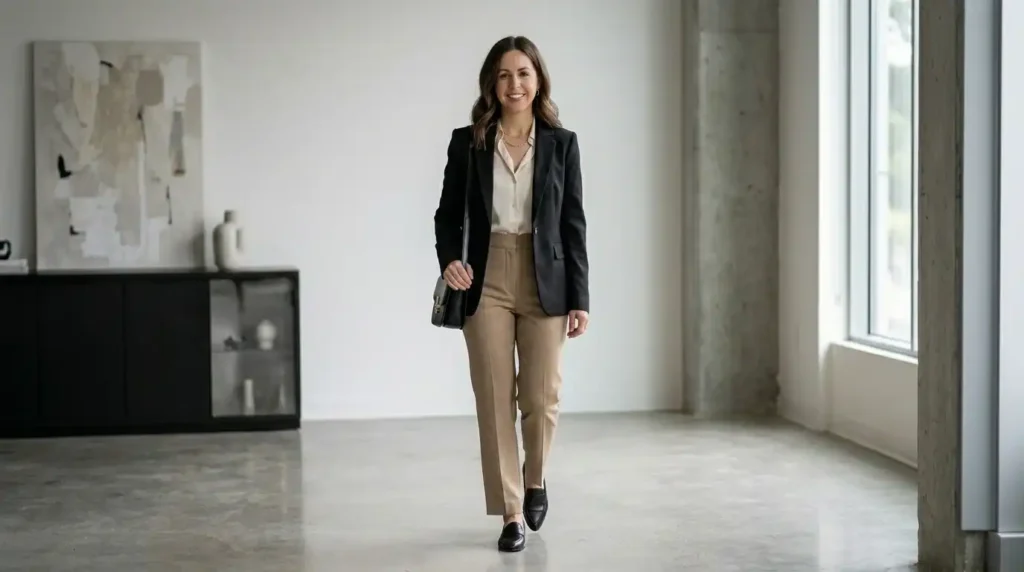
Before vs After: The Petite Outfit Fixes at a Glance
Sometimes the problem becomes obvious when you compare the two versions side by side. The “before” isn’t necessarily bad—it just creates a less intentional proportion.
| Before | What feels off | After |
|---|---|---|
| Oversized top + wide trousers | Too much volume | One relaxed piece + one cleaner silhouette |
| Awkward cropped hem | Strong leg break | Intentional ankle or full-length hem |
| Long untucked top | Torso looks longer | Tucked or shorter top |
| Very low-rise bottoms | Less visible leg length | Higher, comfortable rise |
| Heavy ankle footwear | Strong horizontal break | Cleaner shoe-to-hem transition |
| Extra-long sleeves | Frame gets overwhelmed | Sleeves shortened or pushed up |
| Following every petite rule | Outfit feels restrictive | Rule adapted to your proportions |
The biggest lesson? Before vs after outfit fixes don’t usually require replacing everything.

Start with the element that’s disrupting the silhouette most. A simple tuck may do more than buying another pair of trousers. A changed hem can matter more than an expensive accessory.
Think of styling as editing. Remove the part that’s creating visual clutter, then reassess the outfit.
Fix the Proportion Before Buying Something New
Before adding another “petite-friendly” piece to your closet, check the clothes you already own. A small adjustment to length, waist placement, or volume can completely change how an outfit sits on your frame.
Vogue’s petite styling guidance also emphasizes adapting silhouettes and proportions rather than treating petite dressing as a restriction. Vogue — How Do You Style Clothes for Petite Women?

Start With the Hem
Look at where each garment ends.
- Does your jacket finish at a flattering point?
- Are your trousers stopping somewhere that creates an awkward break?
- Does your skirt length work with the shoes you’re wearing?
- Could a simple alteration make the piece look more intentional?
A clean hem often makes an outfit feel sharper without changing the garment itself.

Check the Waistline
The waistband is another useful checkpoint.
If a long top and low-rise bottom leave very little visible leg, try changing one element. Tuck the top, shorten the layer, or switch to a higher-rise bottom if it feels comfortable.
For more ideas on choosing jeans and creating a longer-looking silhouette, see 7 Petite Plus Size Jeans That Make You Look Taller.
Edit One Volume Point
If an outfit feels bulky, don’t immediately remove everything oversized.
Try one change:
- Keep the oversized blazer, but wear a fitted base.
- Keep the wide-leg trousers, but choose a shorter top.
- Keep the relaxed sweater, but streamline the bottom half.

That’s the easiest way to create petite proportion fixes without turning your wardrobe upside down.
How Body Shape Changes the Petite Styling Fix
Petite styling isn’t one-size-fits-all. Two women can have the same height and need completely different adjustments because their proportions and body shapes distribute visual weight differently.
The best fix starts with petite outfit balance, then adapts to the individual shape.

Petite Hourglass
If your waist is naturally defined, don’t hide it under layers of fabric.
- Choose tops that can be tucked or sit near the waist.
- Look for jackets that finish around the hip rather than far below it.
- Let fitted pieces balance wider trousers or skirts.
- Avoid adding oversized layers everywhere at once.
For more occasion-specific ideas, see How to Dress a Petite Hourglass Figure for Every Occasion.
Petite Pear
A pear shape carries more visual weight through the hips and thighs, so the styling goal is often to create balance rather than simply make the lower half look smaller.

- Try a cleaner, more structured top.
- Use interesting necklines or sleeves to draw attention upward.
- Keep bottoms streamlined when the top already has noticeable detail.
- Make sure jackets don’t finish at the widest part of the hip.
For a deeper look at this approach, see Petite Pear Shape Styling Tips for Better Balance.
Petite Frames With a Fuller Midsection
Comfort and proportion matter more than forcing a tiny waist.
- Look for tops that skim rather than cling.
- Keep the front of the outfit relatively clean.
- Try open layers that create a longer visual line.
- Avoid piling bulky fabric directly around the middle.
The goal isn’t to disguise your body. It’s to make the outfit feel intentional from top to bottom.
Build Better Petite Outfits From Clothes You Already Own
Before buying something new, give your current wardrobe a second look. Many petite outfits need a styling adjustment, not another garment.

Start with one outfit that feels slightly “off.” Then test these quick changes:
- Tuck the top and see if the proportions improve.
- Swap the shoes to change where the leg line visually ends.
- Roll or shorten sleeves if the top feels oversized.
- Remove one layer if the outfit looks crowded.
- Try a different rise with the same top.
- Change the jacket length before replacing the entire outfit.
A useful rule: change one thing at a time. That way, you’ll know exactly what made the outfit work better.
If you’re building a smaller wardrobe around pieces that mix easily, the Petite Capsule Outfit Formula: 10 Pieces, 30 Looks can help you think about combinations rather than individual items.
You can also revisit 13 Styling Hacks Every Short Girl Should Know for more ways to make existing pieces work harder.
The best shop your closet first habit is simple: photograph the outfit before and after each adjustment. You’ll start spotting your own proportion patterns much faster.
Quick Takeaways
Before buying another petite-friendly piece, check the outfit you’re already wearing. Small proportion changes can have a bigger effect than adding more clothes.

- Fix the largest proportion problem first—usually length, volume, or waist placement.
- One oversized piece is easier to balance than an oversized top and bottom together.
- A deliberate hem looks better than a length that simply happens to end there.
- Your body shape matters, so don’t force every petite styling rule to fit every woman.
- Try changing one element at a time. That’s how you’ll learn what actually works for you.
The Bottom Line: Small Changes, Better Proportions
Petite styling doesn’t have to mean following a long list of restrictions. When an outfit feels off, look at the proportions first, then make one focused adjustment.
A tucked top, cleaner hem, better-fitting rise, or simpler shoe can turn the same clothes into a much more balanced outfit. The goal isn’t to dress smaller—it’s to make every piece feel like it belongs on your frame.

Conclusion
Petite style mistakes are often easier to fix than they seem. Before buying something new, check the hem, waistline, volume, and visual breaks in the outfit you already own.
Once you start noticing those details, getting dressed becomes much more intuitive. Small adjustments can make a familiar outfit feel completely different.
FAQs
What is the biggest petite styling mistake?
Wearing too much volume at once is a common issue. If both the top and bottom are oversized, the frame can get visually lost under the fabric.
Do petite women have to wear high-waisted clothes?
No. A higher rise can create a longer-looking leg line, but comfort and your natural proportions matter more than following a fixed rule.
Are wide-leg trousers flattering on petite women?
Yes. The key is proportion. A full-length wide-leg trouser can work especially well when paired with a more fitted or shorter top.
Should petite women avoid oversized clothing?
Not at all. Try balancing one oversized piece with something more streamlined so the outfit still has visible shape.
How can I fix a petite outfit without buying anything?
Start with the pieces you already own. Tuck the top, adjust the sleeves, change your shoes, remove a layer, or try a different waistband position before replacing anything.


