Petite Capsule Outfit Formula: 10 Pieces, 30 Looks

A petite capsule wardrobe doesn’t need dozens of pieces. The trick is choosing a small group that works together, fits your proportions, and can shift easily from casual to polished.
This petite outfit formula starts with 10 carefully chosen pieces and turns them into 30 distinct looks. You’ll see how the combinations work, where proportion matters, and how small styling changes can make the same clothes feel completely different.
For petite women, versatility matters even more. A blazer that’s too long or trousers with excess fabric can throw off an otherwise simple outfit. The right hem, waist placement, and shoe shape can change the whole effect.

So instead of adding more clothes, let’s make the clothes you own work harder.
The Petite Capsule Formula: Why 10 Pieces Can Do More
Ten pieces are enough when each one has a clear job. The goal isn’t to create 30 random combinations; it’s to build a wardrobe where tops, bottoms, layers, and shoes can move between outfits without fighting each other.
A useful capsule relies on repeatable outfit formulas rather than constant novelty.

The 10 × 30 System
Here’s the basic idea:
- 3 tops give you different upper-body combinations.
- 3 bottoms create the main outfit foundation.
- 2 layers or one-piece options add polish and variety.
- 2 shoes change the mood without changing the entire outfit.
- Neutral or closely related colors make mixing much easier.
- Similar visual proportions keep outfits from looking bulky on a petite frame.
The result is a wardrobe that feels larger than it actually is.
Why Proportion Matters
Petite dressing isn’t about avoiding certain clothes. It’s about controlling where the eye lands.
A high-rise bottom can visually lengthen the lower half. A shorter jacket can make the waist easier to see. And a shoe with a low, streamlined profile keeps the outfit from looking visually heavy.
For more general petite styling ideas, see our guide to 13 Styling Hacks Every Short Girl Should Know.
The best capsule pieces should also work beyond one setting. A fitted sweater might pair with jeans for errands, then work with tailored trousers for dinner. That’s the kind of versatility that makes 10 pieces genuinely useful.
Quick Takeaways
- Choose pieces that can pair with at least two others.
- Keep the color palette easy to mix.
- Prioritize clean waist and hem placement.
- Use shoes and layers to change the feel of an outfit.
- Fit matters more than having a large wardrobe.

The 10 Pieces to Build Your Petite Capsule Around
The strongest capsule pieces aren’t necessarily the most basic ones. Each should earn its place by working with several others while keeping your proportions clean.
For this formula, the 10-piece wardrobe is split across tops, bottoms, layers, and shoes. The goal is simple: 10 pieces that mix easily without making every outfit look identical.

Tops — 3 Pieces
1. Fitted white or ivory tee
Keep the shape neat rather than oversized. It works tucked into jeans, trousers, or a skirt and can sit underneath the blazer.
2. Crisp button-down shirt
Choose a shirt that finishes around the hip rather than swallowing it. A partial tuck gives you more control over where the waist appears.
3. Fine-knit fitted sweater
A lightweight knit adds warmth without unnecessary bulk. Neutral shades make it easy to pair with every bottom in the capsule.

Bottoms — 3 Pieces
4. High-rise straight-leg jeans
A straight leg gives you structure without the excess fabric that can sometimes overwhelm a smaller frame. A clean ankle-length hem keeps the shape sharp.
5. Tailored ankle trousers
These are the workhorse of the capsule. Look for a high or mid-high rise, a clean front, and a hem that doesn’t bunch around the shoe.
6. Petite-friendly midi skirt
A streamlined A-line or straight silhouette gives the capsule a softer option while keeping the waist visible.

One-Piece + Layer — 2 Pieces
7. Simple midi dress
Choose a dress with a defined waist or a clean column shape. It should work alone and under the blazer.
8. Cropped or waist-defined blazer
This is the piece that changes the mood of the wardrobe fastest. A shorter hem or shaped waist helps prevent the jacket from visually dominating a petite frame.
Vogue’s petite styling advice also emphasizes adapting silhouettes and proportions rather than simply avoiding particular trends.

Shoes — 2 Pieces
9. Low-profile pointed-toe flats
The streamlined shape works with trousers, jeans, skirts, and dresses. It also keeps the bottom of the outfit visually light.
10. Sleek ankle boots or loafers
Pick one polished option that can handle both casual and dressier outfits. Keep the shape relatively streamlined so it doesn’t compete with the hemline.

Your 10-Piece Capsule at a Glance
| Category | Piece | Main Job |
|---|---|---|
| Top | White/ivory tee | Casual base |
| Top | Button-down shirt | Polished layering |
| Top | Fine-knit sweater | Soft everyday dressing |
| Bottom | Straight-leg jeans | Casual foundation |
| Bottom | Tailored ankle trousers | Work and smart casual |
| Bottom | Midi skirt | Feminine alternative |
| One-piece | Midi dress | One-step outfit |
| Layer | Cropped blazer | Instant polish |
| Shoes | Pointed flats | Light everyday finish |
| Shoes | Ankle boots/loafers | Structured finish |
The beauty of this setup is that no single piece has to carry the wardrobe. Remove one item and several combinations still work. Add the right layer or shoe, and an outfit can take on a completely different personality.
The 30-Look Petite Outfit Formula
The easiest way to test a capsule is to stop thinking in terms of individual pieces and start thinking in combinations. These 30 looks use the same 10 pieces, but each one changes the balance, layering, or occasion.

Looks 1–10 — Everyday Casual
- White tee + straight-leg jeans + pointed flats
A clean starting point for errands, coffee, or a relaxed day out. - Fine-knit sweater + straight-leg jeans + ankle boots
Slightly warmer and more polished without feeling dressed up. - Button-down + straight-leg jeans + pointed flats
Tuck the shirt fully or loosely at the front for two different proportions. - White tee + tailored trousers + loafers
Simple enough for daytime, but sharper than a jeans-based outfit. - Fine-knit sweater + midi skirt + pointed flats
Keep the sweater close to the body so the skirt doesn’t overwhelm the frame. - Button-down + midi skirt + ankle boots
A relaxed shirt gives the feminine skirt a little more structure. - White tee + midi skirt + blazer + pointed flats
The blazer turns a basic combination into a polished smart-casual look. - Fine-knit sweater + tailored trousers + ankle boots
A useful formula for cooler office days or casual dinners. - Button-down + tailored trousers + pointed flats
Leave one or two buttons open and use a partial tuck to define the waist. - Midi dress + pointed flats
The fastest outfit in the capsule. Add a belt only if the dress needs more waist definition.
Looks 11–20 — Polished Work & Smart Casual
- White tee + tailored trousers + blazer + pointed flats
The tee keeps traditional tailoring from feeling too formal. - Button-down + tailored trousers + blazer + loafers
A strong office combination with clean vertical lines. - Fine-knit sweater + tailored trousers + blazer + pointed flats
The fitted knit creates a smoother base underneath the jacket. - White tee + straight-leg jeans + blazer + ankle boots
This is the capsule’s easiest polished-denim formula. - Button-down + straight-leg jeans + blazer + pointed flats
A crisp shirt gives familiar denim a more intentional finish. - Fine-knit sweater + midi skirt + blazer + loafers
Keep both the sweater and blazer relatively neat through the waist. - Button-down + midi skirt + blazer + pointed flats
A useful option when you want the skirt to feel more professional. - Midi dress + blazer + pointed flats
The layer adds structure while the dress keeps the outfit feminine. - Midi dress + blazer + ankle boots
Swap the flats for boots and the same base becomes better suited to cooler weather. - White tee + tailored trousers + blazer + ankle boots
A slightly more grounded version of the classic trouser-and-blazer combination.
Looks 21–30 — Dinner, Dressier Days & Flexible Layers
- Fine-knit sweater + straight-leg jeans + blazer + pointed flats
A comfortable combination that still looks pulled together for dinner. - Button-down + straight-leg jeans + blazer + ankle boots
Roll the sleeves slightly to keep the layered outfit from feeling too formal. - White tee + midi skirt + blazer + ankle boots
The contrast between the simple tee and structured layers keeps the outfit interesting. - Fine-knit sweater + midi skirt + blazer + pointed flats
A softer dressy option that doesn’t require a new statement piece. - Button-down + tailored trousers + blazer + pointed flats
Keep the shirt tucked cleanly for a sharper evening silhouette. - Midi dress + pointed flats + blazer
One of the easiest formulas when you need to move from daytime plans into dinner. - Midi dress + ankle boots + blazer
The boots give the dress a more grounded feel without changing the base outfit. - White tee + straight-leg jeans + blazer + loafers
A relaxed alternative when pointed flats feel too dressy. - Fine-knit sweater + tailored trousers + pointed flats
Minimal, comfortable, and easy to adapt with accessories. - Button-down + midi skirt + ankle boots + blazer
The full capsule comes together here: structured, feminine, and still practical.
The combinations work because each piece appears in several roles. That’s the real advantage of a capsule—not owning fewer clothes for the sake of it, but getting more useful outfits from every item.
How to Make the Same 10 Pieces Look Different
A capsule starts feeling repetitive when every piece is styled the same way. The fix isn’t another shopping trip. Change the proportions, layering, or finishing details first.
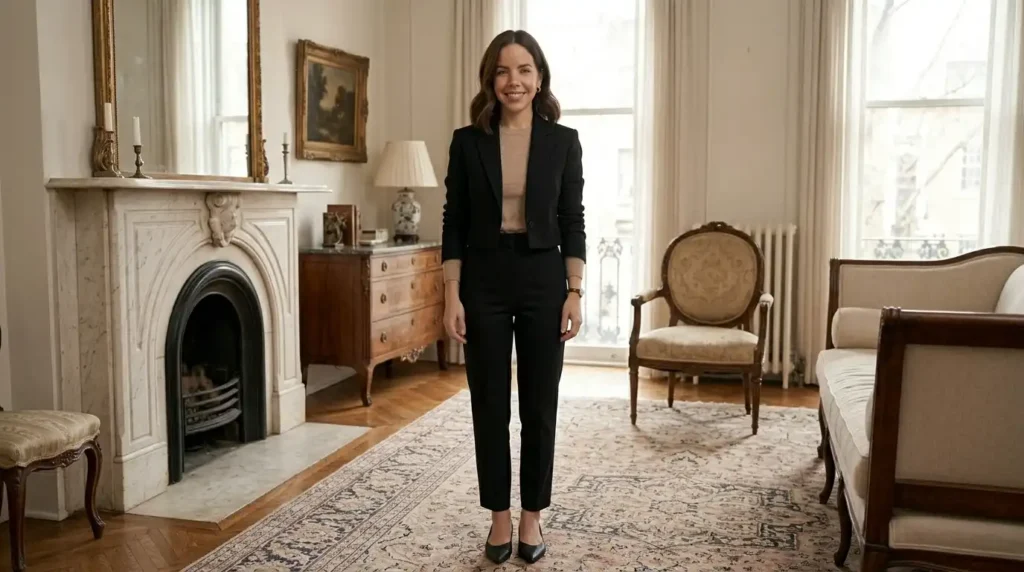
Change the Proportion
The same top can create a very different silhouette depending on how you wear it.
- Tuck the white tee into high-rise jeans for a longer-looking leg line.
- Leave the button-down partially tucked when you want a relaxed shape.
- Pair the fitted sweater with the midi skirt to keep the waist visible.
- Let a cropped blazer finish near the waist instead of covering most of the hip.
- Keep oversized elements limited to one part of the outfit.
For petite proportions, that last point matters. If both the top and bottom are loose and long, your natural shape can disappear underneath the fabric.
Change the Layer
A third piece can completely shift an outfit.
- No blazer: relaxed and casual.
- Blazer over a tee: polished but still easy.
- Blazer over a button-down: sharper and more structured.
- Blazer over the dress: instantly more refined.
- Sweater over a shirt: adds dimension without requiring another garment.
The key is keeping the layers visually light. A jacket that extends too far below the waist can make a petite outfit feel heavier than intended.
Change the Shoe
Shoes are one of the quickest ways to change the personality of the same clothing.
- Pointed flats keep jeans looking streamlined.
- Loafers add structure to trousers and skirts.
- Ankle boots make dresses and skirts feel more grounded.
- A low-profile shoe works especially well when the trouser or skirt hem is already close to the ankle.
You don’t need a different shoe for every outfit. Two carefully chosen pairs can cover a surprising amount of ground.
Use Small Styling Swaps
Try these before replacing an outfit:
- Roll shirt sleeves once or twice.
- Change from a full tuck to a half-tuck.
- Push blazer sleeves slightly upward.
- Leave the blazer open to create a longer central line.
- Switch the shoe before changing the entire outfit.
- Add or remove one layer depending on the occasion.
These tiny adjustments are what make the same 10 pieces feel less predictable while keeping the capsule compact.
Petite Proportion Tricks That Make the Formula Work
The 10 pieces only work as a petite capsule when their proportions work on your body. A good outfit should show some shape and create a clear visual path from top to bottom.
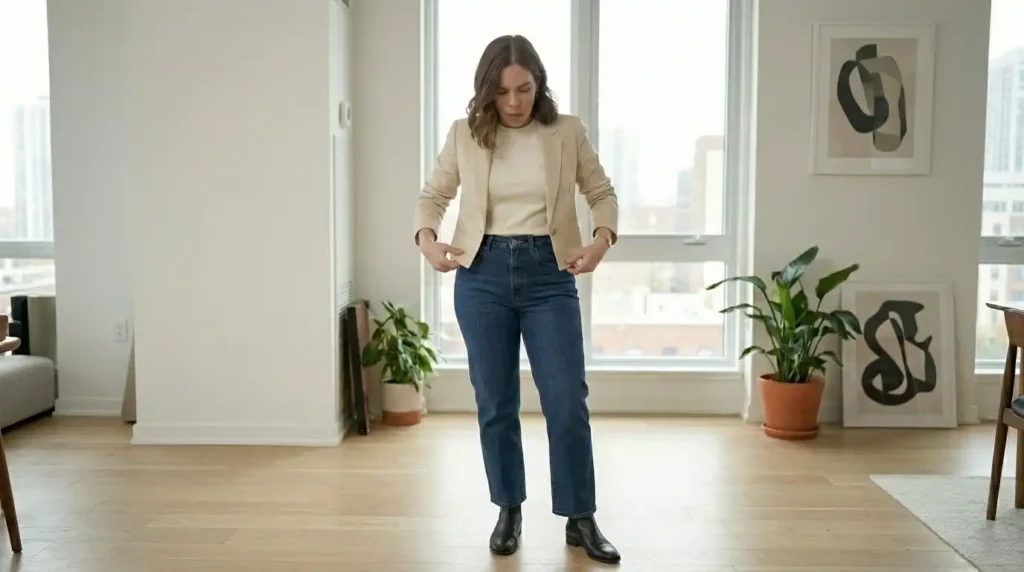
Keep the Waist Visible
High-rise jeans and trousers naturally give you a useful starting point.
- Tuck fitted tops into high-rise bottoms.
- Choose jackets that end around the waist or upper hip.
- Use a partial tuck when a full tuck feels too formal.
- Avoid letting a long top and long jacket overlap without a defined waist.
The goal isn’t to make every outfit tight. It’s simply to give the eye a clear place to recognize your proportions.
Pay Attention to Hem Length
A few inches can change the entire balance of a petite outfit.
- Jeans should finish cleanly around the ankle rather than pooling heavily.
- Trousers should break minimally over the shoe.
- Midi skirts work best when their length doesn’t leave the leg looking visually crowded.
- Dresses should have a deliberate hem rather than an awkward in-between length.
If you’re unsure, photograph the outfit from a few feet away. You’ll usually spot excess fabric or an awkward hem much faster in a picture.
Create a Vertical Line
A vertical line is a visual path that draws the eye up and down rather than stopping it across the body.
You can create one by:
- Wearing an open blazer over a simple top.
- Keeping the center of the outfit relatively uncluttered.
- Choosing trousers and shoes with similar visual weight.
- Using a monochromatic or closely related color combination.
- Keeping bulky layers away from the widest part of the silhouette.
This doesn’t mean petite women need to dress in one color. Contrast can work beautifully when the proportions remain controlled.
Control Volume
One oversized piece can be intentional. Several can quickly become overwhelming.
- Pair a relaxed button-down with slimmer trousers.
- Wear a fitted sweater with the fuller midi skirt.
- Keep the blazer structured rather than excessively oversized.
- If your jeans have more volume, keep the upper half relatively neat.
For pear-shaped petites, this becomes especially useful when balancing the upper and lower halves. Our Petite Pear Shape Styling Tips for Better Balance goes deeper into choosing silhouettes that distribute visual weight more effectively.
Small adjustments make the formula much easier to personalize. You don’t need a completely different wardrobe for your proportions—you need the existing pieces to sit in the right places.
How to Adapt the Capsule to Different Petite Body Shapes
The same 10 pieces can work across different petite body shapes, but the styling doesn’t have to be identical. Focus on where you add definition, volume, and visual emphasis rather than rebuilding the whole capsule.

Petite Pear Shapes
For a petite pear shape, the goal is usually to create a little more balance between the upper and lower body.
- Use the blazer to add structure around the shoulders.
- Keep tops fitted or lightly structured rather than extremely loose.
- Try a tucked tee or sweater with high-rise trousers.
- Let the upper half carry a little more visual detail when the bottom is simple.
- An A-line midi skirt can skim the hips without clinging.
The capsule already gives you useful tools here: a crisp shirt, structured blazer, and clean straight-leg jeans can all help distribute visual weight.
Petite Hourglass Shapes
A petite hourglass silhouette usually benefits from keeping the natural waist visible instead of hiding it beneath oversized layers.
- Tuck the button-down into high-rise trousers or jeans.
- Choose the fitted sweater rather than a very boxy knit.
- Wear the blazer open when you want to show the waist underneath.
- Look for a dress with natural waist definition.
- Keep bulky layers to a minimum around the midsection.
If you’re building outfits for different occasions, our guide to How to Dress a Petite Hourglass Figure for Every Occasion covers more specific silhouette choices.
Petite Plus-Size Figures
The same principles apply to petite plus-size dressing: proportion, fit, and hem placement matter more than simply choosing smaller-looking garments.
- Prioritize fabrics that skim rather than cling.
- Use high-rise trousers with a clean waistband.
- Choose a blazer that has enough room through the shoulders and bust.
- Avoid excessive fabric at the ankle.
- Use an open blazer to create a clean central line.
- Don’t size down just to make an item appear more petite.
A properly fitted straight-leg jean can be especially useful here. For more denim-specific guidance, see our 7 Petite Plus Size Jeans That Make You Look Taller.
The capsule doesn’t need to dictate one silhouette. Adjust the fit and styling of each piece so the clothes follow your proportions rather than hiding them.
The Fastest Way to Build an Outfit From the Capsule
When you’re standing in front of the closet with no idea what to wear, don’t start by choosing a top. Start with the occasion, then build the outfit from the bottom up.
Step 1: Choose the Bottom
Pick the piece that suits the day:
- Jeans for casual plans.
- Tailored trousers for work or polished outfits.
- Midi skirt when you want a softer, more feminine feel.
- Midi dress when you want the fewest decisions.
This gives the outfit a direction immediately.
Step 2: Add One Top
Now choose the top based on the shape of the bottom.
- Jeans + fitted tee = easy and casual.
- Trousers + button-down = crisp and polished.
- Midi skirt + fitted sweater = balanced and feminine.
- Jeans + fine-knit sweater = relaxed but refined.
If the bottom has more volume, keep the top relatively close to the body. If the top is looser, a cleaner or straighter bottom usually keeps the silhouette under control.
Step 3: Finish With One Layer or Shoe Change
This is where the outfit moves from basic to intentional.
- Add the blazer for polish.
- Choose pointed flats for a lighter finish.
- Pick loafers when you want more structure.
- Use ankle boots for a slightly stronger look.
- Leave the blazer open when you want a longer visual line.
That’s the entire system. Petite outfit formula dressing becomes much faster when you make three decisions instead of staring at ten pieces at once.
A Simple Decision Shortcut
Casual day:
Jeans → tee or sweater → flats/boots
Workday:
Trousers → shirt or sweater → blazer → flats/loafers
Dinner:
Skirt or dress → blazer → pointed flats/boots
Cold-weather day:
Jeans or trousers → fitted knit → blazer → ankle boots
Once you know the formula, getting dressed becomes less about finding something new and more about choosing the right combination from what already works.
What to Change When an Outfit Feels “Off”
Sometimes an outfit isn’t wrong. One small proportion is simply throwing it out of balance. Before replacing anything, find the part that’s causing the problem.
If the Outfit Looks Too Long
Check the waist and hems first.
- Tuck the top into high-rise jeans or trousers.
- Swap a long blazer for the cropped one.
- Shorten a trouser hem if fabric is bunching around the shoe.
- Try a cleaner shoe with less visual bulk.
A small change around the waist can make the entire outfit feel more defined.
If the Outfit Feels Too Bulky
Usually, there’s too much volume happening at once.
- Replace the loose top with the fitted tee or sweater.
- Remove one layer.
- Keep the blazer open instead of buttoned.
- Choose straight-leg trousers instead of a wider silhouette.
- Avoid piling a long top underneath a long jacket.
You don’t have to make everything fitted. Just give the eye one clear area of structure.
If the Outfit Looks Too Plain
Don’t immediately add another garment.
Try changing one detail:
- Swap flats for ankle boots.
- Add the blazer.
- Half-tuck the button-down.
- Push the blazer sleeves slightly upward.
- Change the color relationship between your top and bottom.
The outfit may need contrast, not more clothing.
If the Shoes Feel Too Heavy
Look at the hemline. A bulky shoe can make a short trouser or midi skirt feel visually crowded.
Try:
- Pointed flats with ankle-length trousers.
- Sleeker loafers with jeans.
- Ankle boots with a clean skirt hem.
- Similar tones between the shoe and bottom when you want a quieter transition.
The Two-Minute Fix
Before deciding an outfit doesn’t work, ask:
- Can I see my waist?
- Are my hems clean?
- Is there too much volume in more than one place?
- Does the shoe match the visual weight of the outfit?
If one answer is no, fix that first.
A capsule wardrobe becomes much more useful when you learn to troubleshoot the clothes you already own. The goal isn’t perfection. It’s knowing which small adjustment brings the proportions back into balance.
Conclusion
A petite capsule works best when every piece has a purpose and several possible pairings. With 10 carefully chosen pieces, the focus shifts from owning more clothes to styling what you already have with better proportion, layering, and fit.
FAQs
How many pieces should a petite capsule wardrobe have?
There isn’t one universal number, but this formula uses 10 core pieces to create 30 distinct outfits.
What makes a capsule wardrobe petite-friendly?
Prioritize clean hems, visible waist definition, controlled volume, and layers that don’t overwhelm your frame.
Can these 10 pieces work for different body shapes?
Yes. The pieces stay the same, while fit, proportions, and styling can be adjusted for pear, hourglass, and petite plus-size figures.
Do petite women need cropped clothing?
Not necessarily. Cropped or waist-defined pieces can help, but the better rule is choosing lengths that keep your proportions clear.
How do I make capsule outfits feel less repetitive?
Change the layer, shoe, tuck, sleeve styling, or color combination before adding another garment.


