Petite Pear Shape Styling Tips for Better Balance
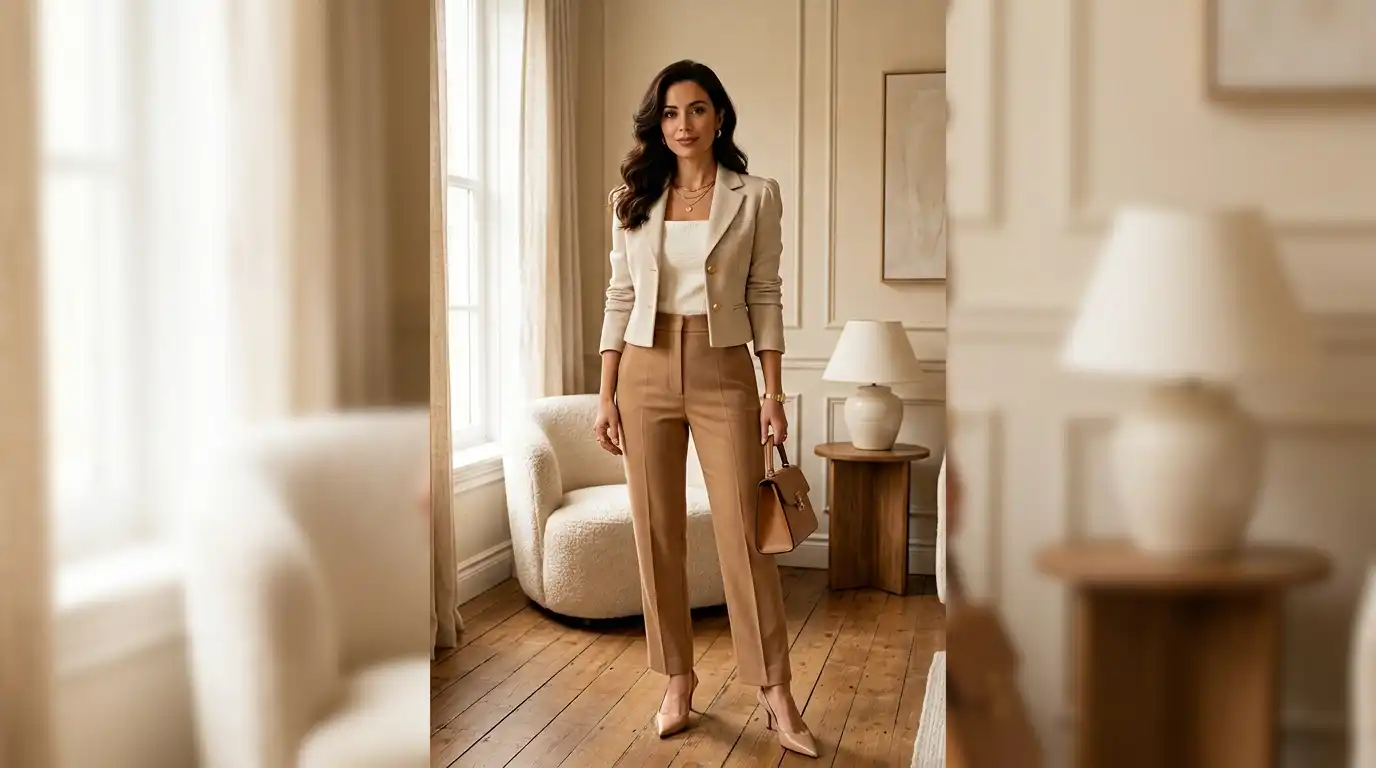
Finding clothes that flatter a petite pear shape isn’t about making your hips disappear. It’s about creating visual balance while celebrating the curves that naturally define your silhouette. When your hips are proportionally wider than your shoulders and your height is on the shorter side, small styling decisions—like where a jacket ends or how a fabric drapes—can have a much bigger impact than they do on taller frames.
Many style guides treat all pear shapes the same, but petite proportions introduce a different set of considerations. A blazer that works beautifully on someone who is 5’9″ may overwhelm someone who is 5’2″. Likewise, a trendy wide-leg trouser can either lengthen your legs or make your frame appear shorter depending on the rise, fabric, and hem length. Understanding these details helps you choose clothing that works with your proportions instead of against them.
The goal isn’t to follow rigid fashion rules or avoid certain garments forever. Personal style should always come first. Instead, think of the ideas in this guide as styling principles that explain why certain combinations create a balanced silhouette. Once you understand those principles, you can confidently adapt trends, build outfits that suit your wardrobe, and make smarter shopping decisions.
Throughout this guide, you’ll learn how to choose tops, bottoms, dresses, jackets, shoes, and accessories that complement a petite pear shape. You’ll also discover how fabric, garment construction, and proportion influence the overall look, helping you create outfits that feel polished, comfortable, and true to your style.
Understanding the Petite Pear Shape
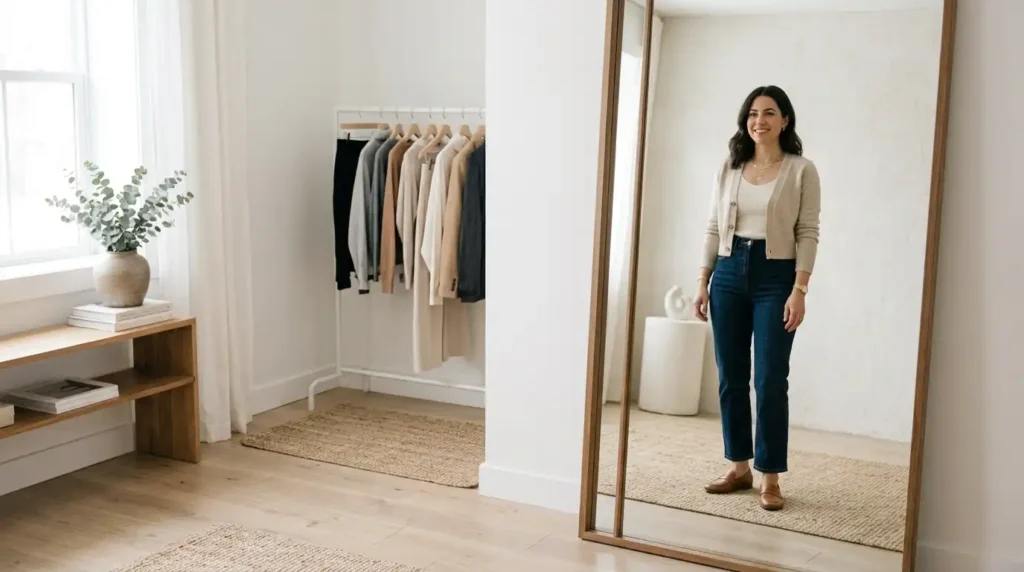
A petite pear shape typically features shoulders and bust that are narrower than the hips, along with a naturally defined waist and a height of around 5’4″ (163 cm) or below. The goal of styling isn’t to reduce your hips but to create visual harmony between your upper and lower body while maintaining a long, balanced silhouette.
The easiest way to identify this body shape is by looking at your natural proportions rather than your clothing size. Many petite pear-shaped women find that tops fit comfortably while trousers or skirts require a larger size to accommodate the hips and thighs. Because the waist remains relatively defined, garments that acknowledge this shape usually feel more comfortable and look more balanced than straight-cut styles.
Being petite changes how clothing interacts with the body. Every seam, pocket, pleat, and hem occupies a greater percentage of your frame than it would on someone taller. A jacket that’s only a few inches longer can visually shorten your legs, while oversized sleeves may overwhelm your shoulders instead of adding the intended volume. This is why proportion often matters more than following general body-shape advice.
How It Differs from a Standard Pear Shape
A standard pear shape and a petite pear shape share the same basic proportions, but height changes how garments create visual balance. Longer coats, oversized knitwear, and dramatic wide-leg trousers may look effortlessly balanced on a taller pear shape because there is more vertical space to distribute their volume. On a petite frame, those same pieces can dominate the outfit unless they’re carefully tailored.
Another difference is the role of garment scale. Large prints, oversized lapels, extra-deep pockets, or exaggerated ruffles can quickly overpower a shorter silhouette. Choosing details that are proportional to your frame often creates a more refined appearance than simply selecting the smallest available size.
It’s also helpful to separate timeless styling principles from changing trends. Fashion trends might encourage oversized tailoring one season and slim silhouettes the next, but the underlying principles of visual balance, waist definition, and proportion remain consistent. Once you understand those fundamentals, you can adapt almost any trend to suit a petite pear shape rather than feeling limited by traditional styling rules.
One common misconception is that having wider hips means every outfit should draw attention away from them. In reality, balanced styling works because it distributes visual interest across the entire outfit. When the shoulders, waist, and lower body feel intentionally connected, the eye reads the silhouette as cohesive instead of focusing on a single area. This approach creates outfits that feel natural rather than engineered to conceal your shape.
The Styling Principle That Changes Everything
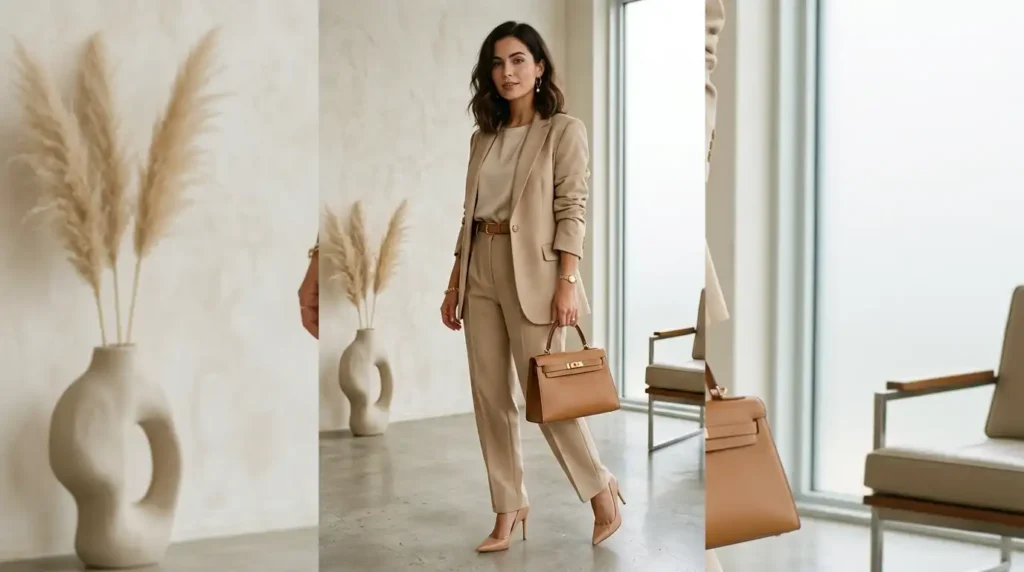
The most effective way to dress a petite pear shape is to create visual balance between your upper and lower body while preserving a clean vertical line. Instead of trying to make your hips look smaller, focus on guiding the eye across your entire silhouette. This approach produces outfits that feel proportionate, polished, and comfortable without hiding your natural shape.
Visual balance is the relationship between where the eye is drawn and how volume is distributed throughout an outfit. Since a petite pear shape naturally carries more visual weight below the waist, adding thoughtful detail to the upper body creates harmony. Shoulder seams, necklines, sleeve shape, texture, and color all influence where attention naturally falls.
A boat neckline, for example, widens the appearance of the shoulders without adding bulk. Square necklines create a similar effect by framing the collarbone and drawing the eye outward rather than downward. Even subtle details such as shoulder gathers, textured knit patterns, or statement earrings can help balance proportions without making an outfit feel busy.
At the same time, maintaining a strong vertical line keeps the body from appearing shorter. A vertical line is the uninterrupted visual path the eye follows from the shoulders to the feet. Long cardigans worn open, matching top-and-bottom colors, high-rise trousers, and pointed-toe shoes all encourage the eye to travel smoothly, making the frame appear longer.
Why Balance Works Better Than Camouflage
Trying to camouflage the hips often creates the opposite effect. Oversized tops, bulky tunics, or long boxy jackets can hide the waist—the feature that naturally defines a pear-shaped figure. Without that waist definition, the body may appear wider overall rather than more balanced.
Another common mistake is choosing very dark bottoms with extremely bright or oversized tops in the hope of disguising the lower body. While contrast can draw attention upward, an abrupt color break at the waist may visually shorten the legs on a petite frame. A softer transition, such as tonal dressing or closely related shades, usually creates a more continuous silhouette while still giving the upper body gentle emphasis.
Fabric choice plays an equally important role. A lightweight crepe trouser drapes smoothly over the hips, while a stiff heavyweight fabric tends to hold its own shape. Two pairs of trousers with the same cut can therefore create very different silhouettes simply because of how the fabric behaves. Paying attention to drape is often more valuable than focusing on the garment label alone.
One styling principle that many guides overlook is the relationship between structure and movement. If every piece in an outfit is soft and flowing, the silhouette can lose definition. If every piece is sharply structured, the look may feel rigid. Combining a structured top or blazer with softly draping bottoms often creates the most balanced result for a petite pear shape. It defines the upper body, allows the lower half to move naturally, and keeps the overall outfit visually light rather than heavy.
Tops That Bring Balance to Your Frame
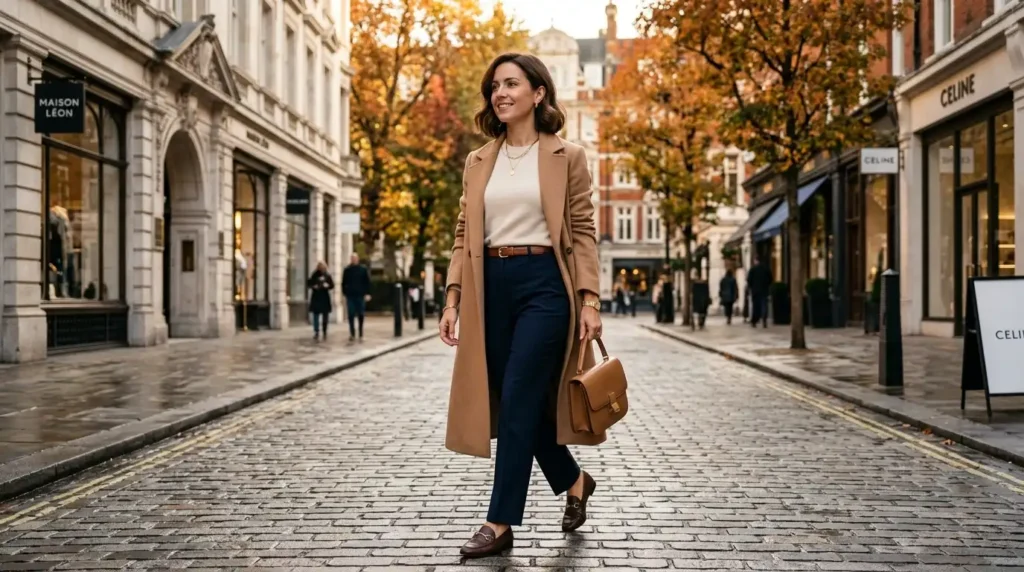
The right top helps create balance by adding subtle visual emphasis to your shoulders and upper body without overwhelming your petite frame. Look for necklines, sleeve details, and tailored fits that guide the eye upward while maintaining waist definition. Small adjustments in cut and construction often make a bigger difference than bold colors or oversized designs.
Necklines are one of the easiest ways to influence proportion. Boat necks visually broaden the shoulder line, while square necks highlight the collarbone and create a structured frame around the face. A V-neck, explained simply as a neckline that forms a “V” shape toward the chest, naturally elongates the neck and torso. It works especially well if you prefer a more understated look because it adds height rather than width.
Sleeves also affect how balanced an outfit appears. Slightly puffed sleeves, gathered shoulders, cap sleeves with structure, or subtle shoulder pleats can make the upper body appear more proportionate to the hips. The key is moderation. Oversized balloon sleeves may dominate a petite frame, while completely flat, fitted sleeves can make the shoulders seem narrower by comparison.
Fit deserves just as much attention as style. A blouse that gently follows your shape and skims the waist creates a cleaner silhouette than one that hangs straight from the shoulders. Tops that end around the natural waist or can be tucked into high-rise bottoms usually maintain better proportions than long untucked styles that cover the hips.
Color and texture offer another opportunity to direct attention upward. Lighter shades, textured knits, embroidery, lace panels, or subtle prints naturally draw the eye to the upper half of the outfit. That doesn’t mean every top needs to be bright or patterned. Even a cream knit with an interesting stitch pattern can provide more visual interest than a plain oversized sweatshirt.
An often-overlooked detail is shoulder seam placement. The shoulder seam should sit close to your natural shoulder edge rather than extending several centimeters beyond it. Dropped shoulders, which place the seam lower on the arm, can create a relaxed aesthetic but often make a petite pear frame look narrower at the top and wider at the hips. A well-positioned shoulder seam quietly improves proportion without anyone noticing why the outfit looks so polished.
When choosing fabrics, think about how they behave throughout the day. Cotton poplin holds a crisp shape that adds gentle structure, making it a good choice for button-down shirts. Silk and satin drape more fluidly, creating an elegant look that works well when paired with tailored trousers or structured skirts. Soft jersey offers comfort but should still have enough shape to avoid clinging where you don’t want extra emphasis.
Rather than relying on decorative details alone, combine several subtle elements. A square-neck blouse in a textured fabric with lightly gathered shoulders often creates a stronger balancing effect than a single dramatic feature. This layered approach feels timeless, adapts easily to changing trends, and allows your natural proportions—not the clothing—to remain the focus.
Choosing Bottoms That Lengthen Without Adding Bulk
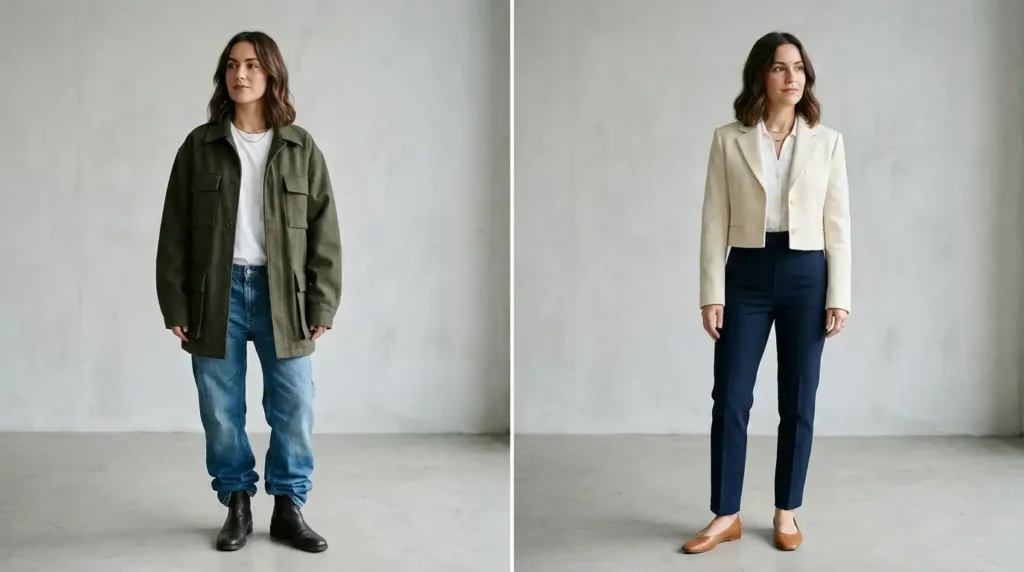
The most flattering bottoms for a petite pear shape create a long leg line while skimming the hips instead of clinging to them. High-rise waists, clean tailoring, and fabrics with a soft drape usually achieve this balance better than extremely tight or overly loose styles. The objective is smooth proportion, not hiding your curves.
A high-rise waistband sits at or just above your natural waist, making your legs appear longer by raising the visual starting point of the lower body. This effect is particularly valuable on a petite frame, where even a small shift in waist placement can noticeably improve overall proportion. Mid-rise styles can also work, but very low-rise trousers often shorten the legs and place unnecessary emphasis on the widest part of the hips.
The cut of the leg matters just as much as the rise. Straight-leg jeans remain one of the most versatile options because they follow the body’s natural line without adding extra volume. Bootcut jeans, which widen slightly below the knee, create a balanced transition between the hips and the feet. Tailored wide-leg trousers can also be flattering when the fabric falls vertically from the hips rather than flaring outward immediately.
Fabric often determines whether a pair of trousers looks polished or bulky. Denim with a small amount of stretch adapts comfortably to the hips while maintaining its shape throughout the day. Crepe and lightweight wool blends hang smoothly, creating clean vertical lines. Thick, stiff fabrics with heavy pleats or bulky side pockets may hold excess volume around the hips, making the lower body appear wider than it naturally is.
Pocket placement is another detail that’s easy to overlook. On jeans, back pockets positioned slightly higher and closer together tend to create a lifted appearance. Oversized pockets placed too low can visually lengthen the seat rather than the legs. Similarly, large cargo pockets or decorative patch pockets on the hips add visual weight exactly where many petite pear-shaped women prefer a cleaner silhouette.
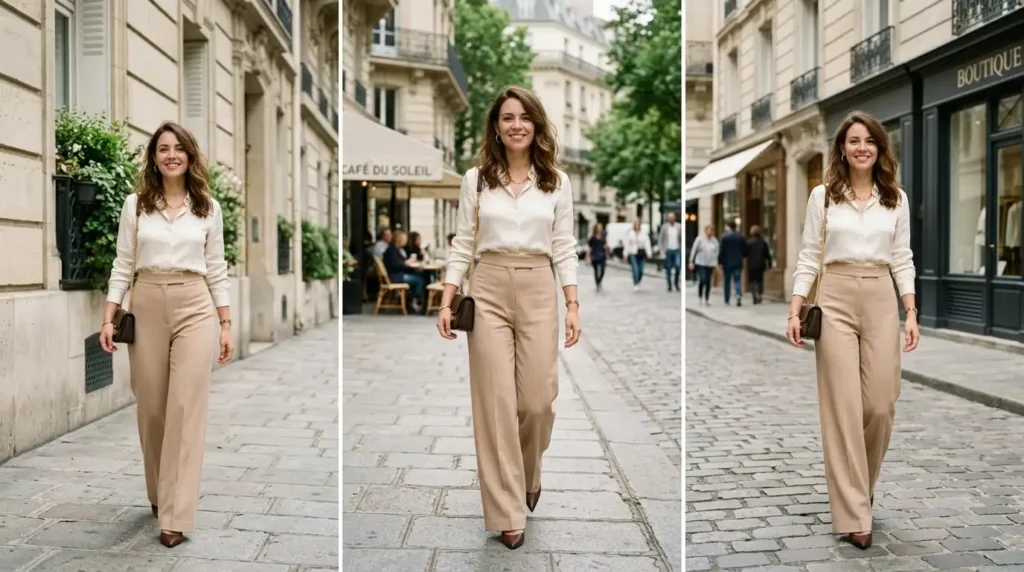
Hem length deserves careful attention because it influences both height and balance. Full-length trousers should nearly touch the top of your shoes without pooling on the floor. Cropped styles often look best when they end just above the ankle bone, exposing the slimmest part of the leg. Crops that stop at the widest point of the calf can interrupt the vertical line and make the legs appear shorter.
Best vs. Less Flattering Bottom Choices
| Category | Usually More Flattering | Usually Less Flattering |
|---|---|---|
| Jeans | High-rise straight-leg, bootcut | Ultra-low rise with oversized pockets |
| Trousers | Tailored wide-leg, straight-leg | Heavy pleated styles in stiff fabrics |
| Skirts | A-line, bias-cut | Bulky gathered skirts with thick waistbands |
| Details | Clean front, minimal embellishment | Large cargo pockets, heavy hip detailing |
It’s also worth remembering that “wide-leg” doesn’t mean “extra-wide.” On a petite pear shape, a moderately tailored wide-leg trouser often creates a more elegant effect than exaggerated runway-inspired proportions. The fabric should fall from the hip rather than balloon outward, allowing movement while preserving a streamlined silhouette.
Finally, don’t judge a pair of bottoms in isolation. The same trousers can look completely different depending on what they’re paired with. A high-rise straight-leg jean worn with a tucked-in square-neck blouse and a cropped blazer creates a balanced silhouette because each piece supports the others. Styling is rarely about one perfect garment—it’s about how every element works together to create proportion.
Dresses and Skirts That Work With Your Shape
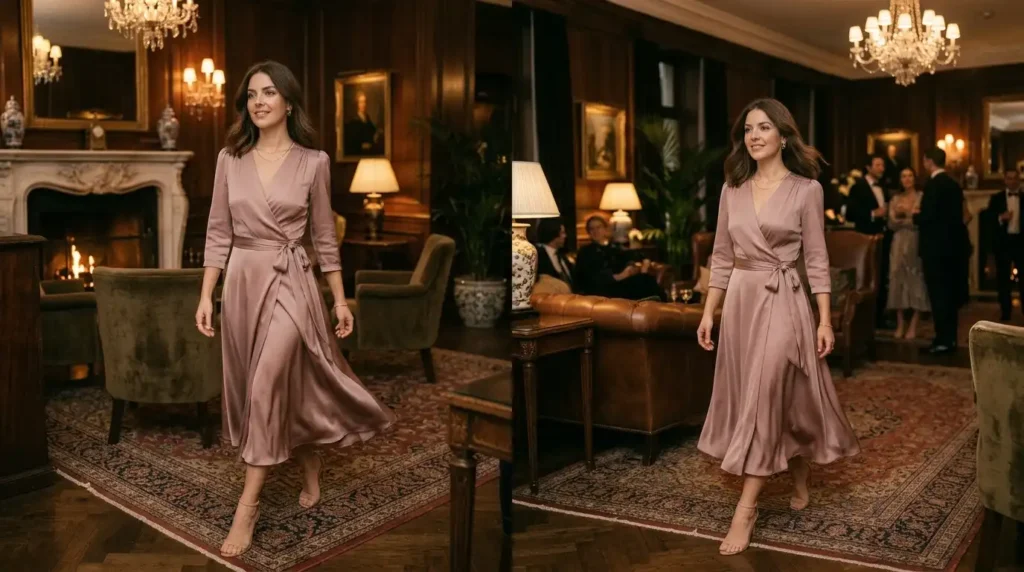
The best dresses and skirts for a petite pear shape define the waist, skim over the hips, and keep the eye moving vertically. Silhouettes that follow the body’s natural proportions generally look more balanced than styles that either cling too closely or add unnecessary volume. Choosing the right length and fabric is just as important as selecting the right cut.
A wrap dress remains one of the most reliable choices because it naturally highlights the waist while creating a V-shaped neckline that lengthens the upper body. The adjustable fit also allows the fabric to drape smoothly across the hips instead of pulling or bunching. For everyday wear, a fit-and-flare dress offers similar benefits by gently following the body’s shape before flowing away from the hips.
A-line skirts are another timeless option. They fit neatly at the waist and gradually widen toward the hem, allowing movement without adding bulk around the hips. Bias-cut skirts, cut diagonally across the fabric grain, behave differently. This construction gives the fabric more natural stretch and fluidity, allowing it to skim the body rather than standing away from it. The result is a softer silhouette that complements curves without feeling restrictive.
Length plays a surprisingly important role for petite proportions. Knee-length skirts create a classic, balanced look, while midi skirts can be equally flattering when they end at a visually intentional point, such as the narrowest part of the calf. A midi that stops at the widest area of the calf may interrupt the leg line and make the lower half appear heavier. If you enjoy maxi dresses, choose styles with a defined waist and a hem that almost reaches the floor without dragging, creating one continuous vertical line.
Print scale is another detail that deserves attention. Smaller florals, delicate stripes, and refined geometric patterns often feel more harmonious on a petite frame than oversized motifs. That doesn’t mean large prints are off-limits, but they usually work best when balanced with simple accessories and clean tailoring elsewhere in the outfit.
Fabric choice can completely change how the same silhouette looks. A lightweight crepe wrap dress falls close to the body and moves naturally as you walk, while a stiff cotton with heavy lining may create extra volume around the hips. Similarly, satin catches the light and highlights movement, whereas linen offers more structure with a relaxed texture. Understanding how a fabric behaves helps you predict how the finished garment will look, even before trying it on.
Many style guides recommend avoiding pencil skirts for pear shapes, but that advice isn’t universal. A well-tailored pencil skirt made from a medium-weight stretch fabric can be very flattering because it follows the body’s natural curves without restricting movement. The key is balance. Pairing it with a structured blouse, subtle shoulder detail, or a cropped blazer shifts visual attention upward, preventing the outfit from feeling bottom-heavy.
A useful way to think about dresses and skirts is to evaluate the entire silhouette rather than focusing on one measurement. A dress with the “perfect” waistline can still feel overwhelming if the sleeves are oversized or the hem falls in the wrong place. When the neckline, waist, skirt shape, and length work together, the result feels effortless because every element contributes to balanced proportions rather than competing for attention.
Jackets, Layers, and Outerwear That Improve Proportion
The right jacket or layer should define your upper body, highlight your waist, and maintain a long vertical line. For a petite pear shape, length, shoulder structure, and fit have a greater impact than trends or brand labels. A well-cut jacket can instantly improve the balance of an outfit, while an ill-proportioned one can make even flattering clothes feel awkward.
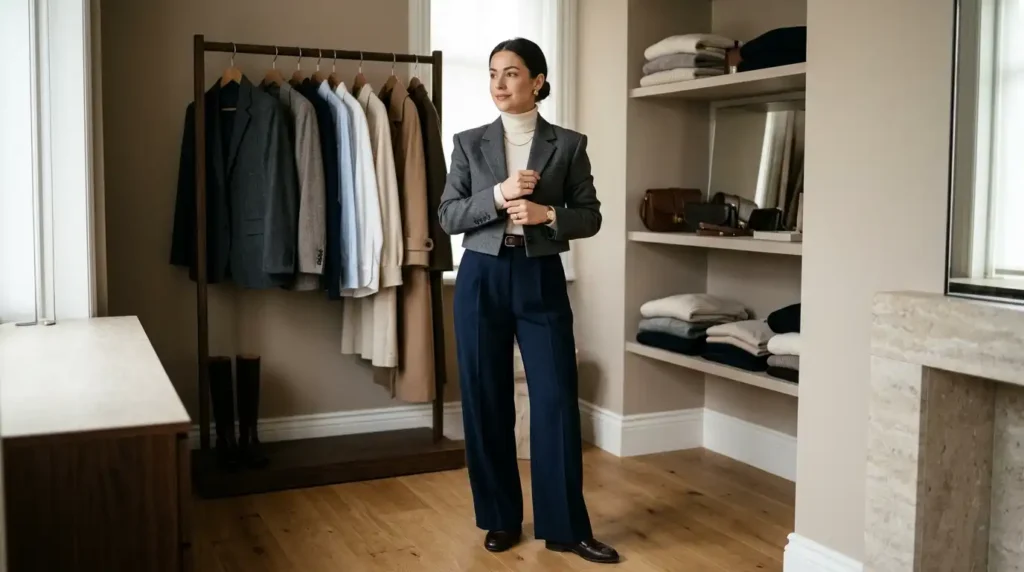
Cropped blazers are one of the most dependable choices because they typically end at or slightly above the natural waist. This length keeps the legs looking long and avoids covering the widest part of the hips. A blazer with light shoulder padding or a well-defined shoulder seam also helps balance your proportions by giving the upper body subtle structure without appearing boxy.
Single-breasted jackets often create a cleaner silhouette than heavily detailed double-breasted styles. Since there is less overlapping fabric across the front, the outfit feels lighter and more streamlined. If you prefer double-breasted blazers, look for versions with smaller lapels and a tailored fit rather than oversized, trend-focused cuts.
Longline outerwear can absolutely work on a petite pear shape, but the proportions need to be intentional. A tailored trench coat or wool coat that follows the body and falls in a straight line creates an elegant vertical effect. Leaving the coat open when appropriate allows the contrasting inner outfit to form a long central column, naturally drawing the eye from the shoulders toward the feet instead of across the hips.
Cardigans deserve the same attention as jackets. Chunky, oversized knits that extend well below the hips may feel cozy, but they often hide the waist and reduce definition. A lightweight cardigan that ends around the waist or upper hip usually preserves better balance. Wearing it open instead of fastening every button also helps maintain a continuous vertical line.
Belts can be surprisingly effective when used thoughtfully. A medium-width belt placed at your natural waist reinforces your body’s proportions without creating a harsh visual break. Extremely wide belts, particularly in a contrasting color, can divide a petite frame into shorter sections. Matching the belt closely to your outfit creates definition while keeping the overall silhouette uninterrupted.
Layering is where many petite women accidentally lose proportion. Thick sweaters under bulky coats, oversized scarves, and multiple long layers can add visual volume that overwhelms a shorter frame. Instead, think in terms of proportion layering: each layer should have a purpose and contribute to the outfit’s shape. For example, a fitted knit, a cropped blazer, and a tailored coat create depth without sacrificing structure.
This is also where timeless styling differs from seasonal fashion. Oversized tailoring appears regularly on runways, but runway proportions are often designed around taller models. Rather than copying the look exactly, adapt the idea by choosing relaxed tailoring with defined shoulders, slimmer sleeves, or shortened hems. You keep the modern aesthetic while ensuring the garments complement your proportions instead of competing with them.
Understanding your body proportions is the foundation of creating a balanced and flattering wardrobe. For petite women with a pear-shaped figure, choosing the right silhouettes, fits, and styling techniques can help create visual harmony. Explore our Body & Style Fundamentals guides to learn more about proportion, fit, and essential styling principles that make every outfit work better for your unique frame.
Shoes and Accessories That Complete the Look
Shoes and accessories may seem like finishing touches, but they influence how the entire silhouette is perceived. For a petite pear shape, the most effective choices create continuity, support the vertical line, and add personality without placing too much visual weight in one area. Small details can make an outfit feel intentional from head to toe.
Footwear plays a major role in creating length. Pointed-toe shoes naturally extend the appearance of the foot, creating a smoother transition between your legs and footwear. Low-vamp shoes, meaning styles that expose more of the top of the foot, have a similar effect because they reveal more skin and reduce visual interruption.
That doesn’t mean petite women need to avoid boots or flats. Ankle boots can look elegant when the color closely matches the trousers, tights, or skirt, creating a continuous line. A chunky boot with a thick ankle strap in a contrasting shade, however, can create a noticeable break that makes the legs appear shorter. The difference comes from how the shoe connects visually with the rest of the outfit.
Heels can add height, but the shape matters more than the heel measurement. A slim heel with a pointed toe often creates a refined effect, while very heavy platforms can add visual weight beneath a petite frame. A small kitten heel, sleek loafer, or structured ballet flat can be just as effective when the outfit already has strong proportion.
Accessories help control where attention moves. Statement earrings, elegant necklaces, or scarves placed near the neckline naturally draw the eye upward, reinforcing the balance created by carefully chosen tops. This doesn’t require oversized accessories. A delicate gold necklace or a pair of pearl earrings can provide enough detail to complete the upper half of the outfit.
Handbags require a little more consideration for petite proportions. Large oversized totes may be practical, but their scale can sometimes overpower a smaller frame. Medium-sized structured bags often create a more balanced appearance because their shape adds polish without competing with the outfit. A bag that sits around the waist or upper hip area should also be considered carefully, as the placement can affect where the eye focuses.
Belts and jewelry can also reinforce your personal style while supporting proportion. A slim belt over a dress defines the waist, while a long pendant necklace creates another vertical element. These details work because they add direction and movement rather than simply adding decoration.
One useful styling technique is creating a visual pathway. Imagine the eye moving from your face down through your outfit. If your earrings, neckline, jacket opening, trouser crease, and shoes all encourage that downward movement, the outfit feels naturally elongated. This is why simple accessories often have such a strong impact—they guide perception without making the styling feel obvious.
For petite pear shapes, the best accessories are not the ones that attract attention individually. They are the ones that make the entire outfit feel connected. A carefully chosen shoe, bag, or necklace can support your proportions while allowing your clothing and personality to remain the focus.
Common Styling Mistakes Petite Pear Shapes Make
Many petite pear styling mistakes happen because of outdated advice that focuses on hiding certain body areas instead of understanding proportion. The most flattering outfits usually come from adjusting fit, scale, and balance rather than avoiding specific garments completely. A style choice that feels wrong is often not the item itself—it is the combination, length, or fabric that needs adjustment.
One common mistake is wearing oversized pieces without considering scale. Relaxed tailoring, oversized shirts, and chunky knitwear can look modern and effortless, but too much volume throughout the outfit can overwhelm a petite frame. A large sweater paired with wide-leg trousers, for example, removes waist definition and creates a block-like silhouette. Balancing one relaxed piece with one more structured or fitted element usually creates a more intentional result.
Another frequent issue is choosing tops that end at the widest point of the hips. A long blouse or jacket that stops directly across the fullest part of the lower body can create a horizontal line that draws attention to that area. Slightly shorter lengths, tucked-in styles, or open layers that continue vertically often create a smoother transition.
Many women also avoid lighter-colored bottoms because of the belief that dark colors are always more flattering. While darker shades can create a visually slimming effect, color alone does not determine how balanced an outfit looks. A well-tailored cream trouser with a clean silhouette can be more flattering than a poorly fitted black pair with excess fabric, heavy pockets, or the wrong rise.
Another overlooked mistake is ignoring garment construction. A dress may have a beautiful print and trendy shape, but if the shoulder placement is too wide, the waist falls too low, or the fabric creates unnecessary volume, the result may not feel comfortable. Understanding seams, shaping, and fabric behavior helps you evaluate clothing beyond the label or trend name. Learning how garments are designed and constructed also explains why small changes in fit can significantly affect proportion and appearance, which is a foundation of professional fashion design principles taught by institutions such as The Fashion Institute of Technology (FIT).
Some petite pear shapes also rely too heavily on body-type rules and avoid styles they genuinely love. For example, a fitted pencil skirt, a bold print, or a wide-leg trouser can work when the surrounding elements create balance. Fashion becomes limiting when guidelines are treated as restrictions instead of tools.
Footwear choices can create another proportion challenge. Shoes with heavy ankle straps, extreme contrast, or very bulky shapes may visually cut through the leg line. However, this doesn’t mean every outfit requires delicate shoes. A structured loafer or ankle boot can look excellent when its color, shape, and styling connect naturally with the rest of the outfit.
A more useful approach is to ask three questions before adding an item to your wardrobe:
- Does this garment respect my proportions?
- Does the fabric create the shape I want?
- Does it work with the rest of my outfit rather than competing with it?
The biggest shift comes from moving away from the idea of “fixing” a pear shape. Your hips are not a problem that clothing needs to solve. Good styling simply creates harmony between different parts of your silhouette, allowing your natural proportions to become part of your personal style.
Outfit Formulas You Can Wear Year-Round
A reliable wardrobe becomes easier to manage when you have a few outfit formulas that already support your proportions. Instead of searching for a completely new look every morning, you can combine proven elements that create balance, comfort, and personal style. The best formulas are flexible enough to adapt across seasons, fabrics, and fashion trends.
Structured Top + High-Rise Bottom + Defined Waist
This combination works because each piece contributes to proportion. A structured top adds gentle emphasis to the upper body, while high-rise trousers or jeans lengthen the lower half by raising the visual waistline. Adding a belt or a tucked-in top reinforces the natural waist without creating a harsh break.
For a casual version, try a cotton poplin shirt tucked into straight-leg jeans with loafers. For a more polished outfit, replace the jeans with tailored trousers and add a cropped blazer. The structure remains the same, but the mood changes depending on the fabric and accessories.
Fitted Knit + A-Line Skirt + Simple Footwear
A fitted knit creates a clean upper silhouette, while an A-line skirt allows movement around the hips without adding unnecessary bulk. This formula works especially well during transitional seasons because it can be adjusted with tights, boots, sandals, or lightweight layers.
The key detail is the skirt fabric. A soft wool blend or flowing crepe creates a graceful shape, while very stiff fabrics with excessive volume may overpower a petite frame. Keeping the top slightly closer to the body allows the skirt’s movement to become the main feature without losing balance.
Monochrome Outfit + Statement Detail
Monochrome dressing, which means wearing different shades of one color family, is one of the easiest ways to create a longer visual line. Matching your top, bottoms, or outer layer in similar tones reduces abrupt breaks and allows the eye to move smoothly through the outfit.
This does not mean every piece needs to be identical. A cream sweater with beige trousers and a camel coat can create depth while maintaining continuity. Add personality through one intentional detail, such as a textured handbag, gold jewelry, or a patterned scarf near the face.
Wrap Dress + Structured Layer
A wrap dress already supports a petite pear shape through waist definition and a flattering neckline. Adding a structured layer, such as a cropped blazer or fitted cardigan, introduces shape around the shoulders and creates a more balanced silhouette.
This formula works well because it combines softness with structure. The dress provides movement, while the outer layer adds architectural detail. This balance between fluid and tailored pieces is often what makes an outfit look refined rather than overly styled.
Tailored Outerwear + Simple Base Outfit
A simple foundation outfit can become much more polished with the right outer layer. A fitted turtleneck, straight-leg trousers, and a tailored coat create a timeless silhouette because the coat adds structure while the base remains clean.
This formula is particularly useful for petite women because outerwear often creates the strongest first impression. A coat with proper shoulder placement, a defined shape, and an appropriate hem length can transform everyday basics into an intentional outfit.
The most effective wardrobe strategy is not collecting endless pieces—it is understanding which combinations consistently support your proportions. Once you know how your body interacts with different cuts, fabrics, and lengths, dressing becomes more creative and less complicated. Trends can then become additions to your style rather than replacements for it.
Building a Petite Pear Shape Wardrobe That Feels Like You
A successful petite pear shape wardrobe is built around pieces that work together, not a collection of clothes chosen only because they are labeled as “flattering.” The strongest wardrobes combine structure, comfort, and personal taste. When your clothing reflects both your proportions and your lifestyle, getting dressed becomes easier because more pieces naturally work together.
Start with foundation pieces that create balance. A well-fitted blazer, a pair of high-rise trousers, straight-leg jeans, a versatile knit top, and a waist-defining dress can form the backbone of many outfits. These pieces are valuable because they provide reliable proportions that can be styled in different ways throughout the year.
Fabric quality also matters when building a wardrobe that lasts. A cotton shirt with enough structure can create shape without feeling stiff, while a wool-blend coat can provide warmth and a refined silhouette. Natural fibers and well-constructed garments often age differently from trend-focused pieces because their value comes from how they fit and function rather than a temporary fashion moment.
Color coordination can make a smaller wardrobe feel much larger. Creating a palette of complementary shades allows different pieces to mix easily while maintaining a cohesive appearance. Soft neutrals such as cream, camel, navy, charcoal, and olive are especially useful because they pair well with both classic and seasonal additions.
A common mistake is buying clothing based on a single occasion instead of considering how often it can be worn. A beautiful skirt that only works with one top may create wardrobe frustration, while a simple A-line skirt that pairs with sweaters, blouses, and jackets becomes a dependable favorite. Versatility is one of the strongest signs that a piece deserves space in your closet.
Your wardrobe should also leave room for experimentation. Understanding proportion gives you more freedom, not fewer options. Once you know why certain cuts work, you can confidently try new silhouettes, patterns, and trends while making adjustments that suit your frame.
The purpose of styling a petite pear shape is not to follow a strict formula every day. Clothing should support the way you want to present yourself, whether that means classic elegance, casual comfort, minimalist dressing, or a more expressive fashion style. The most polished outfits usually come from combining knowledge of fit with confidence in your own preferences.
A balanced wardrobe is ultimately less about having more clothing and more about having the right relationship between your pieces. When your garments respect your proportions, reflect your personality, and work together naturally, style becomes a creative process rather than a daily challenge.
Conclusion
Dressing a petite pear shape becomes much easier when you focus on proportion rather than trying to follow strict rules. The most effective outfits create harmony through thoughtful choices in silhouette, fabric, length, and styling details. A structured neckline, well-placed waist definition, balanced layers, and carefully chosen bottoms can transform how an outfit feels without changing your natural shape.
The goal is not to hide your hips or dress according to limitations. Your proportions are simply a starting point for understanding what creates balance. Once you know how different garments interact with your frame, you can experiment with trends, build a more intentional wardrobe, and choose pieces that feel both comfortable and stylish.
A flattering wardrobe is ultimately one that works with your lifestyle and reflects your personality. Use these styling principles as a foundation, then adapt them to your own taste. The best outfit is the one that helps you feel confident while looking like yourself.
FAQs
What is the most flattering style for a petite pear shape?
The most flattering styles for a petite pear shape create balance between the shoulders and hips while maintaining a defined waist. Structured tops, high-rise bottoms, A-line skirts, wrap dresses, and tailored jackets often work well because they support natural proportions without adding unnecessary bulk.
Can petite pear shapes wear wide-leg pants?
Yes, petite pear shapes can wear wide-leg pants when the fit and fabric are right. Choose high-rise styles with a smooth waistband and fabric that falls vertically from the hips. A tailored wide-leg trouser usually creates a longer silhouette than an oversized, stiff version with excessive volume.
What tops look best on a petite pear body?
Tops with details around the shoulders and neckline often create balance for a petite pear shape. Square necklines, boat necks, subtle puff sleeves, structured blouses, and fitted knits can add visual interest to the upper body while keeping the waist defined.
Are skinny jeans flattering for petite pear shapes?
Skinny jeans can work for petite pear shapes, especially when they have a high rise and are paired with balanced tops or structured layers. The key is avoiding combinations that create too much contrast between a narrow upper body and a fitted lower half.
What dress style is best for a petite pear shape?
Wrap dresses, fit-and-flare dresses, and A-line dresses are often flattering because they define the waist and allow movement around the hips. The best choice depends on fabric, length, and construction rather than the dress style alone.
Should petite pear shapes avoid oversized clothing?
Petite pear shapes do not need to avoid oversized clothing completely. The key is balancing relaxed pieces with structured elements. An oversized sweater can work with slim tailored trousers, while a boxy top paired with very wide bottoms may overwhelm a shorter frame.


