
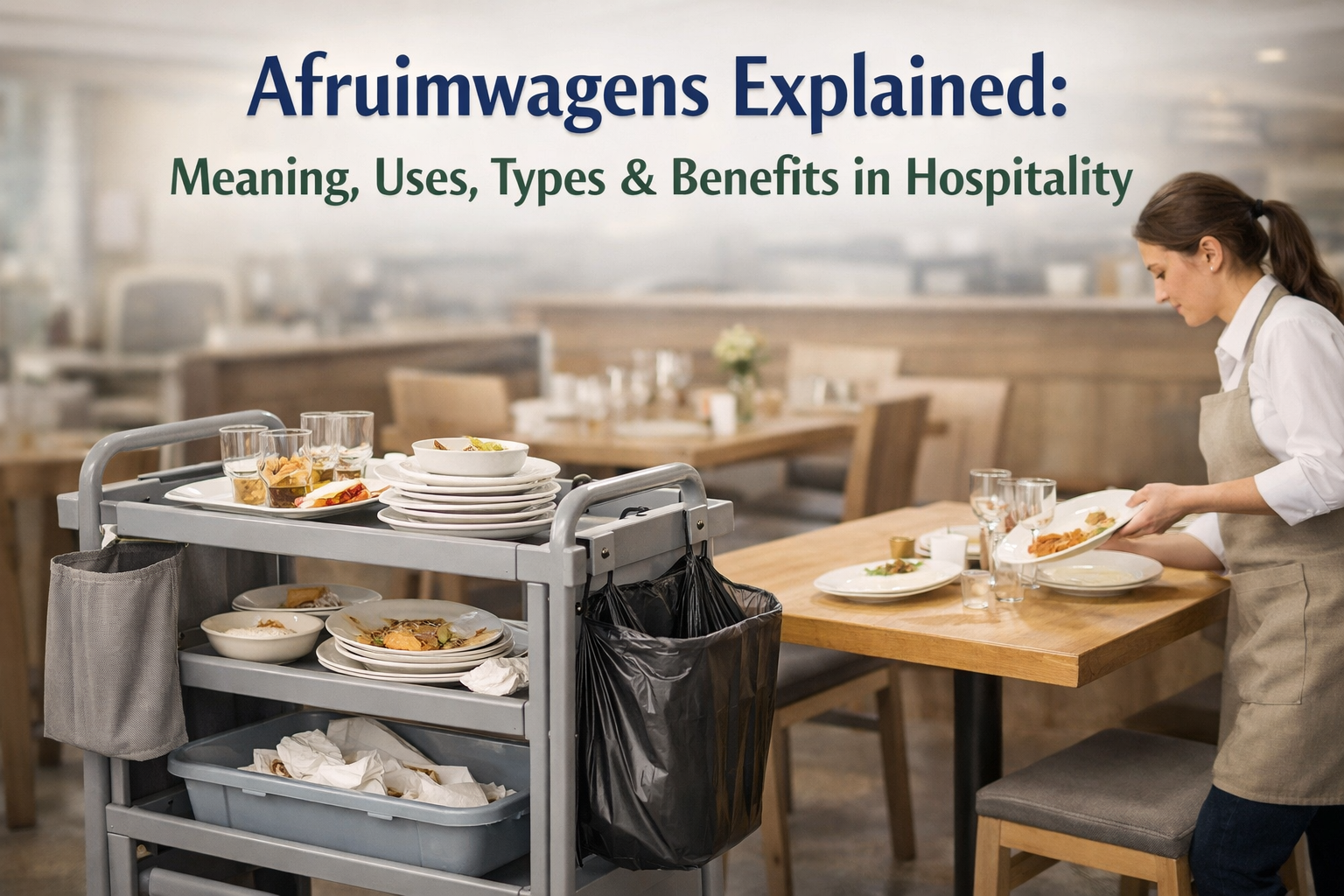
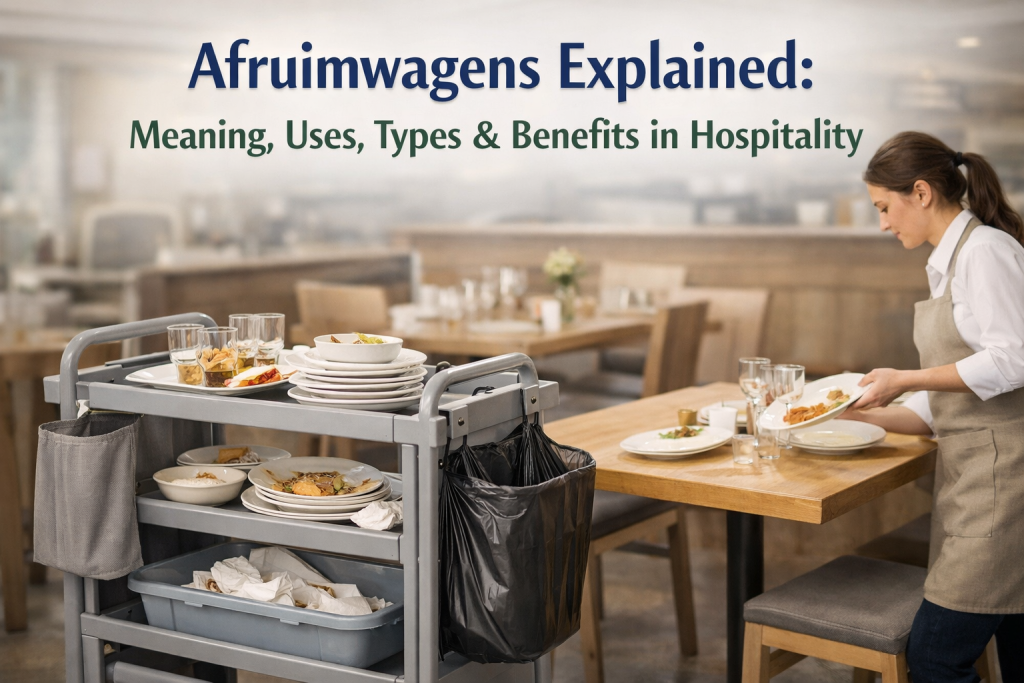
Afruimwagens are specialized hospitality service trolleys used for collecting and transporting used dishes, cutlery, and tableware from dining areas to kitchen or washing stations. They are an essential part of restaurant and hotel operations, helping maintain cleanliness and workflow efficiency.
Meaning in Hospitality Context:
In professional food service environments, an afruimwagen functions as a dish-clearing cart. It is designed to:
- Speed up table turnover
- Reduce manual carrying of dishes
- Improve hygiene in dining areas
- Support structured back-of-house operations
They are commonly found in:
- Restaurants
- Hotels
- Catering services
- Institutional kitchens (schools, hospitals, canteens)
Origin of the Term (Dutch Language):
The word “afruimwagen” comes from Dutch:
- “afruimen” = to clear away (tables/dishes)
- “wagen” = cart or wagon
So, afruimwagen literally means “clearing cart” or “dish removal trolley.”
The term is widely used in Dutch-speaking regions and is often translated in English as:
- Dish trolley
- Clearing trolley
- Service cart
Summary:
Afruimwagens are hospitality trolleys used to collect and transport used dishes from dining areas to kitchen spaces. They are a key part of restaurant workflow efficiency, hygiene management, and service organization.
Key Takeaways:
- Afruimwagens = dish-clearing trolleys in hospitality
- Used to transport used plates and cutlery
- Common in restaurants, hotels, and catering services
- Originates from Dutch language meaning “clearing cart”
Pros and Cons:
| Pros | Cons |
| Improves service efficiency | Requires storage space |
| Enhances hygiene standards | Can be costly in high-end models |
| Reduces staff workload | Needs regular cleaning |
| Speeds up table turnover | Improper use can cause clutter |
Facts:
- Afruimwagens are trolleys used in hospitality to collect and transport used dishes.
- They are essential for restaurant workflow and hygiene management.
- The term comes from Dutch, meaning “clearing cart.”
Also read: Bjudlunch Meaning in Business: Culture, Etiquette & Key Insights.
Types of Afruimwagens:
Standard Dish Trolleys:
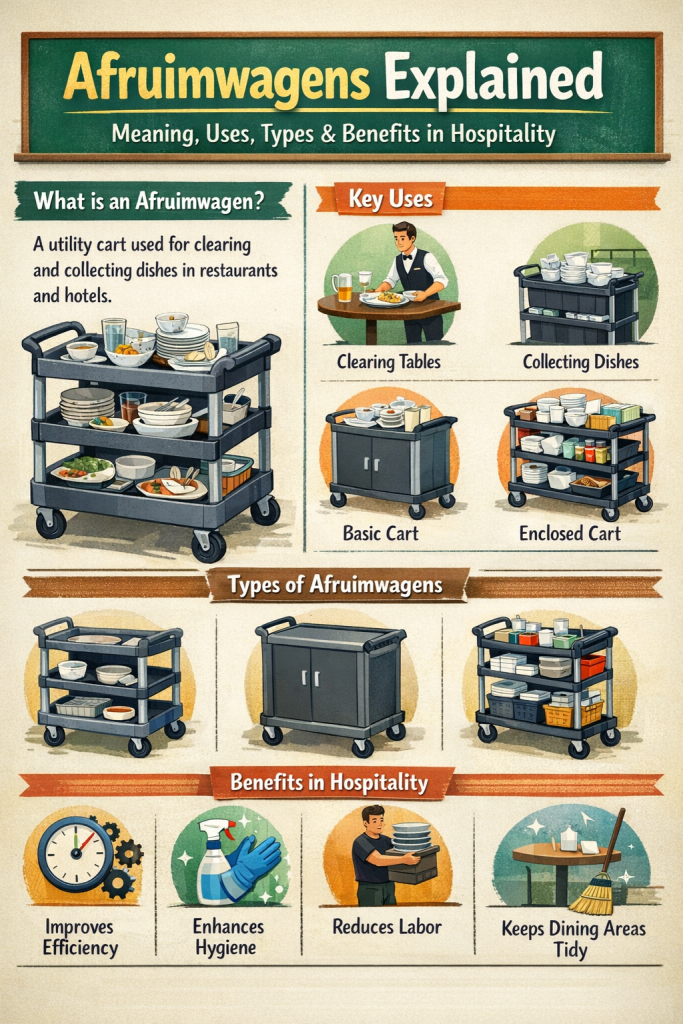
Standard afruimwagens are the most commonly used type in restaurants and cafeterias. They are designed for:
- Basic dish collection
- Moderate load capacity
- Easy movement between tables and kitchen
These models are typically lightweight and suitable for small to medium-sized hospitality businesses.
Multi-Level Service Carts:
Multi-level afruimwagens include several shelves or tiers, allowing staff to:
- Separate plates, glasses, and cutlery
- Organize items more efficiently
- Reduce stacking damage
They are widely used in busy restaurants and hotels where quick sorting improves workflow speed.
Heavy-Duty Industrial Models:
Heavy-duty afruimwagens are built for high-volume environments such as:
- Large hotels
- Hospitals
- Industrial kitchens
- Catering operations
Features include:
- Reinforced frames
- Higher load capacity
- Durable wheels for constant use
These are designed for continuous daily operation under heavy stress.
Compact Space-Saving Designs:
Compact afruimwagens are designed for tight kitchen spaces. They offer:
- Foldable or slim structures
- Easy storage options
- Lightweight mobility
These are ideal for small cafés or limited-space kitchens where efficiency is still required but space is restricted.
Types Comparison Table:
| Type | Best Use Case | Capacity | Key Feature |
| Standard | Small restaurants | Medium | Simple design |
| Multi-Level | Busy dining areas | High | Organized sorting |
| Heavy-Duty | Large facilities | Very high | Strong durability |
| Compact | Small kitchens | Low–Medium | Space-saving design |
Summary:
Afruimwagens come in different types including standard, multi-level, heavy-duty, and compact designs. Each type is suited for specific hospitality environments based on space, workload, and operational needs.
Key Takeaways:
- Multiple types of afruimwagens exist for different needs
- Multi-level models improve sorting efficiency
- Heavy-duty versions support high-volume operations
- Compact designs are ideal for small kitchens
Pros and Cons:
| Pros | Cons |
| Flexible options for all businesses | Choosing wrong type reduces efficiency |
| Improves workflow organization | Higher-end models can be expensive |
| Supports different kitchen sizes | Maintenance varies by model |
| Enhances operational efficiency | Some designs require training |
Facts:
- Afruimwagens come in standard, multi-level, heavy-duty, and compact types.
- Each type is designed for different hospitality environments and workloads.
- They improve efficiency, organization, and dish management in restaurants.
Key Features of Afruimwagens:
Afruimwagens are built using different materials depending on durability and usage requirements:
- Stainless steel: Highly durable, corrosion-resistant, and ideal for heavy-duty kitchens
- Plastic: Lightweight, cost-effective, and easy to clean
- Hybrid models: Combine metal frames with plastic components for balanced performance
Material choice directly impacts hygiene, lifespan, and operational efficiency.
Wheel and Mobility Design:
Mobility is a critical feature of afruimwagens. Most models include:
- 360-degree rotating wheels for smooth movement
- Locking brakes for stability during loading/unloading
- Shock-resistant wheels for uneven surfaces
This ensures safe and efficient transport even in busy kitchen environments.
Load Capacity:
Afruimwagens are designed to handle different weight levels depending on their structure:
- Light-duty: Suitable for small cafés
- Medium-duty: Common in restaurants
- Heavy-duty: Used in hotels and large kitchens
Proper load capacity ensures safe operation and prevents equipment damage.
Hygiene and Cleaning Features:
Since afruimwagens handle used dishes, hygiene is a key consideration. Common features include:
- Smooth, easy-to-clean surfaces
- Water-resistant materials
- Removable trays or compartments
- Anti-bacterial coatings in premium models
These features help maintain food safety and hygiene standards (HACCP compliance in many cases).
Features Overview Table:
| Feature | Description | Benefit |
| Material | Steel, plastic, hybrid | Durability & hygiene |
| Wheels | Rotating with brakes | Easy mobility |
| Load Capacity | Light to heavy duty | Safe transport |
| Hygiene Design | Washable surfaces | Food safety compliance |
Summary:
Afruimwagens are designed with durable materials, smooth mobility systems, strong load capacity, and hygiene-focused features, making them essential tools for efficient and safe hospitality operations.
Key Takeaways:
- Made from stainless steel, plastic, or hybrid materials
- Equipped with mobility wheels and brakes
- Designed for different load capacities
- Built with strong hygiene and cleaning standards
Pros and Cons:
| Pros | Cons |
| Durable and long-lasting designs | High-quality models can be expensive |
| Easy to move in busy environments | Poor maintenance reduces lifespan |
| Supports hygiene compliance | Cheap models may lack durability |
| Improves operational efficiency | Requires regular cleaning |
Facts:
- Afruimwagens are built with durable materials like stainless steel and plastic.
- They include mobility wheels, load capacity design, and hygiene features.
- These features ensure safe, efficient, and hygienic restaurant operations.
Benefits of Using Afruimwagens in Hospitality Operations:
One of the main benefits of afruimwagens is their ability to significantly improve workflow efficiency in restaurants and hotels. By allowing staff to collect multiple dishes at once, they:
- Reduce repeated trips to the kitchen
- Speed up table clearing
- Improve coordination between service and kitchen teams
This leads to smoother and faster overall service delivery.
Better Hygiene and Cleanliness:
Afruimwagens help maintain high hygiene standards by:
- Preventing dirty dishes from being carried by hand
- Reducing contact between waste and clean service areas
- Ensuring quick removal of used tableware
This supports compliance with food safety and sanitation standards commonly required in hospitality environments.
Reduced Staff Workload:
By using afruimwagens, staff experience:
- Less physical strain from carrying heavy loads
- Fewer repetitive movements
- More organized task distribution
This improves employee productivity and reduces fatigue, especially during peak hours.
Faster Table Turnover:
Efficient clearing of tables directly increases restaurant profitability. Afruimwagens help:
- Free up tables quickly after guests leave
- Reduce waiting time for new customers
- Improve seating capacity management
This is especially important in high-traffic dining environments.
Benefits Summary Table:
| Benefit | Explanation | Impact |
| Efficiency | Faster dish collection | Improved service speed |
| Hygiene | Reduced contamination risk | Safer environment |
| Workload Reduction | Less manual carrying | Lower staff fatigue |
| Table Turnover | Faster cleaning cycles | Increased revenue potential |
Summary:
Afruimwagens enhance hospitality operations by improving efficiency, maintaining hygiene, reducing staff workload, and increasing table turnover speed, making them essential tools in modern food service environments.
Key Takeaways:
- Improve speed and efficiency of service operations
- Maintain higher hygiene and food safety standards
- Reduce physical strain on hospitality staff
- Increase table turnover and business productivity
Pros and Cons:
| Pros | Cons |
| Boosts operational efficiency | Requires proper training for staff |
| Enhances hygiene standards | Initial investment cost |
| Reduces staff fatigue | Maintenance needed for durability |
| Increases customer service speed | Can be bulky in small spaces |
Facts:
- Afruimwagens improve efficiency, hygiene, and workflow in hospitality operations.
- They reduce staff workload and speed up table turnover.
- They are essential for modern restaurant and hotel service systems.
Maintenance and Proper Use of Afruimwagens:
To ensure hygiene and durability, afruimwagens should be cleaned after every shift. A proper routine includes:
- Removing leftover food particles immediately
- Washing surfaces with warm water and detergent
- Sanitizing high-contact areas such as handles and trays
- Drying thoroughly to prevent bacterial growth
Regular cleaning helps maintain food safety standards and equipment longevity.
Proper Loading Techniques:
Correct loading is essential to prevent accidents and damage. Staff should:
- Distribute weight evenly across shelves
- Avoid overloading beyond recommended capacity
- Place heavier items on lower levels
- Stack dishes securely to prevent slipping
This ensures safe movement and reduces risk of breakage.
Wheel and Brake Maintenance:
Since mobility is a key feature, wheels require regular inspection:
- Check for blockages like food debris or grease
- Ensure wheels rotate smoothly
- Test braking systems frequently
- Lubricate moving parts when needed
Proper maintenance improves safety and operational efficiency.
Storage Guidelines:
When not in use, afruimwagens should be:
- Stored in dry, clean areas
- Kept away from direct heat or moisture
- Positioned to avoid damage or obstruction
- Covered if stored long-term
Good storage practices extend the lifespan of the equipment.
Maintenance Overview Table:
| Maintenance Area | Action Required | Benefit |
| Cleaning | Wash & sanitize daily | Hygiene compliance |
| Loading | Even weight distribution | Prevents accidents |
| Wheels | Inspect & lubricate | Smooth mobility |
| Storage | Dry, safe placement | Longer durability |
Summary:
Proper maintenance of afruimwagens—including cleaning, correct loading, wheel care, and safe storage—is essential for ensuring hygiene, safety, and long-term durability in hospitality operations.
Key Takeaways:
- Daily cleaning ensures hygiene and safety compliance
- Proper loading prevents damage and accidents
- Wheel maintenance improves mobility and performance
- Safe storage extends equipment lifespan
Pros and Cons:
| Pros | Cons |
| Extends equipment life | Requires consistent staff discipline |
| Ensures hygiene standards | Time-consuming daily routine |
| Improves safety in operations | Neglect leads to breakdowns |
| Maintains smooth workflow | Poor maintenance increases costs |
Facts:
- Afruimwagens require daily cleaning, proper loading, and wheel maintenance.
- Regular upkeep ensures hygiene, safety, and durability.
- Proper storage and care extend their lifespan in hospitality use.
Common Problems and Challenges with Afruimwagens:
One of the most frequent problems in hospitality environments is overloading afruimwagens beyond their capacity. This can lead to:
- Structural damage to shelves or frames
- Difficulty in maneuvering the trolley
- Increased risk of accidents or spills
Overloading also reduces the overall lifespan of the equipment and compromises safety in busy kitchen areas.
Poor Wheel Performance:
Wheels are essential for smooth mobility, but they often face issues such as:
- Accumulation of grease and debris
- Reduced rotation efficiency
- Broken or worn-out casters
If not maintained properly, wheel problems can significantly disrupt kitchen workflow and staff productivity.
Hygiene Negligence:
Since afruimwagens carry used dishes, hygiene is critical. Common issues include:
- Infrequent cleaning after shifts
- Food residue buildup in corners
- Bacterial growth due to moisture retention
Poor hygiene practices can lead to food safety risks and health code violations.
Space Management Problems:
In smaller kitchens or cafés, afruimwagens can create operational challenges:
- Blocking narrow pathways
- Limited storage space
- Difficulty maneuvering during peak hours
Improper placement may slow down service efficiency and staff movement.
Common Problems Overview Table:
| Problem | Cause | Impact |
| Overloading | Excess weight | Equipment damage & accidents |
| Wheel issues | Lack of maintenance | Poor mobility |
| Hygiene problems | Irregular cleaning | Food safety risks |
| Space constraints | Poor layout planning | Reduced workflow efficiency |
Summary:
Afruimwagens can face challenges such as overloading, wheel damage, hygiene issues, and space limitations, all of which can negatively affect safety and operational efficiency if not properly managed.
Key Takeaways:
- Overloading leads to equipment damage and safety risks
- Wheel maintenance is essential for smooth operation
- Poor hygiene creates health and compliance issues
- Space planning is crucial in small kitchen environments
Pros and Cons of Awareness:
| Pros | Cons |
| Helps prevent operational issues | Requires ongoing monitoring |
| Improves safety standards | Staff training needed |
| Enhances equipment lifespan | Mistakes can still occur |
| Optimizes workflow efficiency | Maintenance costs may increase |
Facts:
- Common afruimwagen problems include overloading, wheel failure, and hygiene issues.
- These challenges affect safety, efficiency, and food hygiene standards.
- Proper maintenance and training help reduce operational risks in hospitality settings.
Future Trends and Innovations in Afruimwagens:
Modern hospitality equipment is evolving toward automation. Future afruimwagens may include:
- Weight sensors to prevent overloading
- Smart tracking systems for kitchen workflow monitoring
- Digital alerts for maintenance needs
These innovations aim to improve operational control and efficiency in large-scale kitchens.
Ergonomic and Staff-Friendly Designs:
New designs are focusing more on employee comfort and safety, including:
- Adjustable handle heights
- Lightweight but durable materials
- Improved wheel suspension systems
These enhancements help reduce physical strain and workplace injuries.
Sustainable and Eco-Friendly Materials:
Sustainability is becoming a major trend in hospitality equipment manufacturing. Future afruimwagens may use:
- Recycled plastics
- Eco-friendly stainless steel production methods
- Long-life materials to reduce waste
This supports global efforts toward environmentally responsible hospitality operations.
Modular and Multi-Functional Systems:
Innovations are also moving toward flexibility. Modular afruimwagens can:
- Be reconfigured for different tasks (dish collection, storage, waste sorting)
- Attach or detach compartments as needed
- Adapt to different restaurant sizes and workflows
This improves versatility and cost efficiency.
Future Trends Overview Table:
| Innovation | Description | Benefit |
| Smart sensors | Load & maintenance tracking | Improved efficiency |
| Ergonomic design | Staff-friendly structure | Reduced fatigue |
| Eco-friendly materials | Sustainable production | Environmental protection |
| Modular systems | Flexible configurations | Operational adaptability |
Summary:
The future of afruimwagens is shifting toward smart technology, ergonomic improvements, sustainability, and modular design systems that enhance efficiency, safety, and environmental responsibility in hospitality operations.
Key Takeaways:
- Smart technology will improve workflow monitoring and safety
- Ergonomic designs will reduce staff fatigue and injury risk
- Eco-friendly materials support sustainable hospitality practices
- Modular systems increase flexibility and efficiency
Pros and Cons:
| Pros | Cons |
| Increased efficiency through automation | Higher initial costs |
| Improved staff safety and comfort | Requires technical training |
| Environmentally sustainable options | Maintenance complexity |
| Flexible and scalable designs | Not widely available yet |
Facts:
- Future afruimwagens will include smart sensors, ergonomic designs, and eco-friendly materials.
- Innovations aim to improve efficiency, safety, and sustainability in hospitality.
- Modular systems will allow greater flexibility in restaurant operations.
Conclusion:
Afruimwagens play a crucial role in modern hospitality operations by improving the efficiency, hygiene, and organization of food service environments. From restaurants and hotels to catering and institutional kitchens, these dish-clearing trolleys ensure smooth workflow between dining areas and kitchen stations. Their design, materials, and functionality directly impact service speed, staff workload, and overall customer experience.
As the hospitality industry continues to evolve, afruimwagens are also becoming more advanced with ergonomic designs, sustainable materials, and smart technology integration. Proper usage and maintenance remain essential to maximize their performance and lifespan. Overall, they are a fundamental tool for maintaining professional standards in food service operations.
FAQs:
1. What is an afruimwagen?
An afruimwagen is a hospitality trolley used to collect and transport used dishes, cutlery, and glassware from dining areas to kitchen or cleaning stations.
2. Where are afruimwagens commonly used?
They are commonly used in restaurants, hotels, catering services, hospitals, and institutional kitchens where efficient table clearing is required.
3. What is the main purpose of an afruimwagen?
The main purpose is to improve efficiency by quickly clearing tables, reducing staff workload, and maintaining hygiene in dining areas.
4. What materials are afruimwagens made from?
They are typically made from stainless steel, plastic, or a combination of both, depending on durability and usage requirements.
5. How do afruimwagens improve hygiene?
They reduce direct contact with dirty dishes, prevent cross-contamination, and ensure quick removal of used tableware from dining areas.
6. What are common problems with afruimwagens?
Common issues include overloading, wheel damage, hygiene neglect, and space management problems in small kitchens.
7. Are there modern innovations in afruimwagens?
Yes, future models may include smart sensors, ergonomic designs, eco-friendly materials, and modular systems for better efficiency.
References:
- Food and Agriculture Organization (FAO) – Food Safety and Hygiene in Catering Operations
- World Health Organization (WHO) – Food Safety and Hygiene Standards in Food Service
- European Committee for Standardization (CEN) – Hygiene Requirements for Food Service Equipment
