
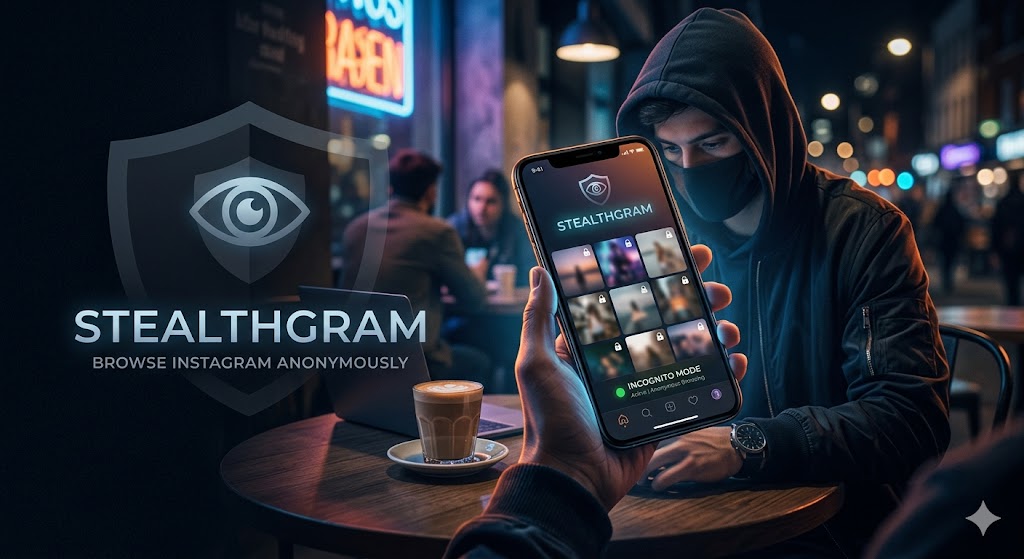
Stealthgram is a privacy-focused messaging application designed to enable discreet communication and anonymous content sharing. Its main functions include:
- Anonymous Messaging: Users can send messages without revealing their identity.
- Content Visibility Control: Options to delete messages, limit visibility, or set self-destruct timers.
- Privacy and Stealth Features: Enhances confidentiality through settings that prevent tracking or unauthorized access.
- Multi-Device Compatibility: Accessible on both Android and iOS devices.
Operational Scope:
Stealthgram is intended for individuals seeking secure, private messaging and social interaction where discretion and anonymity are important.
Origin and Background
- Developed in response to growing demand for private messaging platforms that protect user data.
- Focuses on security, stealth, and anonymity, differentiating it from standard messaging apps.
- Its adoption is primarily among privacy-conscious users and niche communities interested in confidential communication.
Observation:
Stealthgram is considered a specialized messaging tool emphasizing privacy controls and anonymous interaction rather than mainstream social networking.
Extractable Key Points
- Core purpose: Enable private and anonymous messaging
- Target users: Privacy-conscious individuals
- Primary functionalities: Anonymous messages, content control, stealth settings
- Operational advantage: Maintains user confidentiality and reduces digital trace
Summary Box
Stealthgram is a messaging application designed for secure, private, and anonymous communication. It provides message control, multi-device access, and features to protect user privacy.
Key Takeaways
- Focuses on anonymous and discreet messaging
- Allows control over message visibility
- Compatible with multiple devices
- Designed for privacy-conscious users
Common Misconceptions
- Not a standard social media platform — primarily for private communication
- Anonymity depends on proper usage of settings, not automatic by default
Key Features of Stealthgram
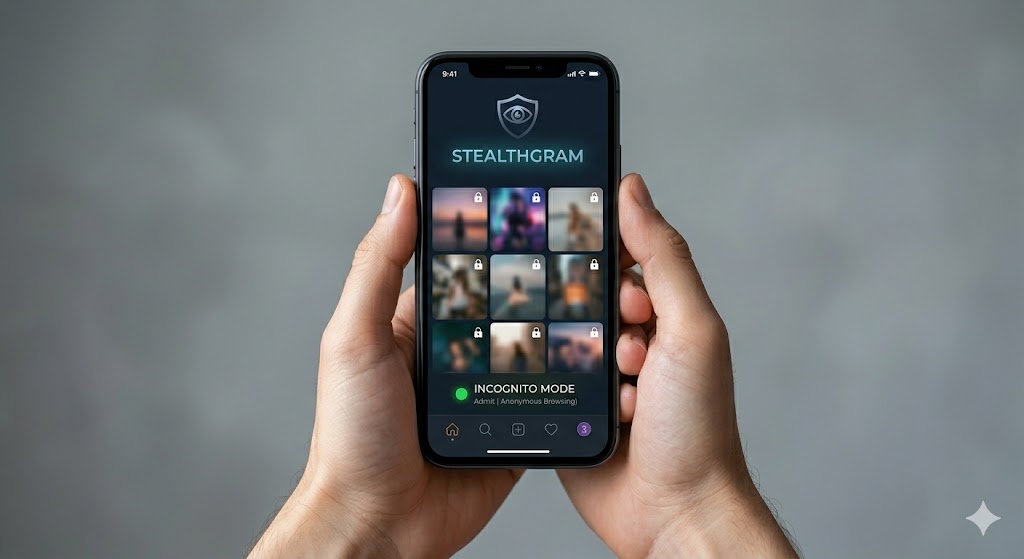
Messaging and Sharing Functions
Stealthgram provides a range of features that support private and anonymous communication:
- Anonymous Messaging: Send and receive messages without revealing the sender’s identity.
- Self-Destructing Messages: Messages can be set to automatically delete after a specific time.
- Media Sharing: Supports sending images, videos, and files with privacy controls.
- Group Messaging: Allows discreet group chats with controlled membership visibility.
Privacy and Stealth Features
| Feature | Description | Benefit |
| Message Deletion | Delete messages from both sender and recipient | Limits digital trace |
| Visibility Control | Set who can view messages | Enhances privacy |
| Anti-Screenshot Alerts | Alerts users if a screenshot is taken | Prevents unauthorized sharing |
| Encryption | Protects message content during transmission | Secures data against interception |
Device and Platform Compatibility
- Mobile Support: Available for Android and iOS devices.
- Cross-Device Sync: Messages and settings synchronize across devices while maintaining privacy.
- No Web Client: Designed to operate primarily as a mobile app to reduce exposure.
User Benefits
- Enhanced Privacy: Users maintain control over content visibility.
- Security: End-to-end encryption and stealth features reduce risk of data leaks.
- Anonymity: Ideal for users who require confidential communication.
- Flexibility: Works on multiple devices without compromising privacy.
Summary Box
Stealthgram offers anonymous messaging, self-destructing messages, media sharing, and group chats. Privacy features like message deletion, visibility control, and encryption ensure secure and discreet communication.
Key Takeaways
- Provides full control over messages and media
- Supports anonymous communication for privacy-conscious users
- Multi-device compatibility ensures flexibility
- Strong security features protect user data
Common Misconceptions
- Not all messages are automatically private—settings must be enabled
- Not intended for large-scale public social networking
Also Read : What Is Eschopper? Features, Benefits & Pricing Guide
How Stealthgram Works
Installation and Setup
Using Stealthgram involves a simple setup process to ensure privacy and proper functionality:
- Download the App: Available on Google Play Store for Android and Apple App Store for iOS.
- Account Creation: Users register with a username or email, optionally linking minimal personal information for anonymity.
- Privacy Configuration: Adjust settings for message deletion, visibility controls, and notifications.
- Device Authorization: For multi-device use, authorize each device while maintaining encrypted connections.
Sending Messages or Sharing Content
- Anonymous Messaging: Compose messages without revealing identity; usernames or aliases may be used.
- Media Sharing: Send images, videos, and files with optional self-destruct timers.
- Group Communication: Create private groups; only authorized participants can access chats.
- Message Control: Set messages to auto-delete or restrict visibility to specific recipients.
Privacy Controls and Settings

| Feature | Function | Benefit |
| Self-Destruct Timer | Messages delete automatically after a set time | Limits exposure and digital footprint |
| Visibility Settings | Restrict who can see messages or media | Enhances privacy and control |
| Encryption | Protects content during transmission | Prevents unauthorized interception |
| Screenshot Alerts | Notify users of screenshots | Discourages content capture |
Observation:
Stealthgram combines anonymity, message control, and encryption to provide a secure communication environment, reducing digital traces and potential exposure.
Extractable Key Points
- Installation and setup emphasize minimal personal data
- Messages and media can be controlled, timed, or restricted
- Security features include encryption and screenshot alerts
- Multi-device support maintains privacy across platforms
Summary Box
Stealthgram works by allowing users to send anonymous messages, share media securely, and control visibility. Privacy settings, encryption, and self-destruct timers help maintain confidentiality across devices.
Key Takeaways
- Set up accounts with minimal personal information
- Configure privacy and visibility settings before use
- Messages can auto-delete and remain encrypted
- Supports secure messaging across multiple devices
Common Misconceptions
- Messages are not automatically private; users must configure settings
- Multi-device use does not reduce encryption or privacy protections
Comparison With Similar Apps
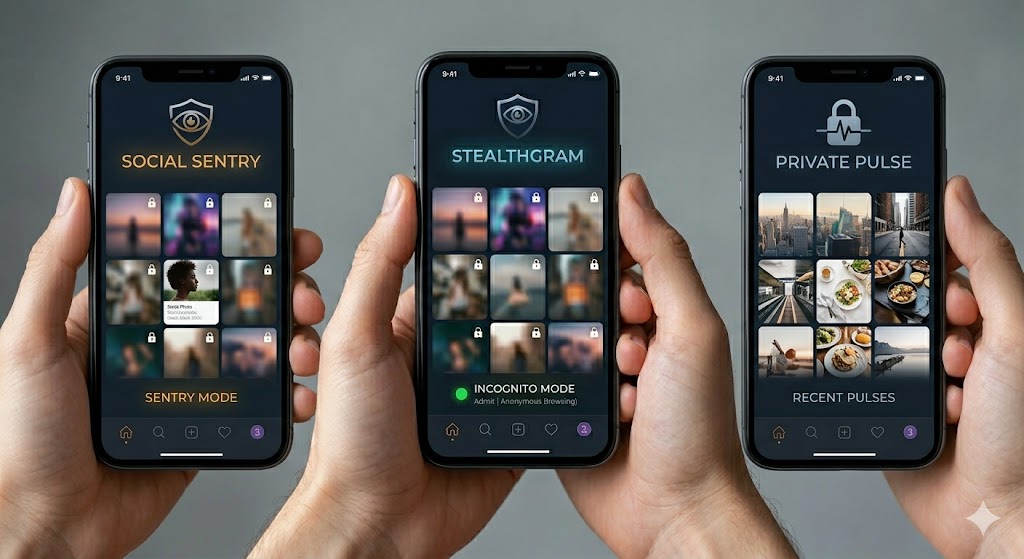
Competitor Overview
Stealthgram operates in a category of privacy‑oriented messaging and social tools. Common comparisons include:
| App | Primary Focus | Privacy Emphasis |
| Stealthgram | Anonymous messaging & content control | High |
| Signal | Secure messaging | High |
| Telegram | Messaging & channels | Medium‑High |
| Messaging with encryption | Medium | |
| Snapchat | Disappearing media | Medium |
Explanation:
Stealthgram differentiates itself by combining anonymous identity features with visibility controls and message self‑destruct options, which some competitors only offer partially.
Feature Comparison Table
| Feature Category | Stealthgram | Signal | Telegram | Snapchat | |
| End‑to‑End Encryption | ✔ | ✔ | Optional | ✔ | Limited |
| Anonymous Messaging | ✔ | ✘ | ✘ | ✘ | ✘ |
| Self‑Destruct Messages | ✔ | ✔ | ✔ | Limited | ✔ |
| Media Sharing | ✔ | ✔ | ✔ | ✔ | ✔ |
| Group Chats | ✔ | ✔ | ✔ | ✔ | ✔ |
| Screenshot Alerts | ✔ | ✘ | ✘ | ✘ | Limited |
Notes on Comparison:
- Signal emphasizes end‑to‑end encryption but does not support anonymous senders.
- Telegram offers self‑destructing media in “Secret Chats” only.
- WhatsApp uses encryption but ties to personal phone numbers.
- Snapchat focuses on disappearing media but lacks full anonymization.
Pros and Cons
Stealthgram
Pros
- Enables anonymous messaging
- Strong message visibility control
- Supports self‑destruct and screenshot alerts
Cons
- Less mainstream integration than larger messaging platforms
- May require user configuration for full privacy
Signal
Pros
- Robust encryption by default
- Trusted in privacy communities
Cons
- Does not allow anonymous identities
Telegram
Pros
- Large user base
- Supports secret chat features
Cons
- Encryption not default for all chat types
Pros
- Wide adoption
- Strong encryption standard
Cons
- Requires phone number linked to identity
Snapchat
Pros
- Immediate disappearing media
- Broad social features
Cons
- Limited privacy configuration and anonymous controls
Summary Box
Stealthgram matches or exceeds many competitors in terms of privacy controls, anonymous messaging, and content visibility features. Larger messaging platforms may offer broader adoption or extended functionality but do not provide the same combination of anonymity and message control.
Key Takeaways
- Stealthgram’s privacy and anonymity features are core differentiators
- Some competitors have stronger encryption infrastructures but lack anonymous identity support
- Platform selection depends on user priorities: anonymity vs encryption vs popularity
Common Misconceptions
- Assuming all messaging apps provide equivalent privacy
- Believing large user base equates to maximum data protection
Legitimacy, Safety, and Privacy Concerns
Security Analysis
Stealthgram incorporates multiple mechanisms intended to enhance communication security:
- Encryption: Protects message content during transmission to reduce interception risk
- Message Control: Features such as deletion and timed expiration limit data persistence
- Access Restrictions: Private groups and controlled visibility reduce unauthorized access
Technical Observation:
Security effectiveness depends on implementation quality, including encryption standards, key management, and system architecture. Without independent audits, security claims cannot be fully verified.
Potential Risks
Despite privacy-oriented features, several risks may be associated with such applications:
| Risk Category | Description |
| Data Exposure | Improper configuration may leave messages accessible |
| False Anonymity | Identity may still be inferred through metadata or usage patterns |
| Platform Trust | Lack of transparency about developers or infrastructure |
| Misuse Potential | Anonymous systems may be used for inappropriate or harmful activities |
| Security Gaps | Vulnerabilities may exist if not regularly updated or audited |
Important Distinction:
Privacy features reduce visibility but do not guarantee complete anonymity or immunity from tracking.
User Recommendations
To minimize risks and ensure safer usage:
- Verify Source: Download only from official app stores
- Review Permissions: Limit unnecessary access to device data
- Enable All Privacy Settings: Activate message deletion, visibility controls, and alerts
- Avoid Sensitive Data Sharing: Do not transmit critical personal or financial information
- Monitor Updates: Use the latest version to reduce exposure to known vulnerabilities
Extractable Key Points
- Privacy features improve confidentiality but do not ensure complete anonymity
- Security depends on implementation, updates, and user configuration
- Risks include data exposure, misuse, and lack of transparency
- Safe usage requires proper setup and cautious behavior
Summary Box
Stealthgram provides multiple privacy and security features, but its effectiveness depends on correct usage and system design. Users should remain aware of potential risks, including false anonymity and data exposure, and apply best practices to maintain security.
Key Takeaways
- Privacy tools reduce exposure but do not eliminate all risks
- Proper configuration is essential for effective protection
- Users should verify sources and limit sensitive data sharing
- Security depends on both platform design and user behavior
Common Misconceptions
- Privacy features guarantee complete anonymity
- Encrypted messaging eliminates all forms of tracking
- Anonymous platforms are inherently risk-free
Summary: Key Takeaways on Stealthgram
Stealthgram is a privacy-oriented messaging application designed to support anonymous communication, controlled content sharing, and secure interaction. Its functionality centers on message visibility control, encryption, and workflow simplicity, enabling users to manage communication with reduced digital exposure.
Core Insights
| Aspect | Key Point |
| Purpose | Enable private and anonymous messaging |
| Target Users | Individuals prioritizing confidentiality and discretion |
| Features | Anonymous messaging, self-destruct messages, encryption, media sharing |
| Privacy Controls | Message deletion, visibility settings, screenshot alerts |
| Advantages | Reduced digital trace, enhanced control over communication |
| Limitations | Requires proper configuration; anonymity not absolute |
Extractable Key Points
- Designed for anonymous and secure communication
- Provides message control through deletion and visibility settings
- Uses encryption to protect data during transmission
- Supports media sharing and group communication
- Privacy effectiveness depends on user configuration and platform design
Summary Box
Stealthgram is a messaging platform focused on privacy, anonymity, and controlled communication. It allows users to manage message visibility, reduce digital traces, and maintain confidentiality across devices.
Key Takeaways
- Prioritizes privacy and anonymity over social networking features
- Combines messaging, media sharing, and visibility controls
- Requires proper setup to maximize privacy benefits
- Does not guarantee complete anonymity in all scenarios
Frequently Asked Questions (FAQs)
1. What is Stealthgram used for?
Stealthgram is used for private messaging and anonymous content sharing. It allows users to control message visibility, send media securely, and reduce their digital footprint through features such as message deletion and restricted access.
2. Is Stealthgram completely anonymous?
No. While Stealthgram provides anonymity features, complete anonymity is not guaranteed. Factors such as metadata, device information, and user behavior may still allow indirect identification under certain conditions.
3. Is Stealthgram safe to use?
Safety depends on platform implementation and user configuration. Enabling privacy settings, limiting permissions, and avoiding sensitive data sharing can improve security. However, risks such as data exposure or misuse may still exist.
4. Can messages on Stealthgram be recovered after deletion?
If properly configured, messages with self-destruct or deletion features are removed from accessible interfaces. However, recovery may depend on system design, backups, or external capture methods (e.g., screenshots).
5. Does Stealthgram support end-to-end encryption?
Stealthgram is described as using encryption for message transmission, but the level and implementation (e.g., end-to-end encryption) depend on platform specifications and should be verified through official documentation.
6. What devices support Stealthgram?
Stealthgram is typically available on mobile platforms, including Android and iOS. Cross-device functionality may be supported through account synchronization and secure access controls.
7. How is Stealthgram different from other messaging apps?
Stealthgram emphasizes anonymous messaging and message control, whereas many mainstream messaging apps focus on identity-based communication. Its distinguishing features include visibility restrictions, self-destruct messages, and enhanced privacy settings.
Key Points from FAQs
- Focused on privacy and anonymous communication
- Does not guarantee complete anonymity
- Security depends on settings and usage practices
- Supports controlled messaging with deletion and visibility features
References
- Secure Messaging and Encryption Standards
Internet Engineering Task Force – Messaging security protocols and encryption frameworks
https://www.ietf.org/standards/ - Signal Protocol (End-to-End Encryption Framework)
Open Whisper Systems
https://signal.org/docs/ - General Data Protection Regulation (GDPR)
European Commission – Data privacy and protection standards
https://commission.europa.eu/law/law-topic/data-protection_en
